

Rosemary Tincture 100 ml – Organic
24,00 €
(incl. VAT)
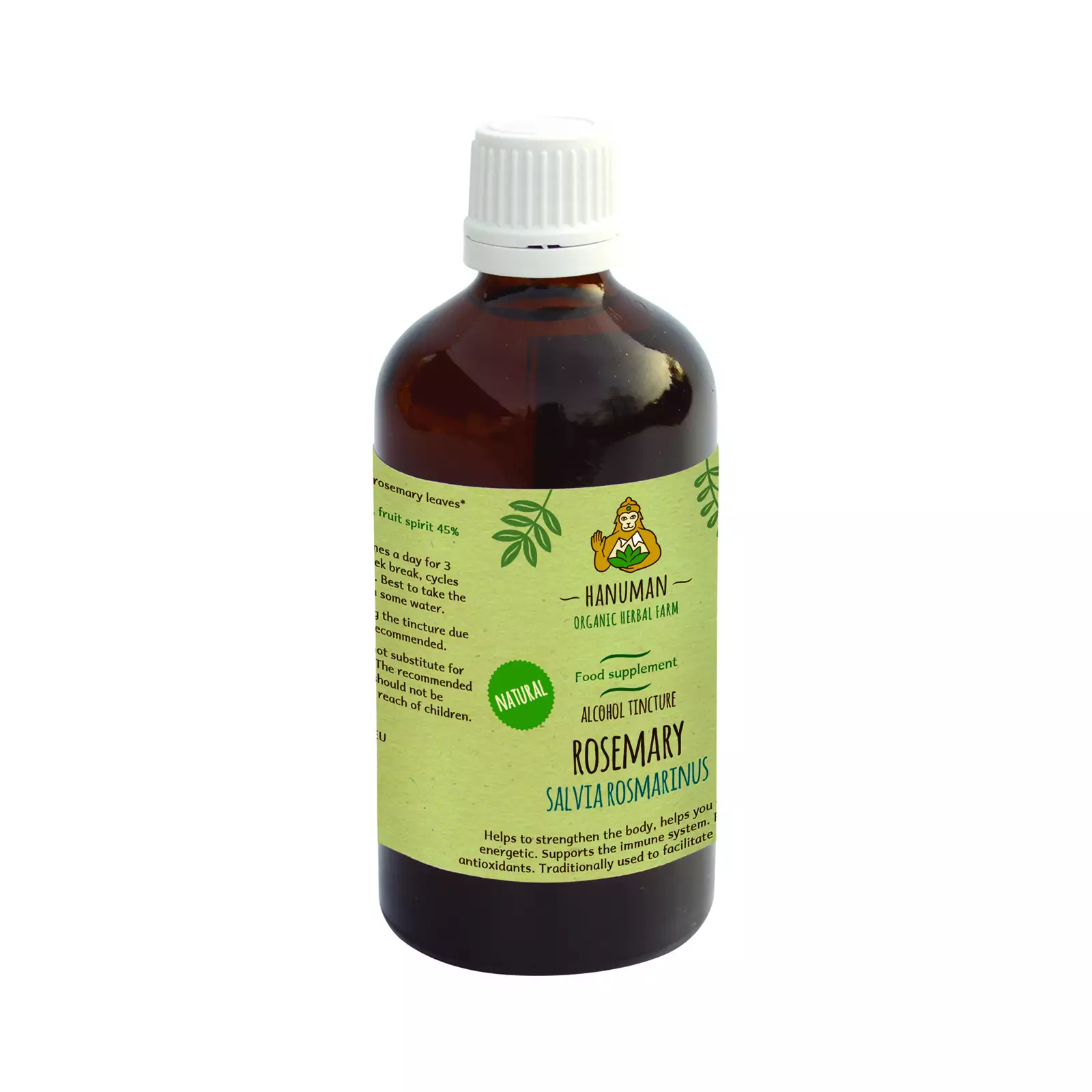
Rosemary tincture (Salvia rosmarinus) is a natural herbal preparation made from organically grown leaves using the traditional cold maceration method. It is traditionally used to support digestion, liver function and a sense of vitality in everyday life.
Ingredients of Rosemary tincture:
- rosemary leaf (Salvia rosmarinus, folium)
- fruit spirit (Slovenian origin, 40% vol. alcohol, organic)
Description
Usage
About the herb
Combinations
FAQ
Rosemary tincture (Salvia rosmarinus) is a concentrated herbal preparation made from rosemary leaves using the traditional cold maceration method. This process helps preserve a broad spectrum of naturally occurring plant compounds that give the tincture its rich and distinctive character.
The alcohol content is carefully adjusted to the characteristics of rosemary, allowing effective extraction of both water-soluble and alcohol-soluble compounds. The result is a balanced extract that preserves the diverse plant profile characteristic of this aromatic herb.
We use carefully selected rosemary of Slovenian origin. The herbs are organically grown or carefully harvested with respect for nature, by hand and at the right time, when their natural qualities are at their peak.
Ingredients of Rosemary tincture:
- rosemary leaf (Salvia rosmarinus, folium)
- fruit spirit (Slovenian origin, 40% vol. alcohol, organic)
Rosemary concentration:
- extraction ratio 1:5, 40% vol. alcohol
Packaging:
- 100 ml
- dark glass bottle with dropper
Quality of Rosemary tincture:
- 100% natural ingredients
- certified organic (IKC UM, SI-EKO-002)
- free from pesticides, artificial colours and other unnecessary additives
Recommended use of Rosemary tincture:
- 25–30 drops
- up to 3 times daily
- you may start with a lower amount (15–20 drops) and gradually increase to 25–30 drops
- recommended for 3 weeks, followed by a break of at least 1 week
- for longer-term use, we recommend taking a break after a maximum of 2 months
How to take Rosemary tincture:
- add to a glass of water or take on a spoon
- preferably take on an empty stomach, before a meal or at least 1 hour after eating
- there is no need to eat immediately after taking the tincture
Tips for use:
- Rosemary is a distinctly aromatic herb, which is why many people prefer to include it in their morning or daytime routine
- one 100 ml bottle usually lasts approximately 3 weeks with regular use
- if you use several different tinctures, you can take them separately or together in the same glass of water, whichever you prefer
Warnings:
- food supplements should not be used as a substitute for a varied and balanced diet and a healthy lifestyle
- do not exceed the recommended daily dose
- keep out of reach of children
- due to its alcohol content, this product is not suitable for children
- use during pregnancy and breastfeeding is not recommended
- use is not recommended in cases of bile duct obstruction, inflammation of the gallbladder, gallstones or other conditions affecting the bile ducts or liver that require medical supervision
- if you experience any adverse reactions or if symptoms persist, consult a doctor or another qualified healthcare professional
Rosemary (Salvia rosmarinus)
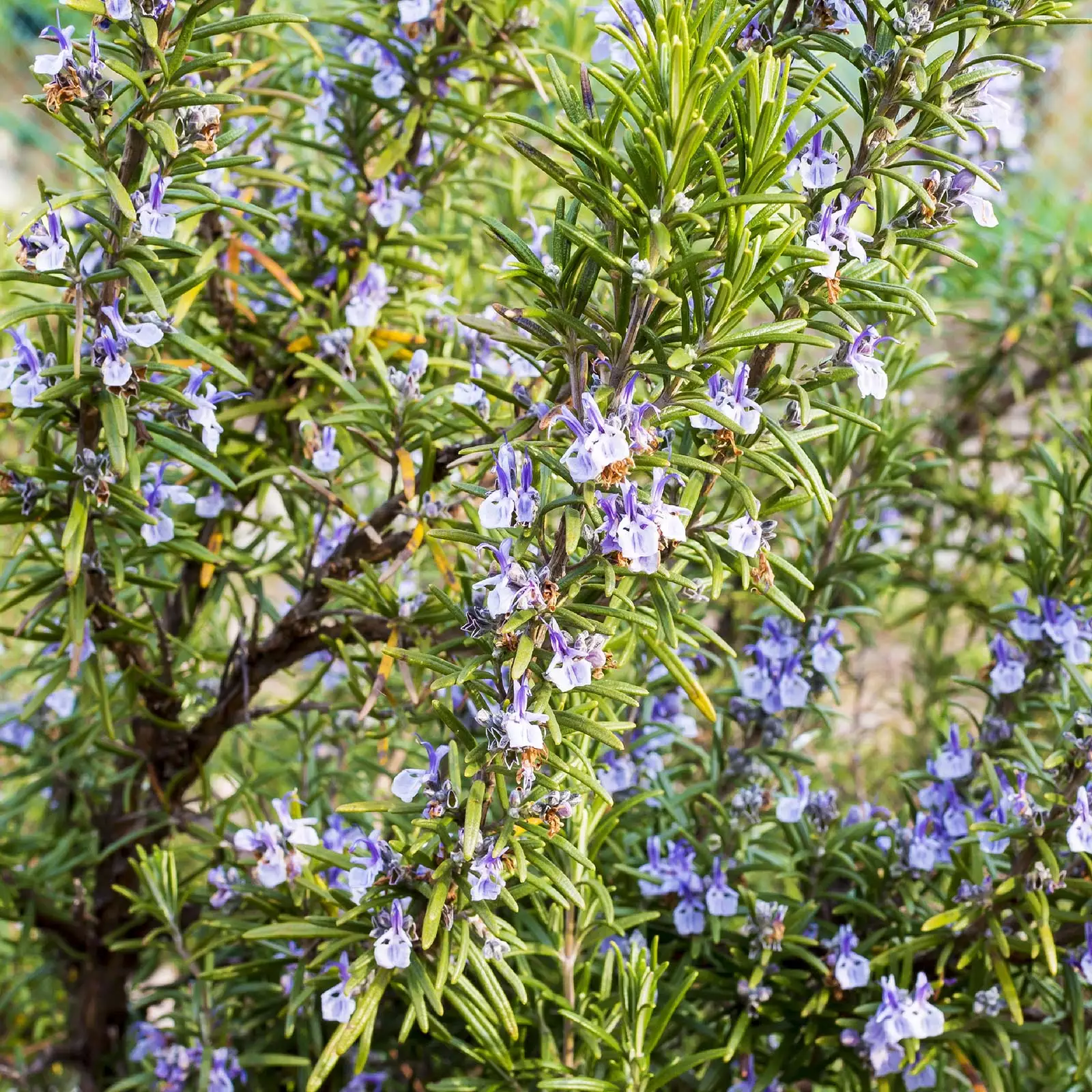
Rosemary is an evergreen, strongly aromatic shrub with narrow, needle-like leaves and small bluish flowers. Its presence feels bright, warm and awakening – a plant that seems to bring warmth, movement and clarity wherever it grows. It thrives in dry, sunny and well-aerated locations, which is why it has long been associated with the Mediterranean landscape, sunlight and inner strength.
It belongs to the mint family (Lamiaceae).
In herbalism, we primarily use the leaves (Salviae rosmarini folium), and sometimes the young shoots. The leaves carry the distinctive aromatic profile that makes Rosemary so recognisable and valued in a wide variety of traditional herbal preparations, from infusions to tinctures.
Rosemary has a long and rich history. In Mediterranean cultures, it was a symbol of remembrance, loyalty and vitality. In some regions, brides once included Rosemary in their wedding bouquets, while elsewhere sprigs were placed near the entrance of the home as a symbol of protection and good intentions. Its former botanical name, Rosmarinus officinalis, is often interpreted as “dew of the sea”, reflecting its close association with coastal landscapes and sea air. Today, its botanical name Salvia rosmarinus places Rosemary among the sages – plants that have long been associated with strength and clarity.
Traditionally, Rosemary is included during periods when we wish for a greater sense of warmth, vitality and inner focus. Many people enjoy incorporating it into their morning or daytime routine, particularly when they wish to support vitality and a feeling of lightness after meals. In herbal practice, it is also valued during periods of greater physical or mental demand or when the body feels heavy and sluggish.
Rosemary is traditionally associated with vitality and digestive support, as well as with the body’s natural physiological cleansing processes. It is also associated with natural antioxidant protection and is often included in herbal routines during periods when we wish for greater clarity, warmth and inner energy.
Rosemary Tincture + Heart Harmony Tincture
- both tinctures for internal use
- rosemary is traditionally valued for supporting circulation, vitality and mental clarity, while Heart Harmony combines selected herbs traditionally associated with the heart, circulation and inner calm
- together, they offer complementary herbal support during periods when you want to support vitality, circulation and a more balanced inner rhythm
Rosemary tincture + Ginkgo tincture
- both tinctures taken internally
- traditionally, this combination is used during periods of greater mental demand; Rosemary brings a sense of clarity and warmth, while Ginkgo complements the combination as part of broader support for focus and concentration
Rosemary tincture + Rhodiola tincture
- both tinctures taken internally
- traditionally, both herbs are included during periods of increased demand; Rosemary brings a sense of warmth and clarity, while Rhodiola complements the combination during periods of greater exertion and a fast-paced lifestyle
Does Rosemary affect blood pressure?
Rosemary (Salvia rosmarinus) is traditionally associated with vitality and circulation. At amounts commonly used in herbal preparations, it should not be regarded as a herb that predictably raises or lowers blood pressure.
Some people experience Rosemary as a warming and stimulating herb and prefer to take it in the morning or during the daytime. Individual responses can vary, so starting with a smaller amount can be a sensible approach.
If you have high or low blood pressure that requires medical supervision, or if you are taking medication to regulate your blood pressure, consult your doctor or another qualified healthcare professional before using Rosemary regularly.
When did Rosemary become Salvia rosmarinus?
Rosemary was known for many years by the botanical name Rosmarinus officinalis. Its botanical classification was later revised following research showing that rosemary belongs within the genus Salvia, which also includes the sages.
The name Salvia rosmarinus was adopted in 2017 as part of this taxonomic revision.
In practice, the former name Rosmarinus officinalis is still widely used, particularly in older herbal literature and on some products. For this reason, you may encounter both botanical names referring to the same plant.