

Rhodiola Tincture 50 ml – Organic
24,00 €
(incl. VAT)
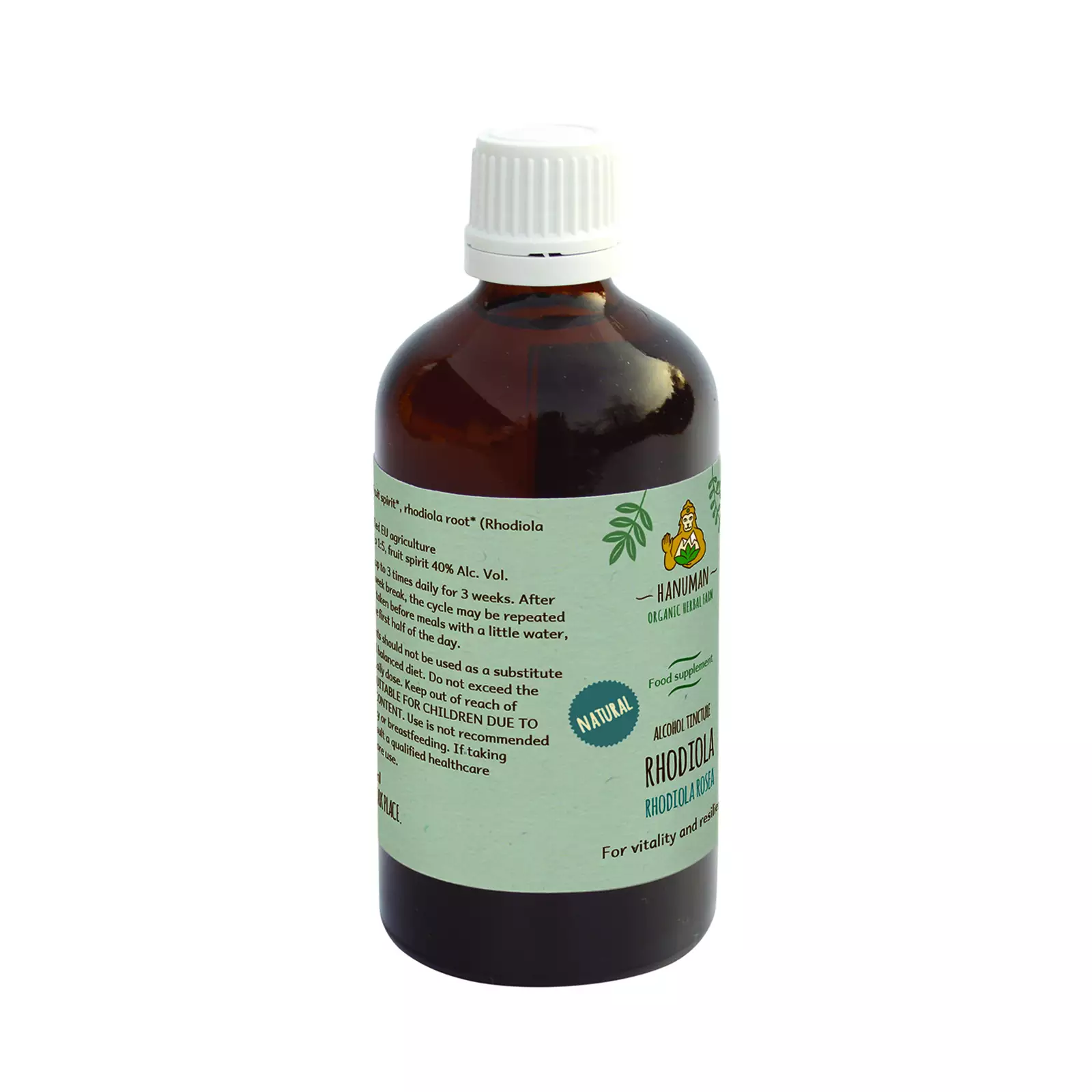
Rhodiola tincture (Rhodiola rosea) is a natural food supplement made from the root of a plant that grows in the colder regions of Europe and Asia. Traditionally prepared using a cold maceration method, it has long been used during periods of physical and mental stress to support vitality and help the body adapt to stress.
Ingredients of Rhodiola tincture:
- Rhodiola root (Rhodiola rosea radix)
- Fruit brandy – of Slovenian origin, 40% alcohol by volume
Description
Usage
About the herb
Combinations
FAQ
Rhodiola tincture (Rhodiola rosea) is a natural herbal preparation made from Rhodiola root using the traditional cold maceration method. This process helps preserve a broad spectrum of naturally occurring compounds that the plant develops in its challenging growing environment.
The alcohol content is carefully adjusted to the characteristics of the root. At 40% alcohol by volume, it allows for balanced extraction of both water-soluble and alcohol-soluble compounds. The result is a stable, well-rounded extract that preserves the plant’s natural balance.
Our Rhodiola root comes from certified organic farming within the EU, where the plant thrives in colder climates. Harvesting and preparation are carried out with great care to preserve quality and respect the plant’s natural growth cycle.
Ingredients of Rhodiola tincture:
- Rhodiola root (Rhodiola rosea radix) – EU, organic
- Fruit brandy – of Slovenian origin, 40% alcohol by volume
Extraction ratio:
- 1:5, 40% alcohol by volume
Packaging:
- 50 ml
- Dark glass bottle with dropper
Quality of Rhodiola tincture:
- 100% natural ingredients
- Certified organic (IKC UM – SI-EKO-002)
- Free from pesticides, artificial colours and other additives
Recommended use of Rhodiola tincture:
- 15 drops
- Up to 3 times daily
- Recommended use for 3 weeks, followed by a break of at least 1 week or switching to another tincture
- For longer-term use, the tincture may be taken continuously for up to 2 months, followed by a break
How to take Rhodiola tincture:
- Add to a glass of water or take directly from a spoon
- Preferably take on an empty stomach (before a meal or at least 1 hour after eating) for better absorption. There is no need to eat immediately afterwards.
Tips for use:
- Rhodiola is native to cold, mountainous regions, where it develops its characteristic resilience and adaptability
- One 50 ml bottle lasts approximately 4 weeks
- For a 6–8 week course, 1–2 bottles are usually sufficient
- We recommend taking it during the first half of the day, preferably in the morning
- If you are sensitive, start with a lower dose and gradually adjust it
Precautions:
- Food supplements should not be used as a substitute for a varied and balanced diet
- Do not exceed the recommended daily dose
- Keep out of reach of children
- Not suitable for children due to its alcohol content
- Not recommended during pregnancy or breastfeeding
- Rhodiola may affect the activity of certain enzymes (e.g. CYP2C9). If you are taking medication, consult a healthcare professional before use
- If you experience any adverse effects or discomfort, discontinue use and consult a healthcare professional
Rhodiola (Rhodiola rosea)
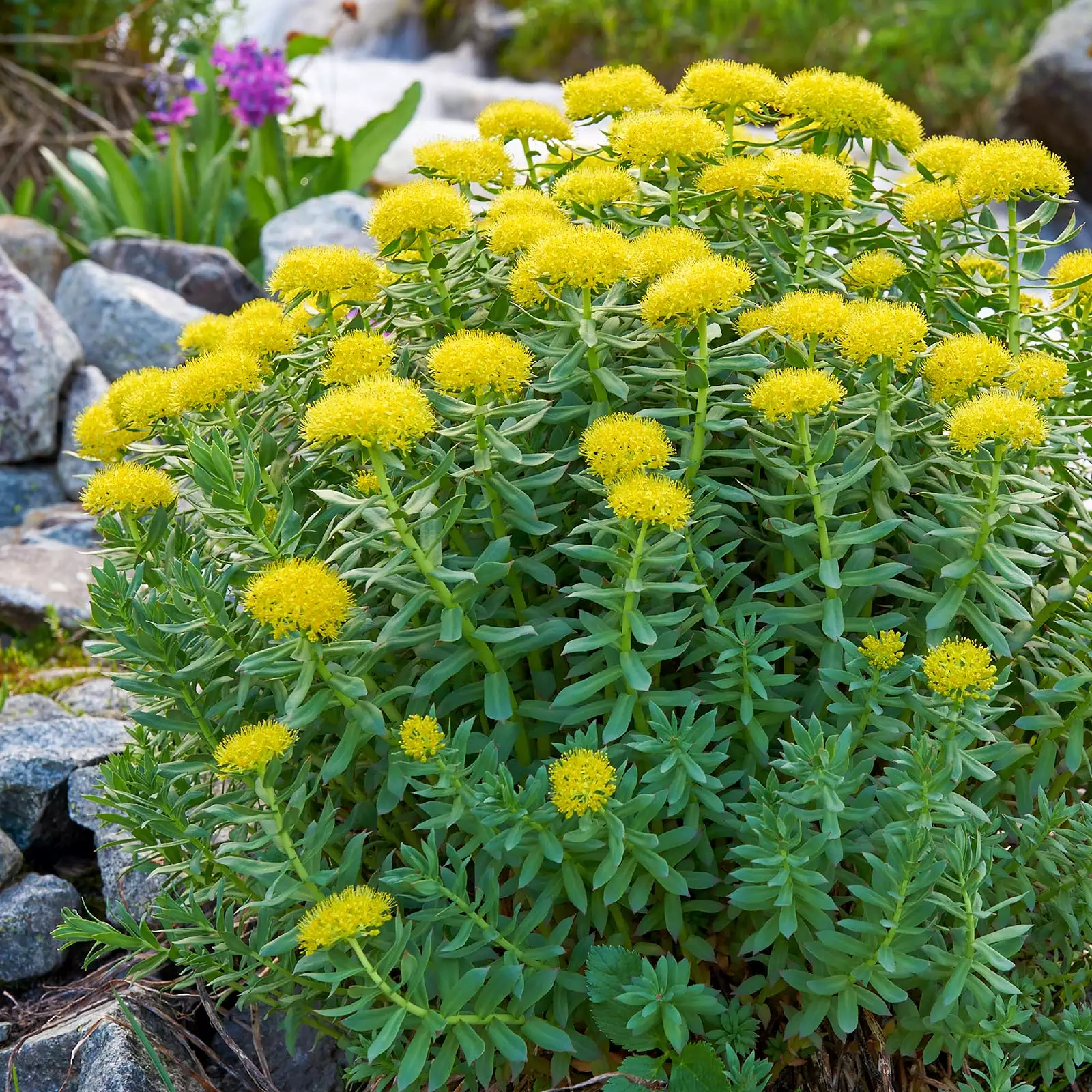
Rhodiola is a resilient plant native to the cold, windy and often harsh regions of Europe and Asia. It grows high in the mountains, on rocky terrain, where it must constantly adapt to challenging conditions. Its energy is concentrated, quiet and enduring – like a plant that does not force its way forward but simply perseveres.
It belongs to the Crassulaceae family. The root (Rhodiola rosea radix) is used to prepare the tincture. It contains characteristic plant compounds, including rosavins, salidroside and various polyphenols, which form part of the plant’s natural defence system.
The name Rhodiola comes from the Greek word “rhodon”, meaning rose. When the fresh root is cut, it often releases a delicate, rose-like fragrance reminiscent of rose petals – hence its common name, “rose root”. This fascinating connection between the root and the flower carries a beautiful symbolism: strength hidden deep beneath the surface, alongside the gentleness the plant continues to preserve.
Rhodiola has a long history of traditional use in the northern and mountainous regions of the world. People have traditionally relied on it during periods of physical exertion, cold weather and prolonged stress, when maintaining inner balance and endurance was particularly important.
Traditionally, Rhodiola has been used during periods when we wish to support the body’s balanced response to stress and maintain a sense of vitality. It is often included in herbal approaches aimed at supporting the body’s adaptability, mental clarity and inner focus.
Its effects are generally described as gradual and holistic – not as a sudden boost, but as gentle, steady support that helps the body find its natural rhythm, even during more demanding times.
Rhodiola tincture + Valerian tincture
- Both tinctures for internal use
- Rhodiola is traditionally used during periods of daily stress, while valerian complements the evening routine and promotes a sense of calm and relaxation.
Rhodiola tincture + Milk thistle seeds
- Tincture for internal use, seeds for internal use
- Rhodiola supports the body’s adaptation to everyday stress, while milk thistle is traditionally included in herbal approaches aimed at supporting metabolism.
Rhodiola tincture + Milky oats tincture + Reishi tincture
- All three tinctures for internal use
- Oats are traditionally used as gentle support during periods of exhaustion, reishi complements the body’s natural balance, while rhodiola contributes to endurance and adaptability.
Does Rhodiola affect sleep?
Rhodiola is traditionally used during periods of increased stress to support the body’s balanced response to physical and mental demands. Indirectly, it may contribute to a greater sense of calm and a more balanced sleep routine.
However, as Rhodiola can have a mildly stimulating effect, we recommend taking it during the first half of the day, preferably in the morning. Taking it in the evening may increase alertness in more sensitive individuals.
Can I take Rhodiola over a longer period, such as six months or more, with regular breaks?
Rhodiola is traditionally used in limited cycles, with regular breaks in between. This approach allows the body to maintain its natural rhythm and helps avoid becoming too accustomed to the herb.
A common recommendation is to take it for 3 weeks, followed by a break of at least 1 week. If needed, it may also be taken for a slightly longer cycle of up to approximately 2 consecutive months, followed by a break.
This routine may be repeated over a longer period, such as several months or even six months, with regular breaks between cycles. It is important to observe how your body responds and adjust the duration accordingly. As evidence on long-term safety is limited, consult a healthcare professional before prolonged use.
Does Rhodiola grow in Slovenia?
Yes, Rhodiola (Rhodiola rosea) also grows in Slovenia, mainly in higher, colder mountain regions where conditions resemble its natural habitat.
However, it is relatively rare in Slovenia and is found only in specific habitats, particularly rocky, well-drained soils in cooler climates. Due to these demanding growing conditions, larger quantities are generally sourced from regions where the plant is more widespread.
Interestingly, it is precisely these harsh conditions – cold temperatures, strong winds and nutrient-poor soils – that shape its remarkable resilience, a quality reflected in its roots.