

Passionflower Tincture 100 ml – Organic
24,00 €
(incl. VAT)
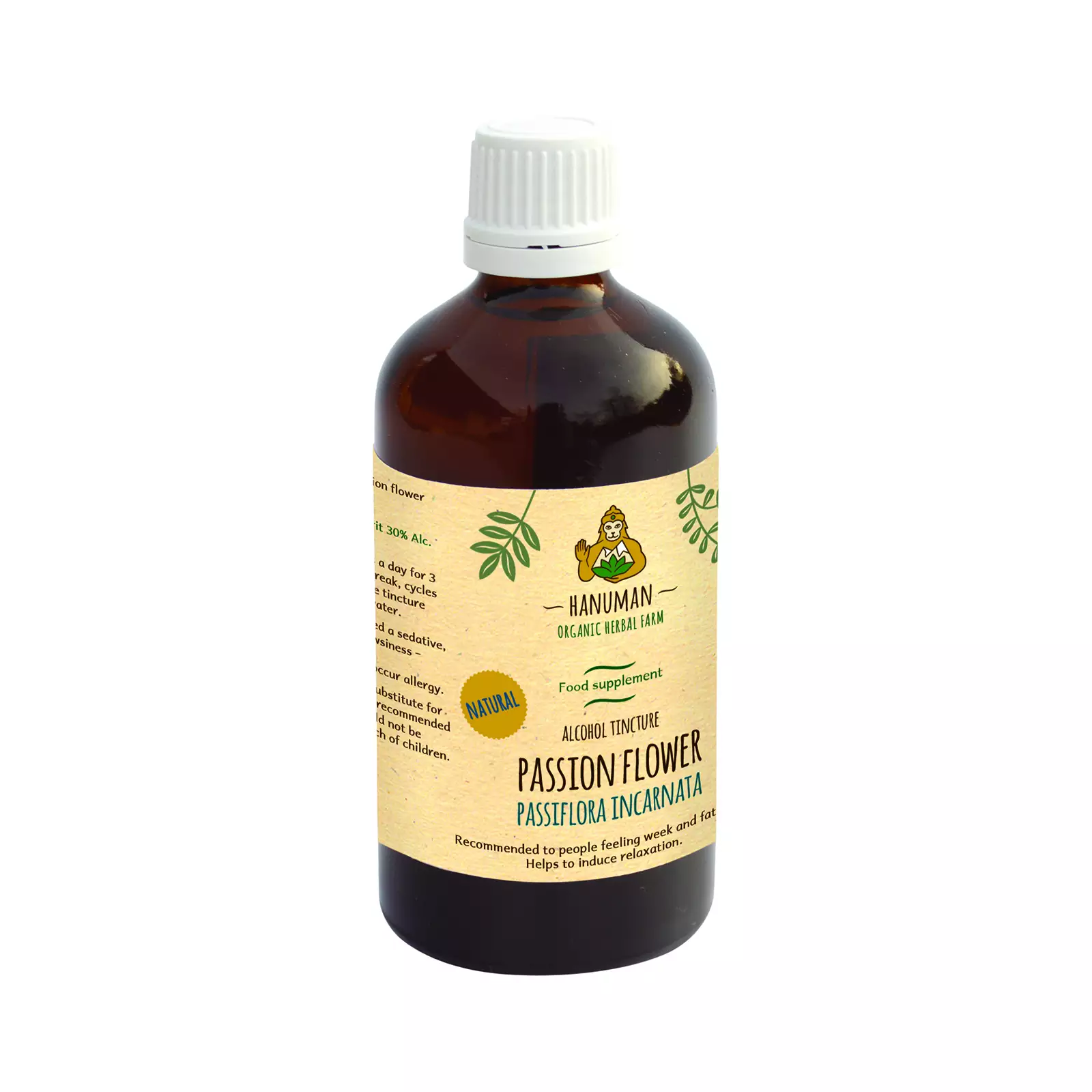
Passionflower tincture is a natural food supplement made from passionflower leaves and flowers using the traditional method of cold maceration. Made from organically grown herbs in Slovenia, it is traditionally used to promote calm and support restful sleep.
Ingredients of passionflower tincture:
- passionflower leaves and flowers (Passiflora incarnata, folium et flos)
- organic fruit brandy (from Slovenia)
Description
Usage
About the herb
Combinations
FAQ
Passionflower tincture is a natural herbal preparation made from the leaves and flowers of passionflower (Passiflora incarnata, folium et flos). It is prepared using the traditional method of cold maceration, which helps preserve a broad range of naturally occurring plant compounds from its above-ground parts.
We use a carefully selected alcohol strength suited to the delicate nature of passionflower. This allows us to extract different groups of plant compounds while retaining the plant’s gentle character.
We grow passionflower organically in Slovenia, following the rhythm of the seasons. We tend it by hand, harvest it at the right time and carefully prepare it as a tincture.
Ingredients:
- passionflower leaves and flowers (Passiflora incarnata, folium et flos)
- organic fruit brandy, 30% alc. by vol. (from Slovenia)
Extraction ratio:
- 1:6, 30% alc. by vol.
Packaging:
- 100 ml
- dark glass bottle with a dropper
Quality:
- 100% natural ingredients
- certified organic (IKC UM, SI-EKO-002)
- no pesticides, artificial colours or other additives
Recommended use of passionflower tincture:
- 15–25 drops
- up to 3 times daily
- we recommend starting with a smaller dose and increasing it gradually according to how your body responds
- take for 3 weeks, then have a break of at least 1 week
- during more challenging periods, the tincture may be taken continuously for up to 2 months, followed by a break
How to take passionflower tincture:
- add the tincture to a glass of water, or place the drops on a spoon and follow with water
- we recommend taking it on an empty stomach, before a meal or at least 1 hour after eating; you do not need to eat immediately afterwards
Tips for use:
- passionflower is a gentle herb often included in evening routines or during periods when you seek a greater sense of calm
- one 100 ml bottle lasts approximately 3 weeks with regular use
- you can also take a smaller dose in the evening
- if you feel more drowsy, adjust the dose to suit your needs
Important information:
- food supplements should not be used as a substitute for a varied and balanced diet
- do not exceed the recommended daily dose
- keep out of reach of children
- this product contains alcohol and is not suitable for children
- due to a lack of data, use is not recommended during pregnancy or breastfeeding, or for children under 12
- passionflower may cause drowsiness; take care when driving or operating machinery
Passionflower (Passiflora incarnata)
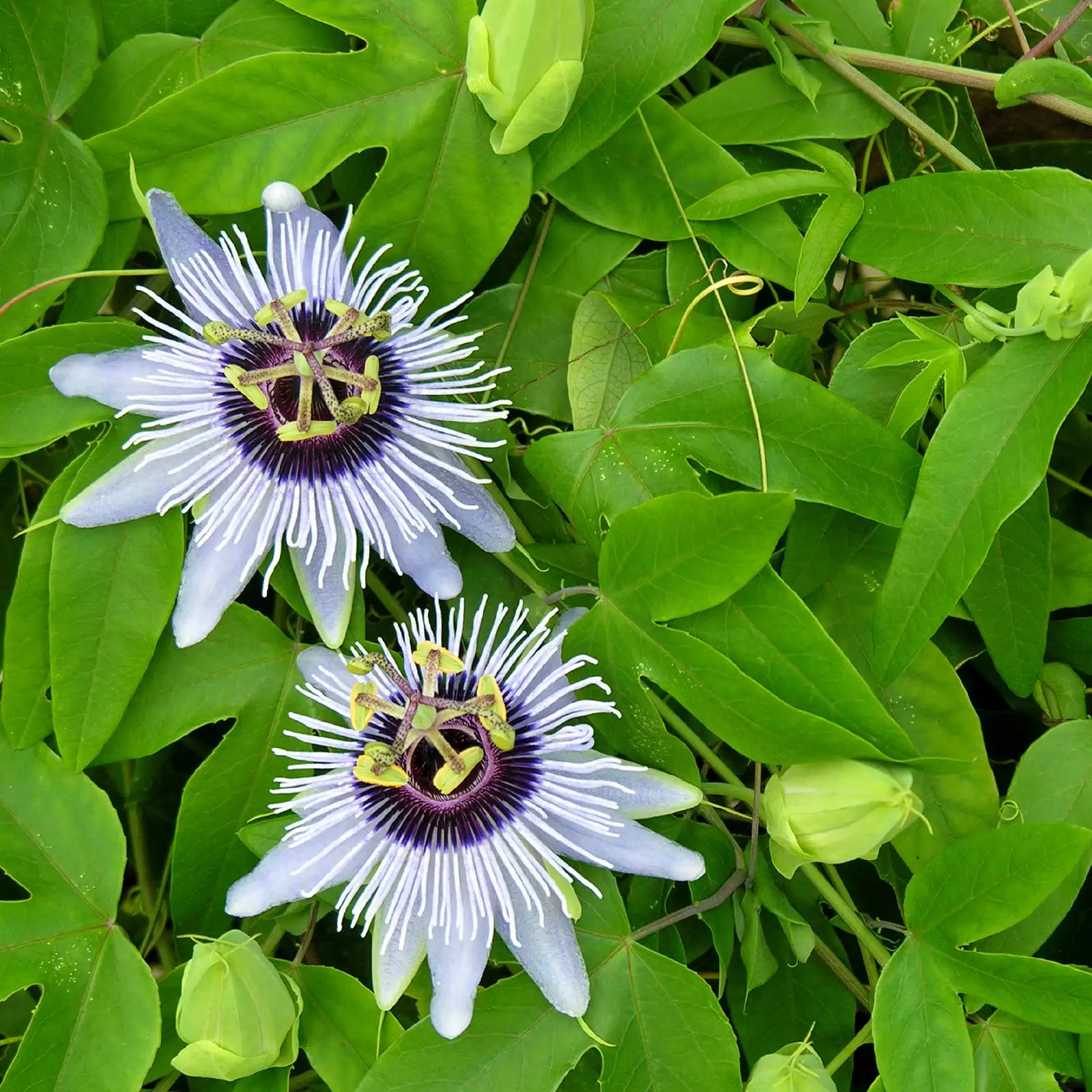
Passionflower is a delicate climbing plant with striking flowers that seem almost otherworldly. Its softly lobed green leaves frame white and purple blooms with an unusual, star-like form.
It belongs to the passionflower family (Passifloraceae).
In herbal practice, we mainly use the above-ground parts of the plant, especially its leaves and flowers (folium et flos).
The name passionflower comes from the symbolism once associated with its flower, whose features were interpreted as images of the Passion of Christ. The plant is native to the Americas and is now grown in other parts of the world for both its beauty and its place in herbal traditions.
Passionflower has a long history of use during times of inner tension and evening restlessness, when we long to unwind and ease into rest. It often finds a place in evening rituals, or on days when the mind feels full and the body asks for a gentler rhythm.
In modern herbal practice, passionflower is valued for its traditional association with relaxation, calm and sleep. It is especially popular in evening preparations, where its gentle yet distinctive character can be appreciated.
Passionflower tincture + Rhodiola tincture
- passionflower tincture taken orally in the evening; rhodiola tincture taken orally in the morning
- passionflower is traditionally used in the evening to help you unwind and ease into rest; rhodiola complements the daytime routine when you seek a sense of balance and focus
Passionflower tincture + Ginkgo tincture
- passionflower tincture taken orally in the evening; ginkgo tincture taken orally in the morning
- passionflower is traditionally used to unwind after an active day; ginkgo is often included in a morning routine when mental clarity is welcome
Passionflower tincture + Dandelion tincture
- passionflower tincture taken orally in the evening; dandelion tincture taken orally during the day
- passionflower is traditionally used in the evening as part of a calming routine; dandelion has a place in daytime herbal routines centred on digestion
Is passionflower similar to valerian?
Passionflower and valerian are often used for similar reasons, but they have different characters. Passionflower is generally considered gentler and is often chosen during periods of inner tension or evening restlessness. Valerian is commonly chosen when someone is looking for a more pronounced sense of calm.
In herbal practice, passionflower is often included in a longer, gentler routine, while valerian may be chosen when more noticeable support is desired. The two herbs are also sometimes used together, especially in the evening.
Can ornamental passionflowers be used in the same way?
Passionflowers grown as ornamental plants are often different species from *Passiflora incarnata*, the species used in this herbal preparation. Ornamental plants may include *Passiflora caerulea* and other tropical species.
Although they may look alike, these species differ in their composition and history of use. You should therefore not assume that an ornamental passionflower can be used in the same way as *Passiflora incarnata*.