
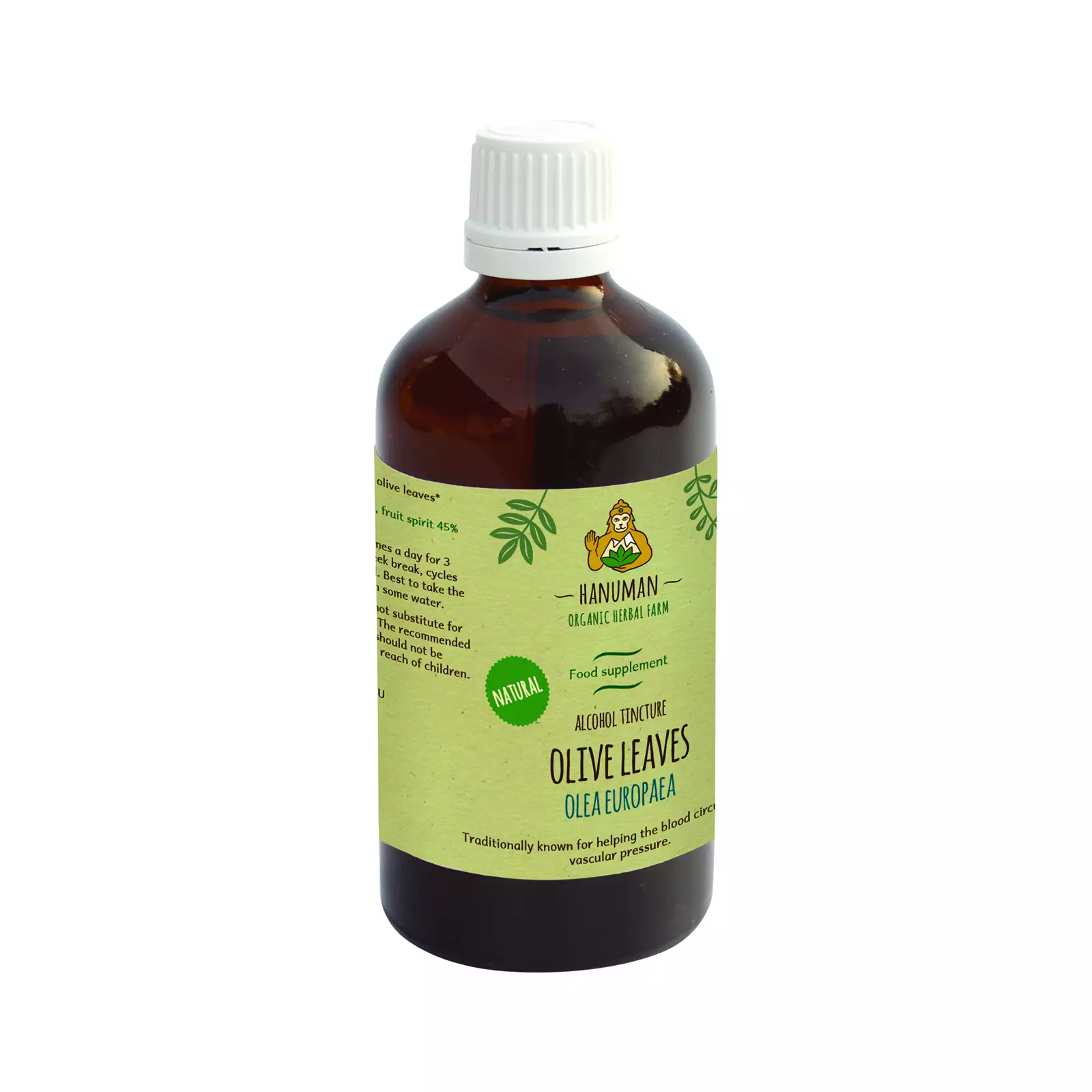

Olive Leaf Tincture 100 ml – Organic
24,00 €
(incl. VAT)
Olive leaf tincture (Olea europaea) is a natural food supplement made from organically grown olive leaves using the traditional cold maceration method. Traditionally used to support blood sugar balance, circulation, digestion and natural immunity.
Ingredients of Olive leaf tincture:
- Olive leaves (Olea europaea folium), of Slovenian origin, organic
- Organic fruit brandy of Slovenian origin
Description
Usage
About the herb
Combinations
FAQ
Olive leaf tincture is a natural herbal preparation made from olive leaves (Olea europaea folium) using the traditional cold maceration method. This process helps preserve a broad spectrum of naturally occurring compounds that the plant develops in its natural environment.
The alcohol content is carefully adjusted to the properties of olive leaves, allowing for effective extraction of various groups of naturally occurring plant compounds. Both water-soluble and alcohol-soluble substances are extracted, including polyphenols such as oleuropein, resulting in a well-rounded herbal preparation.
Our olive leaves are organically grown in Slovenia or carefully harvested with respect for the plant’s natural rhythms. They are hand-picked with great care to ensure quality and respect for nature.
Ingredients of Olive leaf tincture:
- Olive leaves (Olea europaea folium), of Slovenian origin, organic
- Organic fruit brandy, 40% alcohol by volume, of Slovenian origin
Extraction ratio:
- 1:4 extraction ratio
- 40% alcohol by volume
Packaging:
- 100 ml
- Dark glass bottle with dropper
Quality of Olive leaf tincture:
- 100% natural ingredients
- Certified organic (IKC UM, SI-EKO-002)
- Free from pesticides, artificial colours and other unnecessary additives
Recommended use of Olive leaf tincture:
- 15–25 drops
- 3 times daily
- If needed, gradually increase the dose to 30 drops
- Recommended use for 3 weeks, followed by a break of at least 1 week or switching to another tincture
- For more persistent concerns, the tincture may be used continuously for up to 2 months, followed by a break
How to take Olive leaf tincture:
- Add to a glass of water or take from a spoon, followed by some water
- Preferably take on an empty stomach (before a meal or at least 1 hour after eating). There is no need to eat immediately afterwards.
Tips for use:
- Olive leaves contain naturally occurring polyphenols (such as oleuropein), so we recommend introducing the tincture gradually
- One 100 ml bottle lasts approximately 3 weeks with regular use
- Make sure to drink enough water while taking the tincture
Precautions:
- Food supplements should not be used as a substitute for a varied and balanced diet
- Do not exceed the recommended daily dose
- Keep out of reach of children
- Not suitable for children due to its alcohol content
- Due to insufficient safety data, use is not recommended during pregnancy or breastfeeding, or for children under 12
- If you are taking medication or have an existing medical condition, consult a healthcare professional before use
Olive tree (Olea europaea)
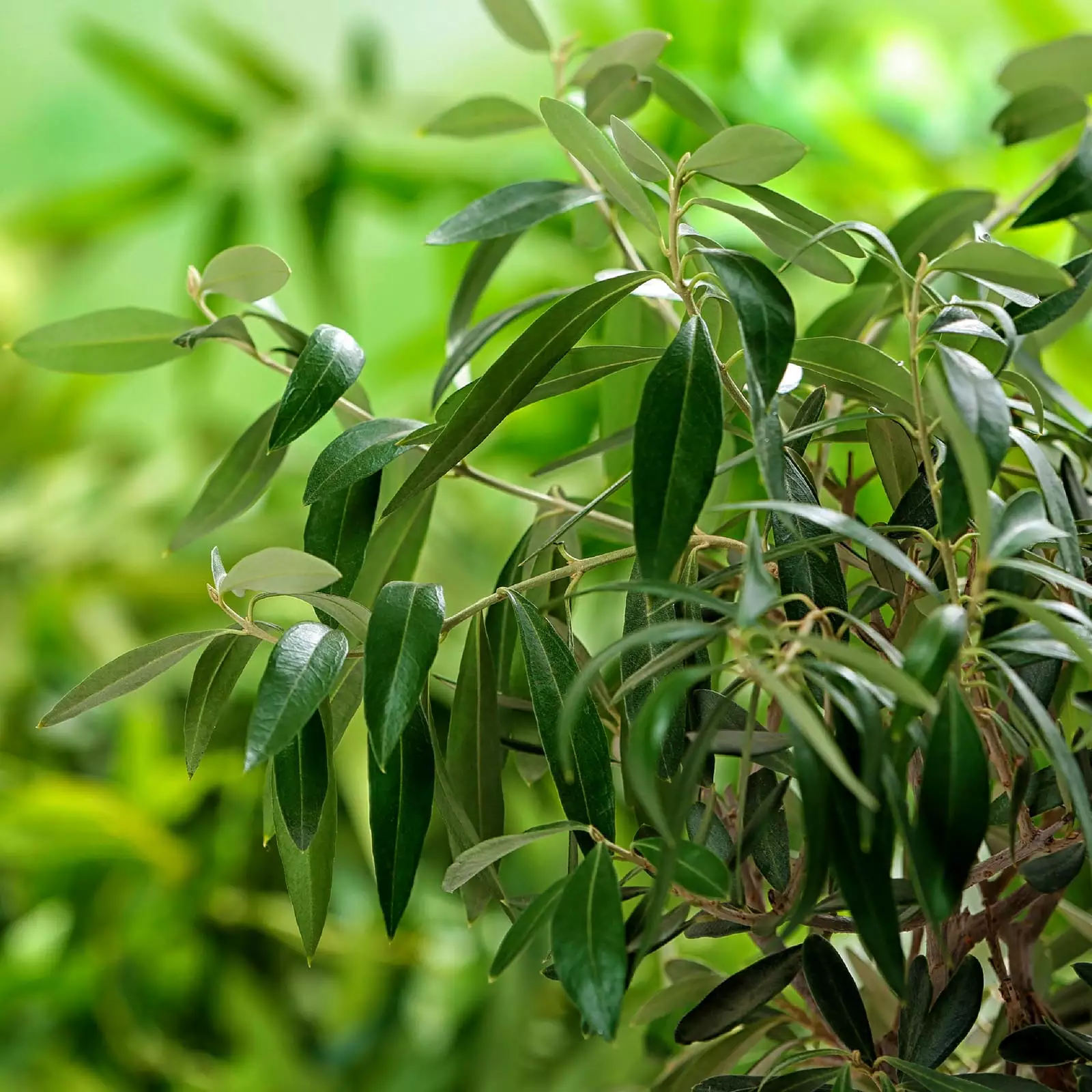
The olive tree is an evergreen Mediterranean tree with distinctive silvery-green leaves that withstand strong sunlight, wind and drought. Its presence is quiet yet powerful – often associated with longevity, stability and inner balance. Although best known for its fruit, olive leaves also have a long and valued place in traditional herbalism.
It belongs to the Oleaceae family. The leaves (Olea europaea folium) are used to prepare the tincture. They contain a variety of naturally occurring plant compounds, including polyphenols characteristic of this plant.
The olive tree is one of the oldest cultivated plants in the Mediterranean and has been part of human life for thousands of years. It has long symbolised peace, wisdom and protection. Its leaves are remarkably resilient and retain their vitality for a long time, reflecting the very nature of the tree – strength, adaptability and the ability to maintain balance even in challenging conditions.
Traditionally, olive leaves have been used during periods when we wish to support the body’s internal balance. They are often associated with supporting metabolism, circulation and general vitality, as well as being included in herbal routines during times of increased physical and mental demands.
Olive leaves have also been traditionally associated with supporting blood sugar balance, healthy circulation, digestion, intestinal function and the body’s natural defences. Their use is rooted in generations of herbal knowledge and observation, with the olive tree offering its quiet yet enduring support.
Olive leaf tincture + Dandelion tincture
- Both tinctures for internal use
- Dandelion is traditionally used to support digestion and metabolism, while olive leaves complement this herbal approach by supporting overall balance and a sense of inner well-being.
Olive leaf tincture + Reishi tincture
- Both tinctures for internal use
- Reishi is traditionally used during periods of increased physical and mental demands, while olive leaves complement this approach by supporting the body’s natural defences and internal balance.
Olive leaf tincture + Hawthorn tincture
- Both tinctures for internal use
- Hawthorn is traditionally used to support heart health and circulation, while olive leaves complement this approach by supporting circulatory balance and vitality.
Olive leaf tincture + Rosemary tincture
- Both tinctures for internal use
- Rosemary is traditionally used to support vitality and digestion, while olive leaves complement this herbal combination by supporting circulation and overall balance.
When is the best time to harvest olive leaves?
Olive leaves are traditionally harvested in dry, sunny weather, when they are fully developed and firm. They are often collected before or during flowering, when the plant is at its peak vitality. It is important to select healthy, undamaged leaves from a clean environment.
Can olive leaves cause a significant drop in blood pressure?
Olive leaves may have a blood pressure-lowering effect, so some people may notice changes when they start taking them. If your blood pressure drops significantly or you experience dizziness, stop taking the tincture and consult a healthcare professional. This is particularly important if you are taking blood pressure medication, as the effects may be additive.
How do olive leaves differ from olive oil?
Olive leaves and olive oil come from the same plant but have different compositions. The leaves contain different plant compounds from the fruit, which is why they are used differently in traditional herbalism. Both, however, reflect the characteristic qualities of the olive tree – stability, resilience and longevity.