

Milky Oats Tincture 100 ml – Organic
24,00 €
(incl. VAT)
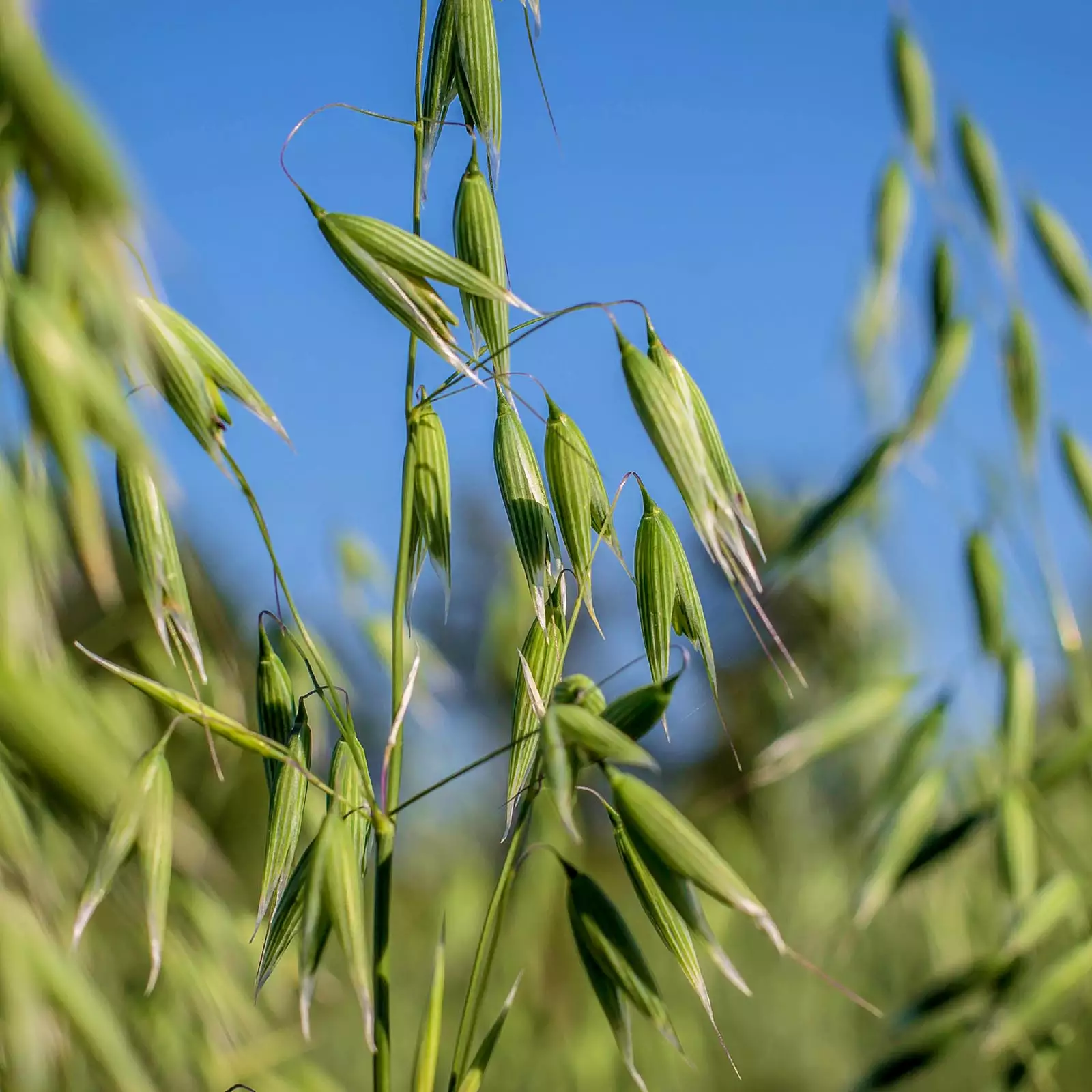
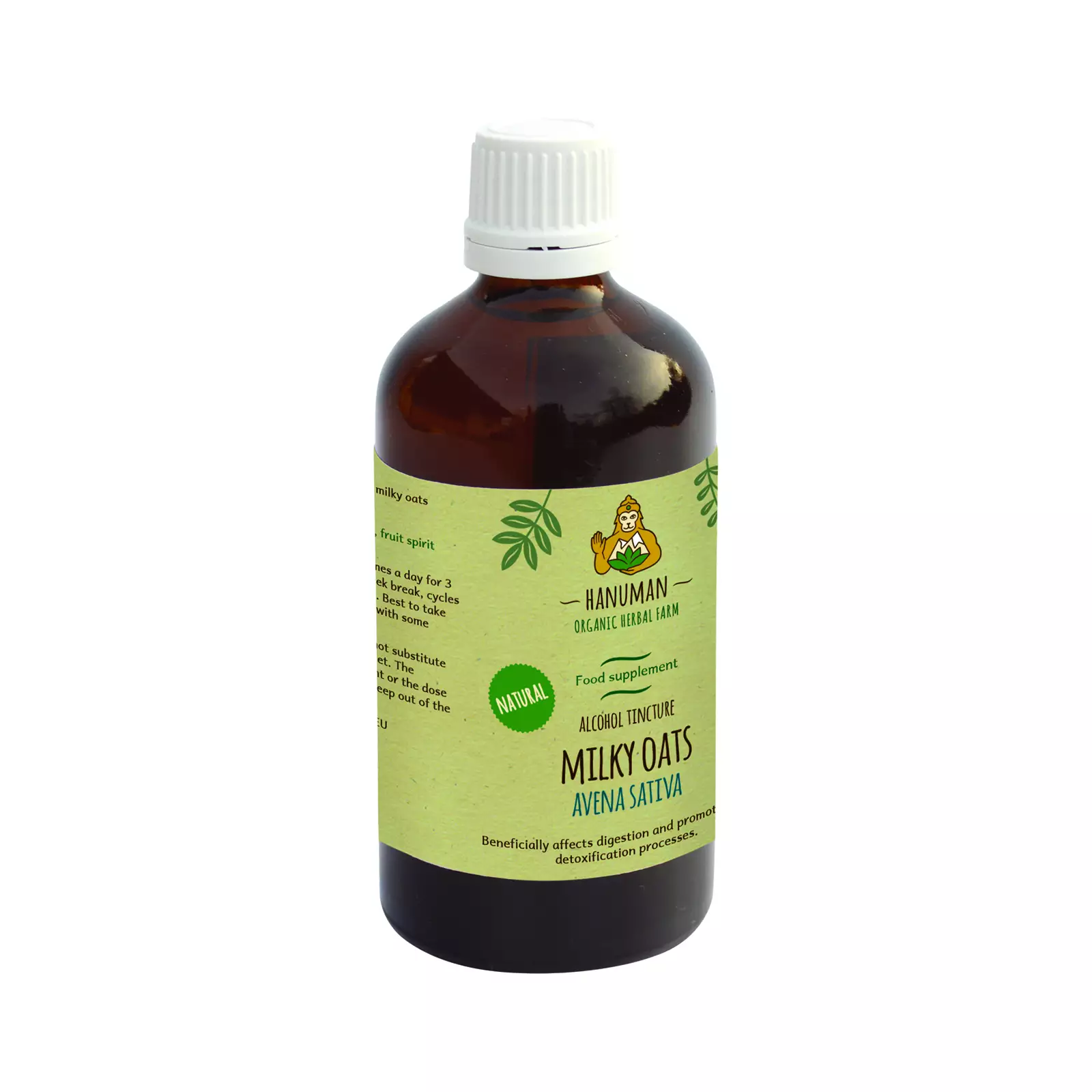
Milky Oats Tincture is a natural food supplement made from fresh green oats with milky, immature grains (Avena sativa), prepared using the traditional cold maceration method. Organically grown in Slovenia, milky oats have long been valued in herbal tradition as gentle support during periods of tiredness and tension, and for overall vitality.
Ingredients of the Milky Oats Tincture:
- green oat tops with milky, immature grains (Avena sativa, herba cum fructibus immaturis)
- fruit spirit, 40% vol. alcohol (organic, Slovenian origin)
Description
Usage
About the herb
Combinations
FAQ
Milky Oats Tincture is a liquid herbal preparation made from fresh green oat tops with milky, immature grains (Avena sativa), prepared using the traditional cold maceration method. This method helps preserve a broad spectrum of naturally occurring compounds that the plant develops during this delicate milky stage of growth.
We carefully adjust the alcohol content to suit each plant, allowing a balanced extraction of both water-soluble and alcohol-soluble compounds. In this way, the tincture captures the full character of the plant and its distinctively gentle, nourishing nature.
We grow our oats organically in our herbal garden, where they develop in harmony with natural rhythms. They are harvested by hand at just the right stage, while the grains are still soft, milky and full of vitality.
Ingredients of the Milky Oats Tincture:
- green oat tops with milky, immature grains (Avena sativa, herba cum fructibus immaturis)
- fruit spirit, 40% vol. alcohol (organic, Slovenian origin)
Concentration of Milky Oats:
- extraction ratio 1:5, 40% vol. alcohol
Packaging:
- 100 ml
- dark glass bottle with dropper
Quality of the Milky Oats Tincture:
- 100% natural ingredients
- certified organic (IKC UM, SI-EKO-002)
- free from pesticides, artificial colours and other unnecessary additives
Recommended use of the Milky Oats Tincture:
- 25–30 drops
- 3 times daily
- you can start with a smaller amount and gradually increase to 25–30 drops
- recommended for 3 weeks, followed by a break of at least 1 week or by switching to another tincture
- for longer periods of use, such as several months, we recommend taking regular breaks
How to take the Milky Oats Tincture:
- add to a glass of water or take from a spoon, followed by some water
- preferably take on an empty stomach (before a meal or at least 1 hour after eating), as this allows for better absorption; there is no need to eat immediately afterwards
Tips for use:
- milky oats have a naturally gentle, nourishing character, making them suitable for longer, steady periods of use
- for one course, we recommend 1 bottle; for a longer course, 2–3 bottles with breaks in between
- the tincture can be included in your evening wind-down routine or during periods when you wish to give your body a little extra support and balance
Warnings:
- food supplements should not be used as a substitute for a varied and balanced diet and a healthy lifestyle
- do not exceed the recommended daily dose
- keep out of reach of children
- not suitable for children due to its alcohol content
- not recommended if you have a known sensitivity to oats or related plants
- if you are pregnant, breastfeeding or taking medication, consult your doctor or pharmacist before use
Oats (Avena sativa)
Oats are gentle yet remarkably resilient plants that have long accompanied us as a grain, food and herb. When still young and green, with soft grains in their milky stage, the plant has a particular freshness and vitality that has made milky oats highly valued in herbal tradition. Their appearance is simple, almost modest, but therein lies part of their charm – oats do not stand out through extravagance, but through a sense of quiet, dependable support.
Oats belong to the grass family (Poaceae), together with many other important cereal crops. This plant family is closely intertwined with human history, having accompanied us for thousands of years as part of everyday food and rural life.
In herbalism, we most commonly use the fresh green aerial parts together with the milky, still immature grains. This particular stage of growth is special because the plant is still soft, fresh and full of the naturally occurring compounds we wish to capture in the tincture. Oat straw is also commonly used in herbalism, although it has a somewhat different character and a different emphasis in traditional use.
Oats are one of those plants that people have long taken almost for granted, even though they have far more to offer than first meets the eye. In traditional European rural life, oats were associated with nourishment, warmth and simple everyday abundance. In some traditions, they were also connected with a calm home, restful sleep and the sense of the body gradually “putting itself back together” after periods of exertion. Oats were also widely used as feed for horses, giving the plant an additional symbolism of strength, endurance and steady energy.
Traditionally, milky oats are used during periods of physical and mental exhaustion, when gentle, long-term herbal support is desired. They are often associated with a sense of calm, inner stability and a gradual return of strength after demanding periods. In herbal practice, milky oats are also valued as a gentle companion during times of greater tension or sensitivity, or whenever a more nourishing and soothing form of herbal support is desired.
Oats are also traditionally associated with everyday balance, vitality and support for normal metabolic processes. They are often included in herbal routines when a gentler approach to digestion, a greater sense of inner steadiness or simply a softer herbal companion is desired. Their nature is not sudden or forceful, but patient – like a plant that works slowly and deeply, reminding us that strength sometimes returns quietly, almost unnoticed.
Milky Oats Tincture + Reishi Tincture
- both tinctures for internal use
- traditionally, milky oats and reishi complement each other well during periods of exhaustion; milky oats bring a sense of gentle, nourishing support, while the deeper, calming character of reishi adds a sense of inner stability and balance
Milky Oats Tincture + Passionflower Tincture
- both tinctures for internal use
- a combination that brings together gentleness and calm; milky oats support a sense of inner stability, while passionflower is traditionally used as part of evening routines when a quieter rhythm and a gentle transition towards rest are desired
Milky Oats Tincture + Rhodiola Tincture
- both tinctures for internal use
- traditionally, milky oats and rhodiola complement each other well during more demanding periods; milky oats bring gentleness and a nourishing quality, while rhodiola adds a brighter, more alert character and a sense of endurance
Milky Oats Tincture + Valerian Tincture
- both tinctures for internal use
- traditionally, milky oats and valerian are used as part of evening herbal routines; milky oats bring a sense of comfort and gentleness, while valerian adds a deeper sense of calm and supports the transition towards rest
What is the difference between cultivated oats and wild oats?
Cultivated oats (Avena sativa) and wild oats (most commonly Avena fatua) may look similar at first glance, but they differ both in the way they grow and in their traditional herbal use.
Cultivated oats have been intentionally grown by people for centuries. Their growth is more uniform, the grains are larger and their development is more predictable. This consistency is one of the reasons Avena sativa is most commonly used in herbal preparations – particularly during the milky stage, when the young grains have the gentle, nourishing character valued in milky oats tinctures.
Wild oats grow naturally without cultivation. Their growth is less uniform, and they are often found along field margins or growing among other crops. They have a somewhat wilder character and are less commonly used in practice for preparing milky oats tinctures.
Are milky oats more associated with calming or restoration?
Milky oats (Avena sativa) are valued in herbal tradition for their gentle, well-rounded character. Rather than being associated with just one aspect, they are traditionally used both for a sense of calm and for gradual restoration after demanding periods.
They are often associated with inner softness and stability, particularly during periods of tension or feeling overwhelmed. Their character is not that of a fast-acting calming herb, but rather of quiet, steady support that accompanies the body as it gradually settles into a calmer rhythm.
At the same time, oats have traditionally been valued as a nourishing plant during periods of exhaustion. This is one of the qualities that makes milky oats distinctive: they combine gentleness and calm with a sense of gr