

White Willow Tincture 100 ml – Organic
24,00 €
(incl. VAT)
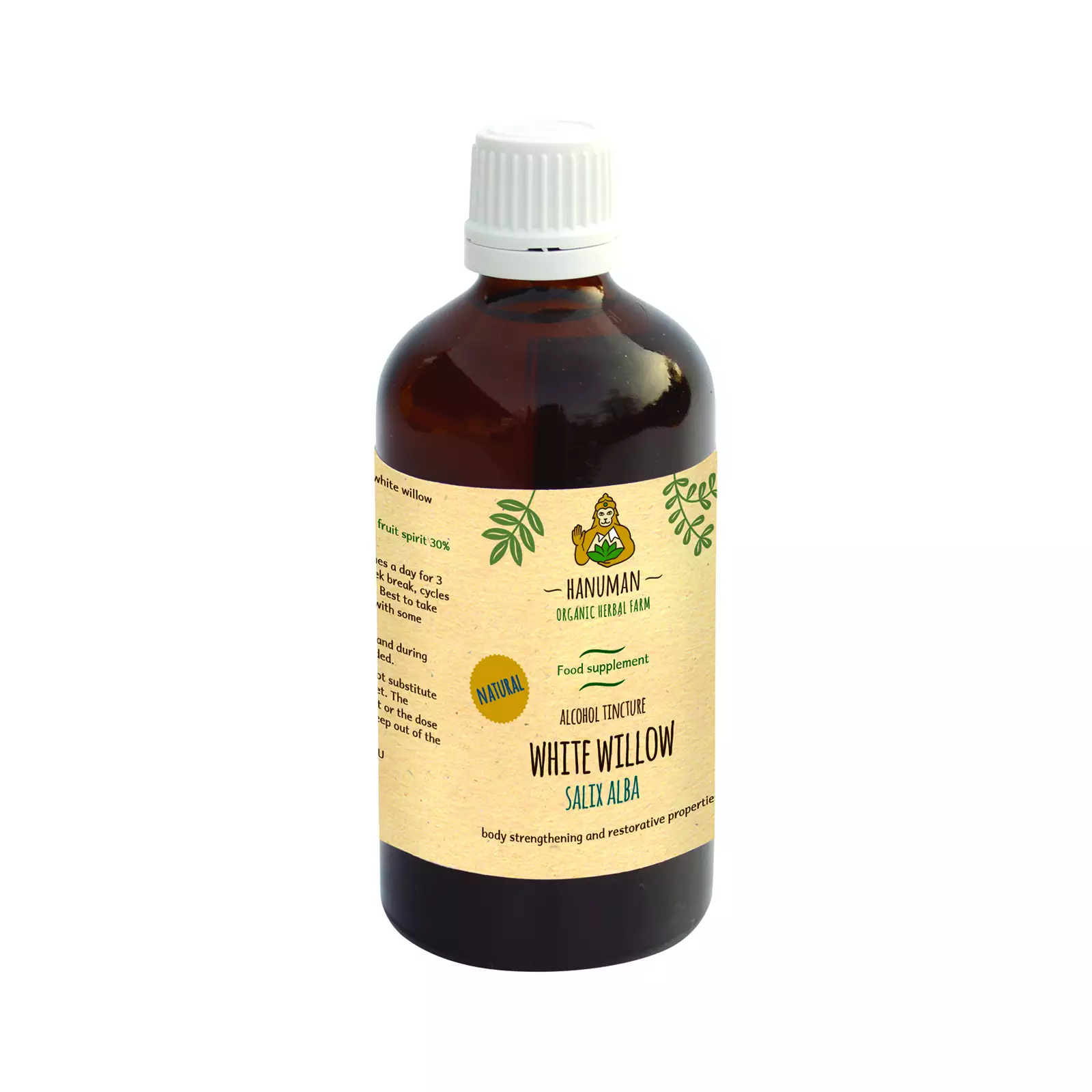
White Willow tincture (Salix alba) is a natural food supplement made from organic willow bark, prepared using the traditional cold maceration method. Traditionally used to support muscles and joints and as part of everyday natural support for the body.
Ingredients of White Willow tincture:
- white willow bark (Salix alba, cortex), Slovenian origin
- Slovenian organic fruit spirit
Description
Usage
About the herb
Combinations
FAQ
White Willow tincture (Salix alba) is a natural food supplement made from white willow bark, prepared using the traditional cold maceration method. The bark (cortex) contains a diverse range of naturally occurring plant compounds, which are gently and thoroughly extracted through slow maceration.
The alcohol content is carefully adjusted to this plant, allowing for effective extraction of both water-soluble and alcohol-soluble compounds. In this way, the tincture retains the natural balance and broad spectrum offered by the plant itself.
The white willow bark we use comes from trees growing on our organic herbal farm. We harvest it by hand and with care, always respecting the natural balance of the environment.
Ingredients of White Willow tincture:
- white willow bark (Salix alba, cortex), Slovenian origin
- Slovenian organic fruit spirit, 40% vol. alcohol
White Willow bark concentration:
- 1:5, solvent fruit spirit 40% vol. alcohol
Packaging:
- 100 ml
- dark glass bottle with dropper
Quality of White Willow tincture:
- 100% natural ingredients
- certified organic (IKC UM, SI-EKO-002)
- free from pesticides, artificial colours, preservatives and other additives
Recommended use of White Willow tincture:
- 25–30 drops
- 3 times daily
- you can start with a smaller dose and gradually increase to 25–30 drops
- recommended use for 3 weeks, followed by a break of at least 1 week
- in exceptional cases, it can be taken continuously for up to 2 months, followed by a break
How to take White Willow tincture:
- add to a glass of water or take from a spoon, followed by water
- preferably take on an empty stomach (before a meal or at least 1 hour after eating), as this may support better absorption
- there is no need to eat immediately afterwards
Tips for use:
- for one course (3 weeks), 1 bottle is usually sufficient; for longer use (up to 2 months), we recommend 2–3 bottles
- it can be combined with warm herbal infusions (e.g. thyme or linden) or other tinctures for additional support during the colder months
- always dilute the tincture with water to make it gentler on the stomach
Warnings:
- food supplements should not be used as a substitute for a balanced and varied diet and a healthy lifestyle
- do not exceed the recommended daily dose
- keep out of reach of children
- due to its alcohol content, it is not suitable for children
- not recommended for people who are sensitive to salicylates (e.g. aspirin)
- not suitable for use alongside anticoagulant medicines or other non-steroidal anti-inflammatory drugs without consulting a qualified healthcare professional
- not suitable in cases of gastric or duodenal ulcers
- not recommended during pregnancy or breastfeeding
- due to insufficient data, use in children under 12 years of age is not recommended
- if symptoms worsen or persist, consult a doctor or pharmacist
White Willow (Salix alba)
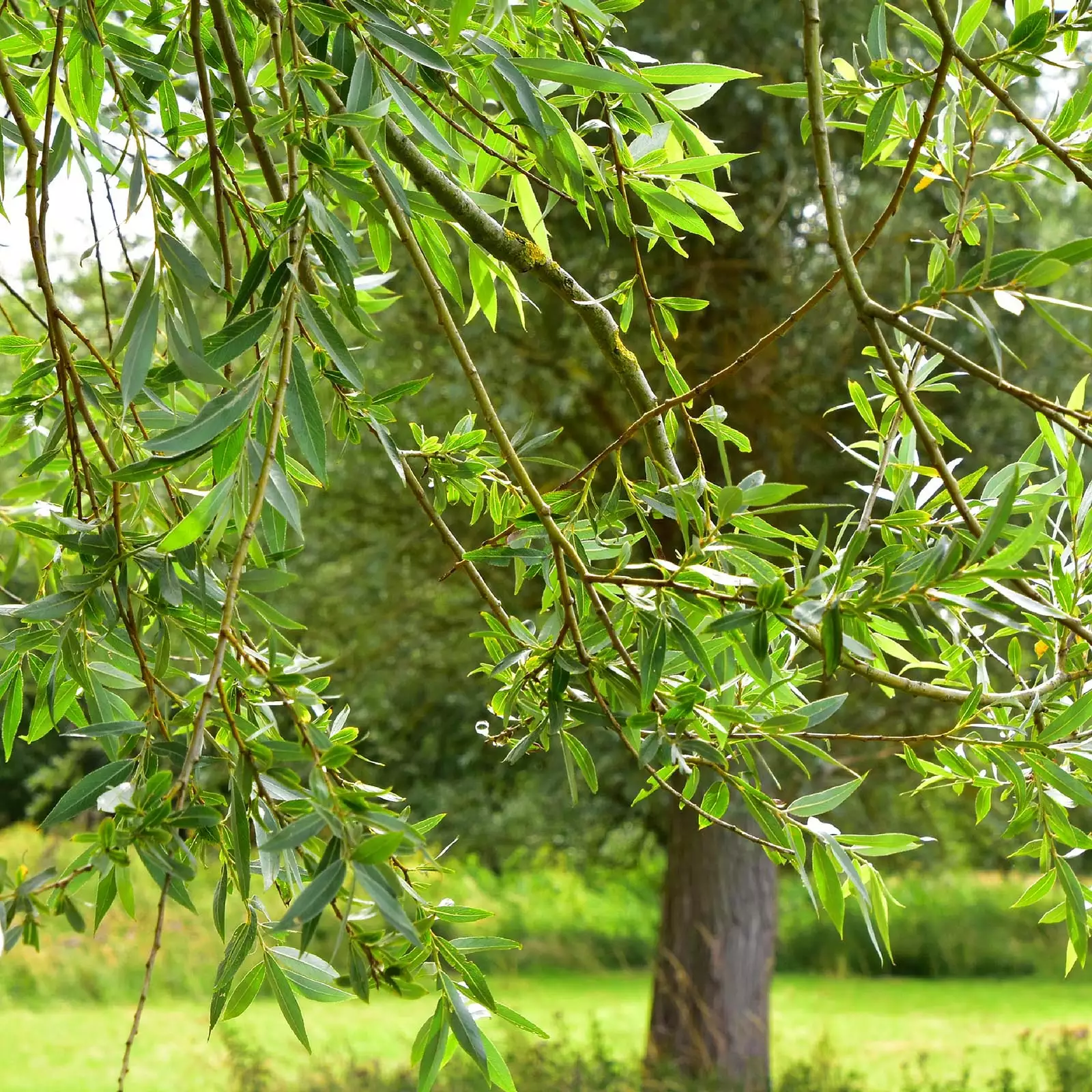
White willow is a slender, elegant tree often found along rivers and streams and in other damp habitats. Its long, flexible branches and narrow, silvery-green leaves give it a distinctive, almost gentle appearance, as though it were constantly swaying softly in the wind. In folk tradition, white willow is a tree associated with water, movement and quiet flexibility.
It belongs to the willow family (Salicaceae).
In herbalism, we mainly use the bark (cortex), most commonly from younger branches. The bark naturally contains the plant compounds for which white willow has long been valued in traditional herbal use.
White willow holds a special place in the European herbal tradition. It grows where moisture is abundant and has therefore long been associated with flow, flexibility and a sense of relief. Interestingly, willow is also one of the plants behind the story of the later development of salicylates. The whole plant, however, is not the same as an isolated compound – within the plant, its naturally occurring substances are present together as part of a more complex and interconnected whole.
Traditionally, white willow is used during periods when we wish to support the body in maintaining comfort in the muscles and joints, as well as during times of greater physical activity or strain. It is also often associated with periods when the body benefits from a greater sense of lightness and natural herbal support.
White willow is traditionally recognised for its contribution to healthy muscles and joints and for containing naturally occurring compounds associated with supporting and restoring the body.
White Willow tincture + Spruce Resin Balm
- tincture taken internally, ointment applied externally
- traditionally, white willow and spruce resin ointment complement each other as internal and external herbal support; white willow provides support from within as part of everyday herbal care, while spruce resin ointment can be applied to selected areas for a warming and soothing sensation
White Willow tincture + Feverfew tincture
- both tinctures taken internally
- traditionally, white willow and tansy (Tanacetum vulgare) are combined during periods when more comprehensive herbal support is desired; white willow brings a gentle, supportive element, while tansy complements it with its distinctly stronger herbal character
White Willow tincture + Echinacea tincture
- both tinctures taken internally
- traditionally, white willow and echinacea (Echinacea purpurea) complement each other during periods of greater physical demands; white willow supports a sense of comfortable movement, while echinacea is traditionally used during seasonal challenges
How were salicylates developed from white willow?
The story of white willow (Salix alba) is a fascinating example of how traditional herbal knowledge gradually contributed to modern science.
In the 19th century, researchers isolated salicin from willow bark, one of the naturally occurring compounds found in the plant. Salicin is metabolised in the body into salicylic acid, which encouraged further research into more stable and practical forms of salicylate compounds.
An important step came in 1897, when chemist Felix Hoffmann at Bayer prepared acetylsalicylic acid, later widely known as aspirin. This compound subsequently became one of the most widely used medicines of its kind.
What is the difference between aspirin and White Willow tincture?
The main difference is that we are comparing a precisely defined pharmaceutical substance with a whole-plant extract.
Aspirin (acetylsalicylic acid) is a single, precisely defined active substance with a specific pharmacological action.
White Willow tincture (Salix alba), on the other hand, is a whole extract of willow bark. Salicin is present alongside other naturally occurring plant compounds, including flavonoids and tannins. The composition and concentration of these compounds can naturally vary depending on the plant material and preparation.
For this reason, White Willow tincture should not be regarded as a direct natural equivalent or substitute for aspirin.
Does white willow contain the same amount of salicin as aspirin?
No. The amounts cannot be directly compared because they are different substances and preparations.
Aspirin contains a precisely measured amount of acetylsalicylic acid. White willow bark, on the other hand, naturally contains salicin and related salicylate compounds, and their concentration can vary considerably depending on the species, growing conditions and plant material.
In a dose of tincture, such as 25–30 drops, the amount of salicin also depends on the concentration of the original bark and the extraction method and cannot be determined precisely unless the finished tincture has been laboratory tested and standardised.
In addition, salicin undergoes metabolism in the body before being converted into salicylic acid. White Willow tincture also contains a broader spectrum of naturally occurring plant compounds, while aspirin contains a precisely defined pharmaceutical active substance.
Can white willow irritate the stomach?
White willow (Salix alba) may also cause stomach discomfort in some people and should therefore be used with care.
Its bark naturally contains salicin and related compounds. Sensitive individuals may experience digestive discomfort, particularly with prolonged use or higher amounts.
Extra caution is advised for people with a sensitive stomach, gastric or duodenal ulcers, salicylate sensitivity, or those taking certain medicines.
We recommend taking the tincture diluted in water and paying attention to how your body responds.