

Echinacea Tincture 100 ml – Organic
24,00 €
(incl. VAT)
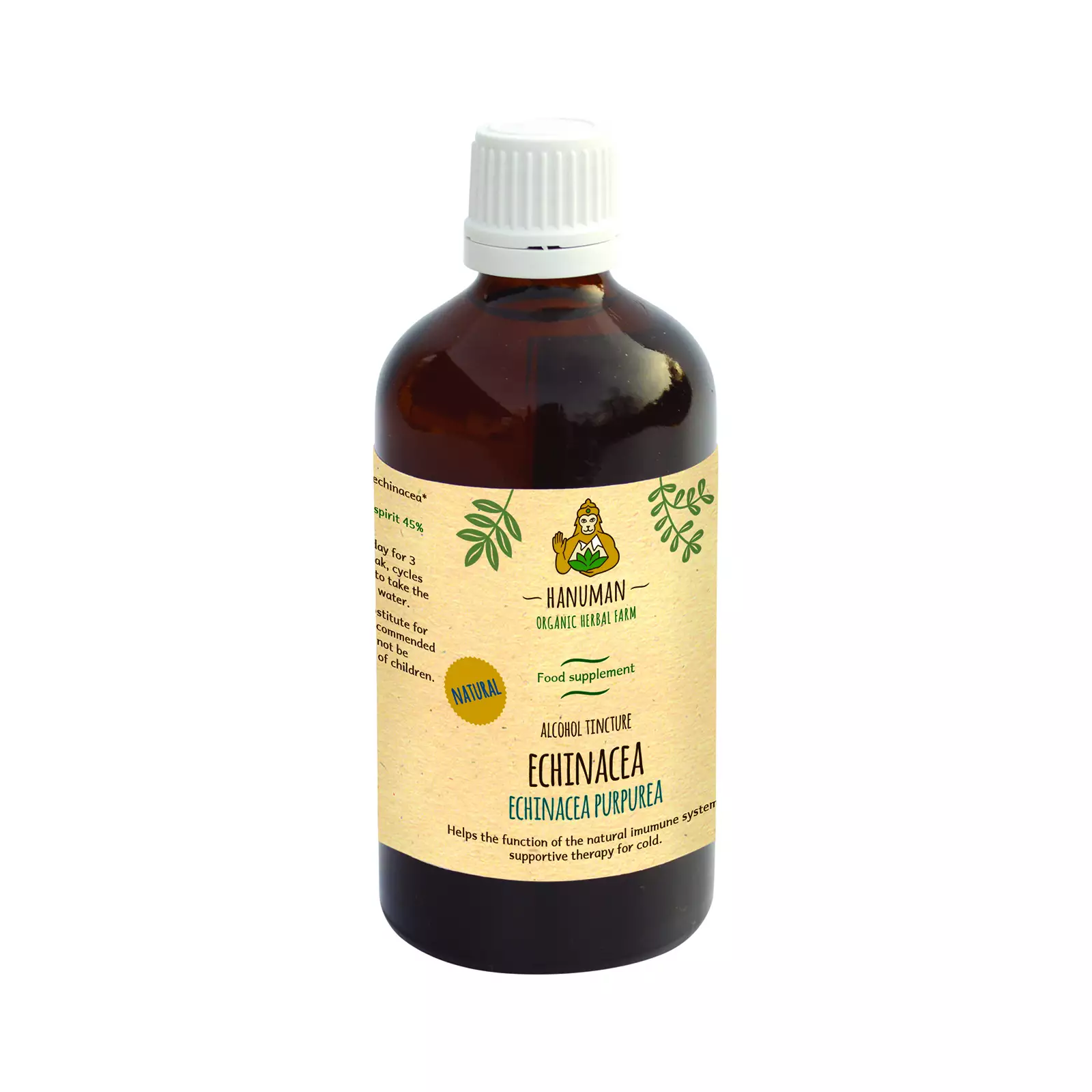
Echinacea tincture (Echinacea purpurea) is a natural food supplement made from fresh echinacea, prepared using the traditional cold maceration method. It is traditionally used to support the immune system, throat and pharynx.
Ingredients of Echinacea tincture:
- Fresh echinacea herb and root (Echinacea purpurea, herba et radix)
- Organic Slovenian fruit brandy, 45% alcohol by volume
Description
Usage
About the herb
Combinations
FAQ
Echinacea tincture is a concentrated herbal preparation made from fresh echinacea herb (Echinacea purpurea, herba), using the traditional cold maceration method. This gentle process helps preserve a broad spectrum of naturally occurring active compounds that the plant develops during its growth.
We carefully select the alcohol concentration to suit the properties of the fresh plant. This allows for effective extraction of various compounds, resulting in a balanced and stable herbal extract.
We grow our echinacea organically in Slovenia, where the plants thrive in harmony with natural rhythms. Each plant is carefully harvested by hand at the optimal time, when it is at its peak vitality and rich in its characteristic compounds.
Ingredients of Echinacea tincture:
- Fresh echinacea herb and root (Echinacea purpurea, herba et radix)
- Organic Slovenian fruit brandy, 45% alcohol by volume
Echinacea tincture concentration:
- Extraction ratio 1:3
- 45% alcohol by volume
Packaging:
- 100 ml
- Dark glass bottle with dropper
Echinacea tincture quality:
- 100% natural ingredients
- Certified organic (IKC UM, SI-EKO-002)
- Free from pesticides, artificial colours, preservatives and GMOs
Recommended use of Echinacea tincture:
- At the first signs of a cold, you may take it more frequently – up to 5 times daily for a maximum of 1–2 days
- Then continue with 25–30 drops up to 3 times daily
- You may start with a lower dose and gradually increase it
- The recommended duration of use is usually 3 weeks. In exceptional cases, it may be taken continuously for up to 2 months, followed by a mandatory break
How to take Echinacea tincture:
- Add the drops to a glass of water or take them directly from a spoon
- Preferably take on an empty stomach (before meals or at least 1 hour after eating) for better absorption. There is no need to eat immediately afterwards
Tips for using Echinacea tincture:
- Echinacea is traditionally used for short, targeted periods rather than as a long-term daily supplement
- One 100 ml bottle lasts approximately 3 weeks with regular use
- An alcohol-free Echinacea extract is also available
Warnings:
- Food supplements should not be used as a substitute for a varied and balanced diet
- Do not exceed the recommended daily dose
- Keep out of reach of children
- Not suitable for children due to its alcohol content
- Not recommended for individuals with a known allergy to plants of the Asteraceae family
- Consult a healthcare professional before use during pregnancy or breastfeeding
- If you have an autoimmune condition or take medication that affects the immune system, consult a healthcare professional before use
Echinacea (Echinacea purpurea)
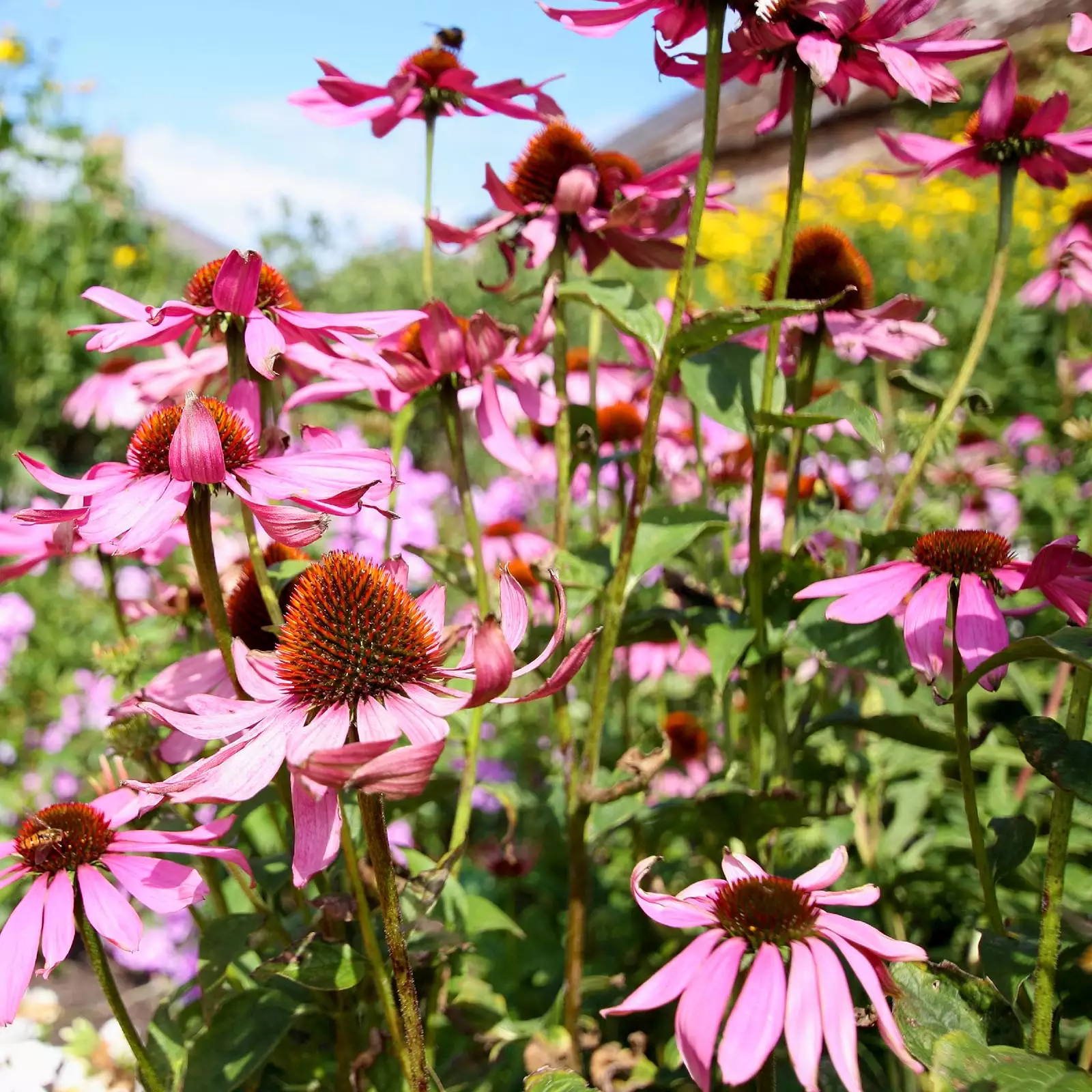
Echinacea is a perennial plant with distinctive pink-purple flowers and a striking, upright appearance. Native to North America, it is now also well established in European herbalism, where it is particularly valued during seasonal challenges and at times when we wish to offer the body additional support.
It belongs to the daisy family (Asteraceae).
In herbalism, we primarily use the fresh aerial parts (herba recens), but the root (radix) is also commonly used, as these two parts of the plant have slightly different profiles of naturally occurring compounds. The fresh herb is especially valued for tincture making, as it helps preserve a broad spectrum of plant constituents.
Echinacea is one of the most recognisable plants in modern Western herbalism. Its journey to Europe also has an interesting history. In the last century, Swiss herbalist Alfred Vogel became familiar with echinacea during a visit to North America, where it was traditionally used by Indigenous peoples. He brought the plant to Europe and began cultivating it and incorporating it into his herbal preparations, making a significant contribution to its wider recognition.
Alongside Echinacea purpurea, there is also Echinacea angustifolia, a species highly valued in the traditional herbal practices of various Indigenous North American peoples. Both species are used in herbalism today, each with its own distinctive characteristics.
Traditionally, echinacea is used to support the body’s natural immune defences, particularly at the first signs of seasonal challenges. It is also commonly included in herbal preparations for the throat and pharynx, as well as for general well-being during the colder months.
Today, echinacea is recognised as a herb best suited to short, targeted periods of use. Its traditional role is well defined, making it a popular choice when we wish to provide the body with additional herbal support at particular times.
Echinacea tincture + Thyme tincture
- Both tinctures for internal use
- Both herbs are traditionally used during periods of seasonal challenges. They complement each other in supporting the throat, pharynx and overall respiratory well-being.
Echinacea tincture + Reishi tincture
- Both tinctures for internal use
- Reishi offers a gentler, longer-term approach to well-being. Together, they combine short-term herbal support with a more sustained approach to maintaining natural balance.
Echinacea Tincture + Natural immunity Tincture
- both tinctures for internal use
- echinacea is traditionally used to support the body’s natural defences, while Natural immunity combines selected herbs and medicinal mushrooms traditionally associated with resilience and immune balance
- together, they offer complementary herbal support especially during seasonal changes or periods of increased strain on the body
Why do we use both the herb and root of echinacea?
Echinacea (Echinacea purpurea) is a plant whose different parts complement each other beautifully. The aerial parts contain a higher proportion of water-soluble compounds, while the root provides a somewhat different spectrum of constituents that are more readily extracted in alcohol.
By combining both parts of the plant in our tincture, we create a more comprehensive extract that captures a broader range of echinacea’s natural properties. This approach follows traditional herbal practices, where the plant is valued as a whole rather than for just one of its parts.
Why do we make our Echinacea tincture from fresh herbs?
In echinacea (Echinacea purpurea), some important compounds found in the aerial parts of the plant may decrease or change during drying. Polysaccharides and certain caffeic acid derivatives, such as cichoric acid, may be better preserved in the fresh plant.
Using fresh herb therefore helps the tincture retain a more complete profile of these compounds. The plant’s natural moisture also contributes to the extraction of water-soluble constituents, while alcohol extracts other, less polar compounds.
For this reason, fresh echinacea herb is often preferred when preparing a tincture with a broad and balanced spectrum of naturally occurring active compounds.
Can Echinacea be used by people with autoimmune conditions?
Echinacea (Echinacea purpurea) contains various bioactive compounds, including polysaccharides, alkylamides and caffeic acid derivatives, which may influence immune system activity. For this reason, additional caution is recommended for people with autoimmune conditions.
Research findings are not conclusive. Studies suggest that echinacea may have complex immunomodulatory effects, but its long-term effects in people with autoimmune conditions are not sufficiently understood.
Therefore, people with autoimmune conditions should generally avoid using echinacea without first consulting a doctor or qualified healthcare professional. Particular caution is advised with prolonged use or when taking medication that affects the immune system.