

Thyme Tincture 100 ml – Organic
24,00 €
(incl. VAT)
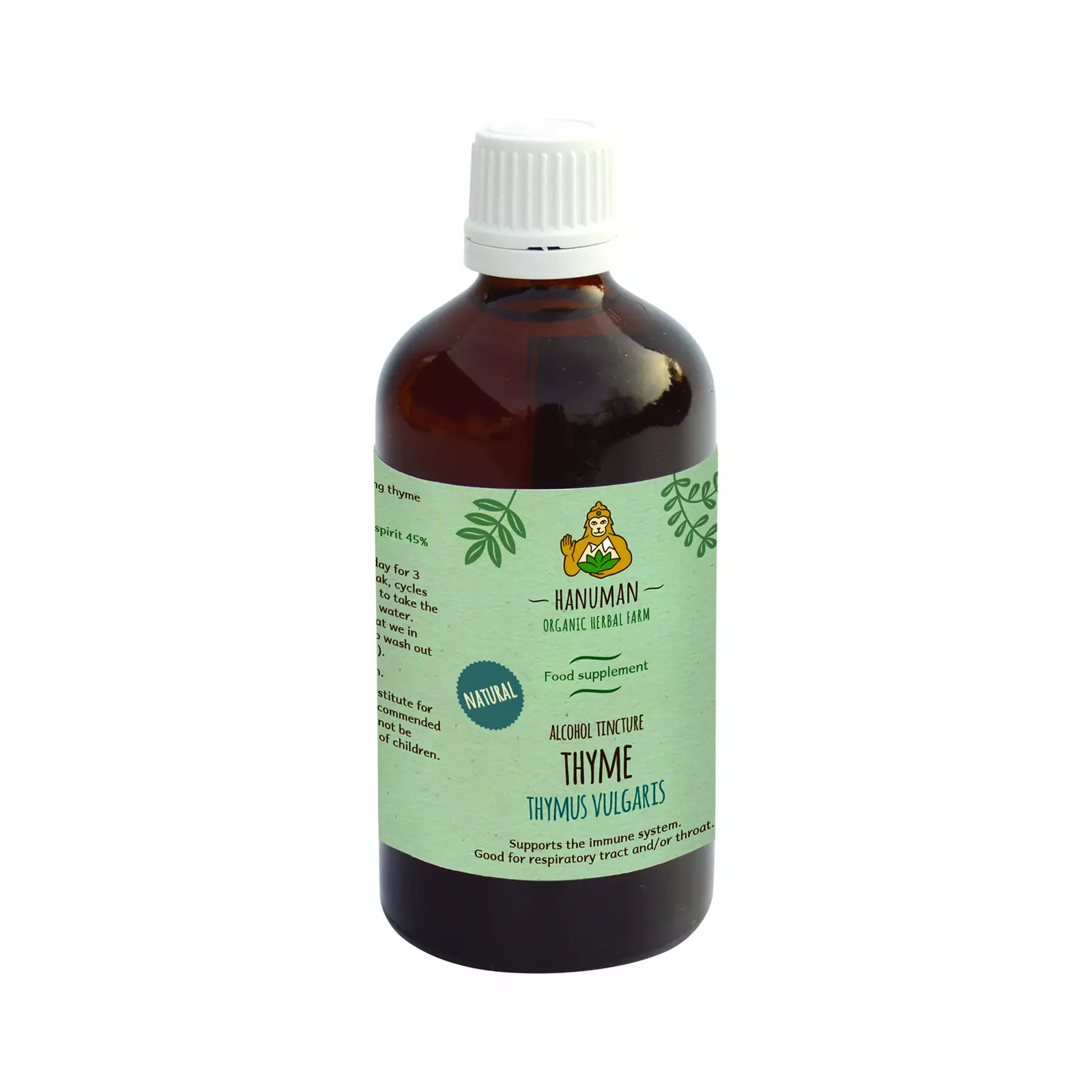
Thyme Tincture (Thymus vulgaris) is a natural food supplement made from organically grown thyme using the traditional cold maceration method. Traditionally used to support the respiratory system, throat and natural defences, as well as to support comfortable digestion.
Ingredients of the Thyme Tincture:
- thyme herb (Thymus vulgaris, herba)
- fruit spirit (organic, Slovenian origin)
Description
Usage
About the herb
Combinations
FAQ
Thyme Tincture (Thymus vulgaris) is a natural herbal preparation made from fresh or carefully dried thyme herb (herba), prepared using the traditional cold maceration method. This method helps preserve a broad spectrum of naturally occurring plant compounds – from essential oils to bitter compounds and flavonoids – which together create the herb’s rich and characteristic profile.
The alcohol content is carefully adjusted for thyme, as approximately 40% vol. alcohol allows effective extraction of both water-soluble and alcohol-soluble compounds. Thyme essential oil, particularly thymol and carvacrol, is more readily extracted in the presence of alcohol, while the water in the mixture supports the extraction of other plant constituents. The result is a balanced extract that captures the full character of the plant.
We grow the thyme for our tincture organically in Slovenia, with great respect for the soil and the rhythms of nature. The plants are harvested by hand at just the right time, when they are at their most aromatic, and gently processed to preserve their natural richness.
Ingredients of the Thyme Tincture:
- thyme herb (Thymus vulgaris, herba)
- fruit spirit (organic, Slovenian origin, 40% vol. alcohol)
Concentration of Thyme:
- extraction ratio 1:7, 40% vol. alcohol
Packaging:
- 100 ml
- dark glass bottle with dropper
Quality of the Thyme Tincture:
- 100% natural ingredients
- certified organic (IKC UM, SI-EKO-002)
- free from pesticides, artificial colours and other ad
Recommended use of the Thyme Tincture:
- 25–30 drops
- up to 3 times daily
- you can start with a smaller amount and gradually increase to 25–30 drops
- recommended for 3 weeks, followed by a break of at least 1 week
- during more intensive periods, the tincture can be used continuously for up to 2 months, followed by a break
How to take the Thyme Tincture:
- add to a glass of water or take from a spoon
- preferably take on an empty stomach (before a meal or at least 1 hour after eating), as this allows for better absorption; there is no need to eat immediately afterwards
For throat support, the tincture can also be used as a gargle:
- dilute one teaspoon of tincture with three teaspoons of water
- gargle slowly, particularly in the evening or several times a day as needed
Tips for use:
- thyme is an aromatic herb naturally rich in essential oils, so even small amounts of the tincture have a distinctive warming and aromatic character in the throat and chest area
- 1 bottle (100 ml) lasts approximately 3 weeks with regular use
- during more demanding periods, the tincture can be combined with plenty of fluids and warm drinks
- for a sensitive throat, gargling is a simple way to bring the herbal preparation directly into contact with the throat
Warnings:
- food supplements should not be used as a substitute for a varied and balanced diet and a healthy lifestyle
- do not exceed the recommended daily dose
- keep out of reach of children
- not suitable for children due to its alcohol content
- not recommended during pregnancy
- if you have a thyroid condition, consult your doctor or pharmacist before use
- not recommended if you have a known sensitivity to plants from the mint family (Lamiaceae)
- if you take medication or have a medical condition, consult your doctor or pharmacist before use</l
Thyme (Thymus vulgaris)
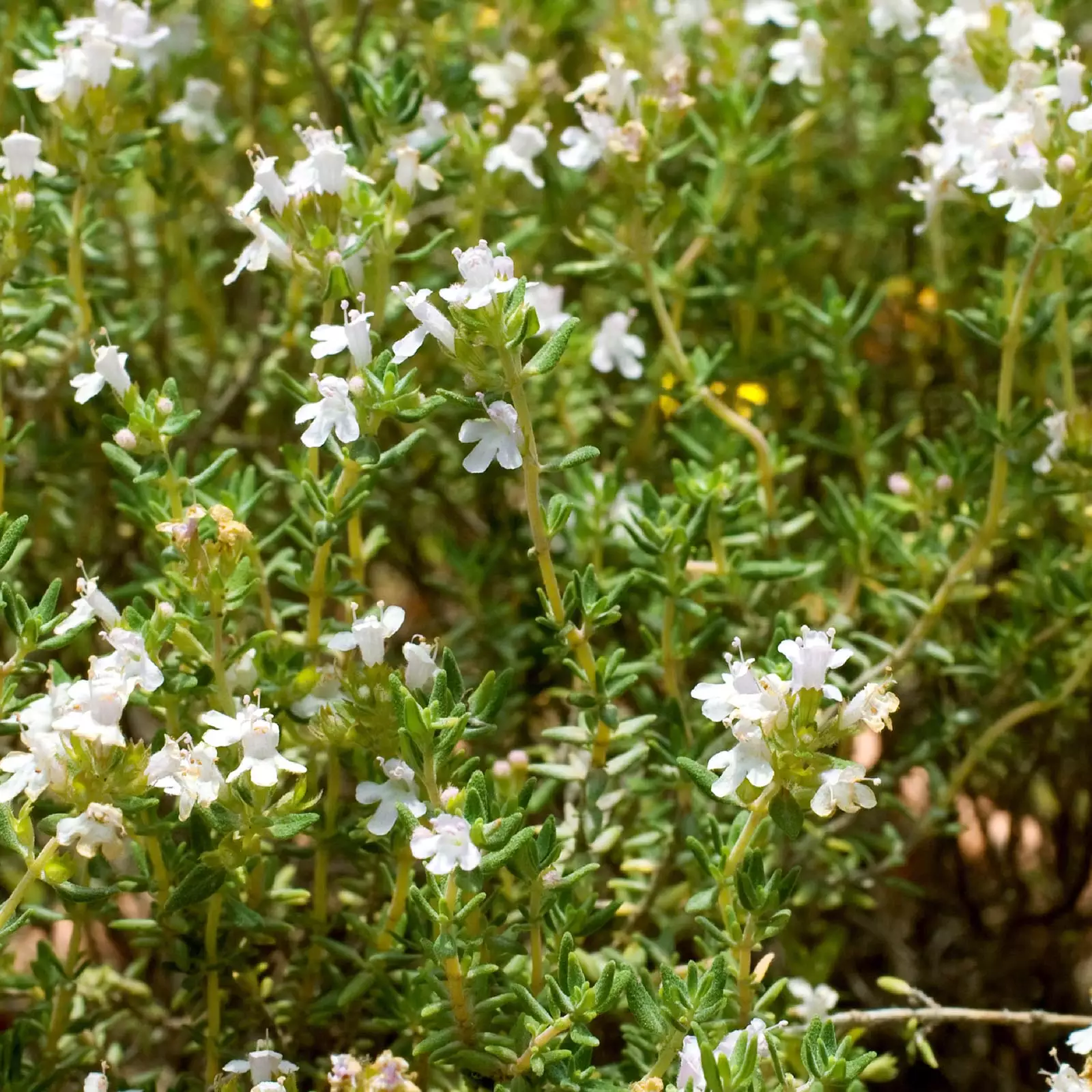
Thyme is a low-growing, highly aromatic subshrub whose warmth and distinctive fragrance immediately evoke the sun. Its tiny leaves and delicate pinkish-purple flowers may be small, but they are full of character, which is why thyme has long been valued both in traditional herbalism and in the kitchen. Even the lightest touch releases its characteristic clean, penetrating aroma, often associated with clarity, warmth and freshness.
Thyme belongs to the mint family (Lamiaceae), together with sage, lemon balm, rosemary, mint and oregano. Plants from this family are often recognised by their distinctive fragrance, abundance of essential oils and close association with sunny, dry habitats.
In herbalism, we primarily use thyme herb (herba), meaning the aerial parts of the plant – the leaves, softer stems and flowering tops. These parts are particularly rich in aromatic compounds and are traditionally used to prepare tinctures, herbal infusions, syrups, baths and other herbal preparations.
Thyme has been surrounded by stories and traditions for centuries. In European tradition, it was regarded as a herb of courage, clarity and protection. In some places, thyme was kept in the home as a fragrant herb, while elsewhere it was placed in small herbal pillows traditionally associated with peaceful sleep and a sense of comfort. During the Middle Ages, ladies are said to have given knights embroidered images of thyme as a symbol of courage. The name Thymus itself is often linked to ancient Greek words associated with fragrance, fumigation or spirit – something aromatic that rises into the air and fills the surrounding space.
Traditionally, thyme is associated with times when warmth, freshness and herbal support for the throat, chest and respiratory system are desired. It is particularly valued during the colder months and whenever the warming, aromatic character of herbs feels welcome. In traditional herbalism, thyme also has a long history of use in connection with digestion and as part of everyday routines for maintaining inner balance. Because of its strong aromatic character, it is often experienced as an invigorating herb that brings a sense of freshness and clarity to the breath.
Thyme is also traditionally associated with the throat, pharynx and vocal cords, the respiratory system, digestion, natural defences and antioxidant protection. This makes thyme a valued companion in both traditional and modern herbalism – unassuming, yet unmistakable. Its character is not harsh, but distinctly warm and sunny, with an aroma that can be recognised almost instantly.
Thyme Tincture + Echinacea Tincture
- both tinctures for internal use
- traditionally, thyme and echinacea complement each other well during periods when the respiratory system needs a little extra support; thyme brings its characteristic warmth and aromatic freshness to the throat and chest, while echinacea is traditionally used to support the body’s natural defences
Thyme Tincture + Propolis with Thyme & Sage
- thyme tincture for internal use; propolis can be used locally in the mouth and throat or taken internally
- a combination that brings together aromatic herbs and the traditional qualities of propolis; thyme provides warming herbal support from within, while Propolis with Thyme & Sage can be applied directly in the mouth or throat for more targeted herbal care
Does thyme affect the thyroid?
Thyme is an aromatic herb naturally rich in essential oils, particularly thymol and carvacrol, which give the plant its characteristic warm aroma and flavour.
In traditional herbal use, thyme is not generally regarded as a herb that acts directly on the thyroid. There is also limited evidence that the amounts of thyme normally used in herbal preparations have a significant effect on thyroid function in humans.
However, if you have a diagnosed thyroid condition or take thyroid medication, it is sensible to be cautious with concentrated herbal preparations. Start with a lower amount, pay attention to how you feel and avoid prolonged continuous use without appropriate professional advice.
If you have a thyroid condition or take medication for your thyroid, consult your doctor or pharmacist before using thyme tincture regularly.
What is the difference between thyme and wild thyme?
Thyme (Thymus vulgaris) and wild thyme (Thymus serpyllum) may appear very similar at first glance – both are low-growing, fragrant plants from the mint family, and both carry the warmth and aroma of sunny habitats. Yet their character is somewhat different.
Common thyme has a stronger, more concentrated aromatic character. Its fragrance is more intense and its flavour more penetrating. Traditionally, it is associated with more direct herbal support for the respiratory system, throat and chest, particularly when a stronger aromatic herb is desired. It is often experienced as warming, refreshing and clarifying.
Wild thyme has a gentler, softer character. It grows close to the ground, often forming fragrant carpets across dry meadows and sunny slopes. In traditional herbalism, it is generally regarded as milder and is often associated with gentle, soothing herbal support. Its character is less intense than that of common thyme, making it a lovely choice when a softer aromatic herb is preferred.