
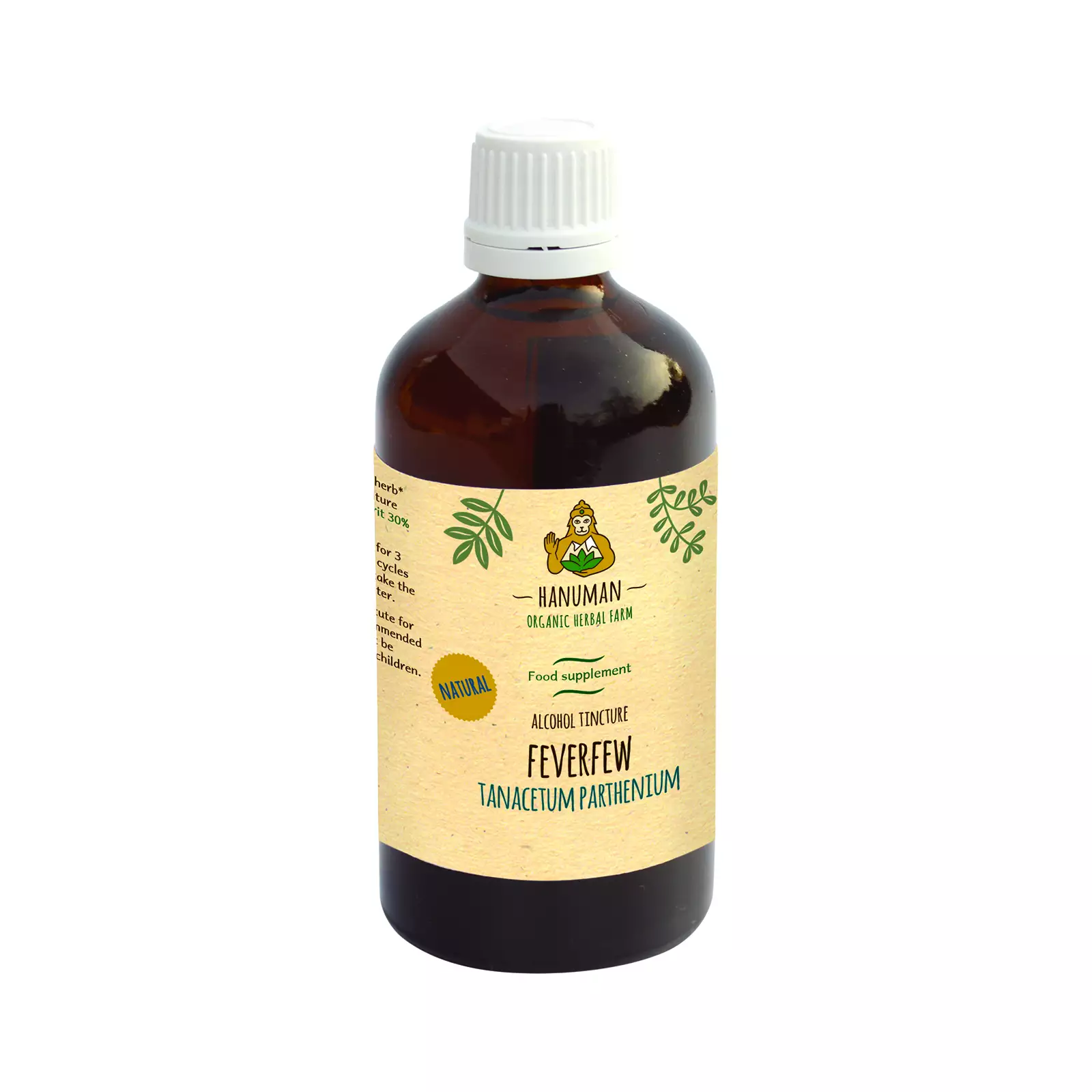

Feverfew Tincture 100 ml – Organic
24,00 €
(incl. VAT)
Feverfew Tincture (Tanacetum parthenium) is an organic food supplement made from dried flowering feverfew herb grown on our herbal farm, using the traditional cold maceration method. In herbalism, feverfew has long been valued during periods of inner tension and for supporting overall balance.
Feverfew Tincture Ingredients:
- dried flowering feverfew herb (Tanacetum parthenium, herba cum flore)
- fruit brandy
Description
Usage
About the herb
Combinations
FAQ
Feverfew Tincture (Tanacetum parthenium) is a high-quality food supplement made from dried flowering feverfew herb (herba cum flore). It is prepared using the traditional cold maceration method, which allows for the gradual extraction of a broad spectrum of naturally occurring plant compounds.
The alcohol content is carefully adjusted to 40%, as this hydroalcoholic solution enables the extraction of both water-soluble and less water-soluble plant compounds. This produces a balanced extract that combines a diverse range of plant constituents with good stability and shelf life.
Our feverfew is organically grown on our herbal farm in Slovenia. The plants are hand-picked at the optimal flowering stage, carefully dried and processed in small batches. This allows us to maintain high quality standards while preserving the authentic character of our herbal preparations.
Feverfew Tincture Ingredients:
- dried flowering feverfew herb (Tanacetum parthenium, herba cum flore), Slovenian origin, organic
- fruit brandy, 40% alcohol by volume, Slovenian origin, organic
Feverfew Concentration:
- extraction ratio 1:8
- 40% alcohol by volume
Packaging:
- 100 ml
- dark glass bottle with dropper
Feverfew Tincture Quality:
- 100% natural ingredients
- certified organic (IKC UM, SI-EKO-002)
- free from pesticides and artificial colourings
Proposed Use of Feverfew Tincture:
- 10 drops twice daily
- follow the directions on the product label
- the duration of use should be adjusted according to individual needs and professional advice
How to Take Feverfew Tincture:
- add the drops to a glass of water or take them on a spoon, followed by water
- if you have a sensitive stomach, you can take the tincture after a meal
Tips for Use:
- pay attention to your body’s response while using the tincture
- consistent use at approximately the same time each day is recommended
- discontinue use if you experience any adverse effects
Precautions When Taking Feverfew Tincture:
- food supplements should not be used as a substitute for a varied and balanced diet and a healthy lifestyle
- do not exceed the recommended daily dose
- keep out of reach of children
- not suitable for children and adolescents under 18 years of age
- use is not recommended during pregnancy or breastfeeding
- do not use if you are allergic to plants in the daisy family (Asteraceae)
- consult your doctor before use if you are taking anticoagulant or antiplatelet medication
- discontinue use at least 2 weeks before scheduled surgery and inform your doctor
- may cause digestive discomfort in sensitive individuals
- if you experience allergic reactions or other adverse effects, discontinue use and consult a healthcare professional
Feverfew (Tanacetum parthenium)
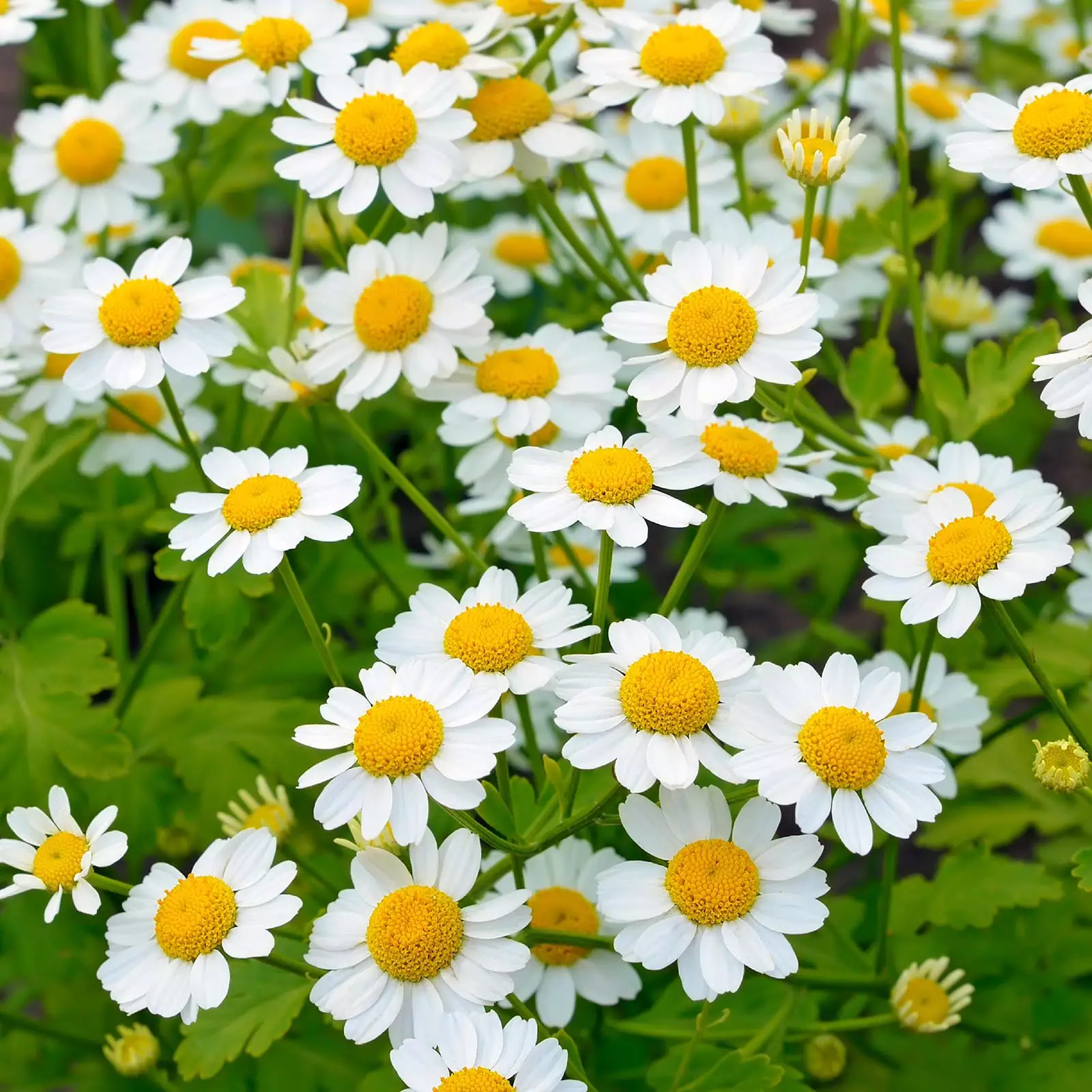
Feverfew (Tanacetum parthenium) is a delicate, aromatic plant with small white flowers and yellow centres that resemble tiny daisies. It thrives in sunny locations, along garden edges and beside paths, where it has accompanied people for centuries.
It belongs to the daisy family (Asteraceae), which also includes many other traditionally used herbs, such as chamomile, yarrow and arnica.
In herbalism, we primarily use the flowering herb (herba cum flore), harvested during the flowering season. For our tincture, the herb is carefully dried before undergoing the traditional cold maceration process.
The name Tanacetum parthenium has an interesting history. According to one etymological interpretation, Tanacetum is associated with the Greek word athanasia, meaning immortality. The name parthenium comes from the Greek word parthenos, meaning maiden or virgin. The plant also has a long history of use in traditional women’s herbalism.
Feverfew has a long history of use in European herbalism. With its aromatic leaves and delicate flowers, it is also valued as a garden plant and makes a beautiful addition to herbal gardens.
Traditionally, feverfew is best known for its use in relation to headaches, particularly migraines. It holds a special place in European herbal tradition as a plant that calls for thoughtful use and an understanding of its distinctive properties.
Feverfew reminds us that even delicate and seemingly simple plants can contain potent natural compounds, making moderation and respect for the plant essential.
Feverfew Tincture + Lemon Balm Tincture
- both tinctures taken orally
- lemon balm is traditionally used to promote calm and inner balance, while feverfew complements the herbal routine during periods of increased tension
Feverfew Tincture + Lady’s Mantle Tincture
- both tinctures taken orally
- lady’s mantle is traditionally valued as a companion throughout the menstrual cycle, while feverfew has a long history of use for menstrual discomfort
Feverfew Tincture + Yarrow Tincture
- both tinctures taken orally
- yarrow is traditionally associated with women’s menstrual health, while feverfew has a long history in European herbalism, particularly in relation to headaches and menstrual discomfort
Is Feverfew Safe to Use?
Feverfew (Tanacetum parthenium) has a long history of use in European herbalism. It is generally well tolerated by adults when used appropriately, although some individuals may experience adverse effects.
The plant contains naturally occurring compounds, including sesquiterpene lactones such as parthenolide. Sensitive individuals may experience digestive discomfort or allergic reactions.
Feverfew should not be used by people who are allergic to plants in the daisy family (Asteraceae), and its use is not recommended during pregnancy or breastfeeding. Caution is also advised when taking medication, particularly blood-thinning medicines.
Is Feverfew Suitable for Long-Term Use?
Feverfew has traditionally been used over extended periods, although the appropriate duration depends on the type of preparation and its intended use.
If you are considering long-term use, we recommend consulting a healthcare professional. Discontinue use if you experience any adverse effects.
Is Feverfew the Same Plant as Pyrethrum?
No, feverfew (Tanacetum parthenium) and pyrethrum are not the same plant. They are related species belonging to the daisy family (Asteraceae), but they differ in their composition and traditional uses.
Feverfew has a long history of use in European herbalism, particularly in relation to headaches and migraines.
Pyrethrum (Tanacetum cinerariifolium), on the other hand, contains natural compounds called pyrethrins, which are used as active ingredients in natural insecticides.