
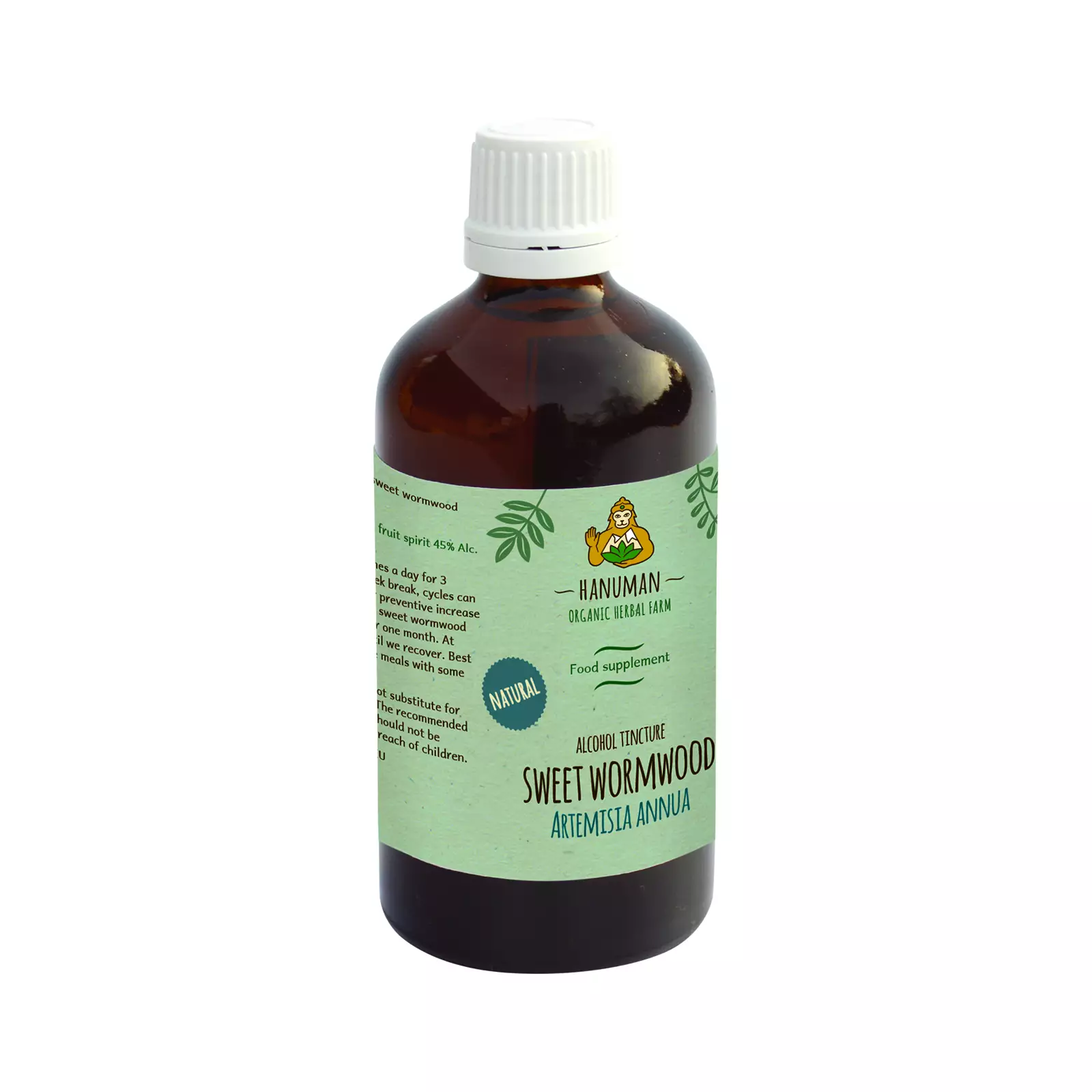

Sweet Wormwood Tincture 100 ml – Organic
24,00 €
(incl. VAT)
Sweet wormwood tincture is a concentrated herbal preparation made from Artemisia annua grown on our organic farm. It is prepared by traditionally macerating the herb in fruit brandy to capture its distinctive botanical character.
Ingredients:
- sweet wormwood herb (Artemisia annua, herba)
- organic fruit brandy (from Slovenia, 45% alc. by vol.)
Description
Usage
About the herb
Combinations
FAQ
Sweet wormwood tincture is a concentrated herbal preparation made from the above-ground parts of sweet wormwood (Artemisia annua). It is prepared by cold maceration, which helps retain a broad range of naturally occurring plant compounds in the tincture.
The alcohol strength is carefully chosen to extract different components of the plant. As a solvent, alcohol carries these compounds into the liquid preparation.
We grow sweet wormwood on our organic farm in Slovenia, following the natural rhythm of the seasons. We harvest the herb by hand, choosing the right time and treating each plant with care.
Ingredients:
- sweet wormwood herb (Artemisia annua, herba)
- organic fruit brandy (from Slovenia, 45% alc. by vol.)
Extraction ratio:
- 1:5
- 45% alc. by vol.
Packaging:
- 100 ml
- dark glass bottle with a dropper
Quality:
- 100% natural ingredients
- no pesticides or artificial colours
Recommended use of sweet wormwood tincture:
This product is registered as a cosmetic preparation and is intended for external use only.
Apply a small amount of the tincture to the desired area of skin and massage in gently. Repeat several times a day if needed.
Precautions:
- for external use only
- not suitable for children
- avoid contact with eyes and mucous membranes
- discontinue use if skin irritation or a reaction occurs
- keep out of reach of children
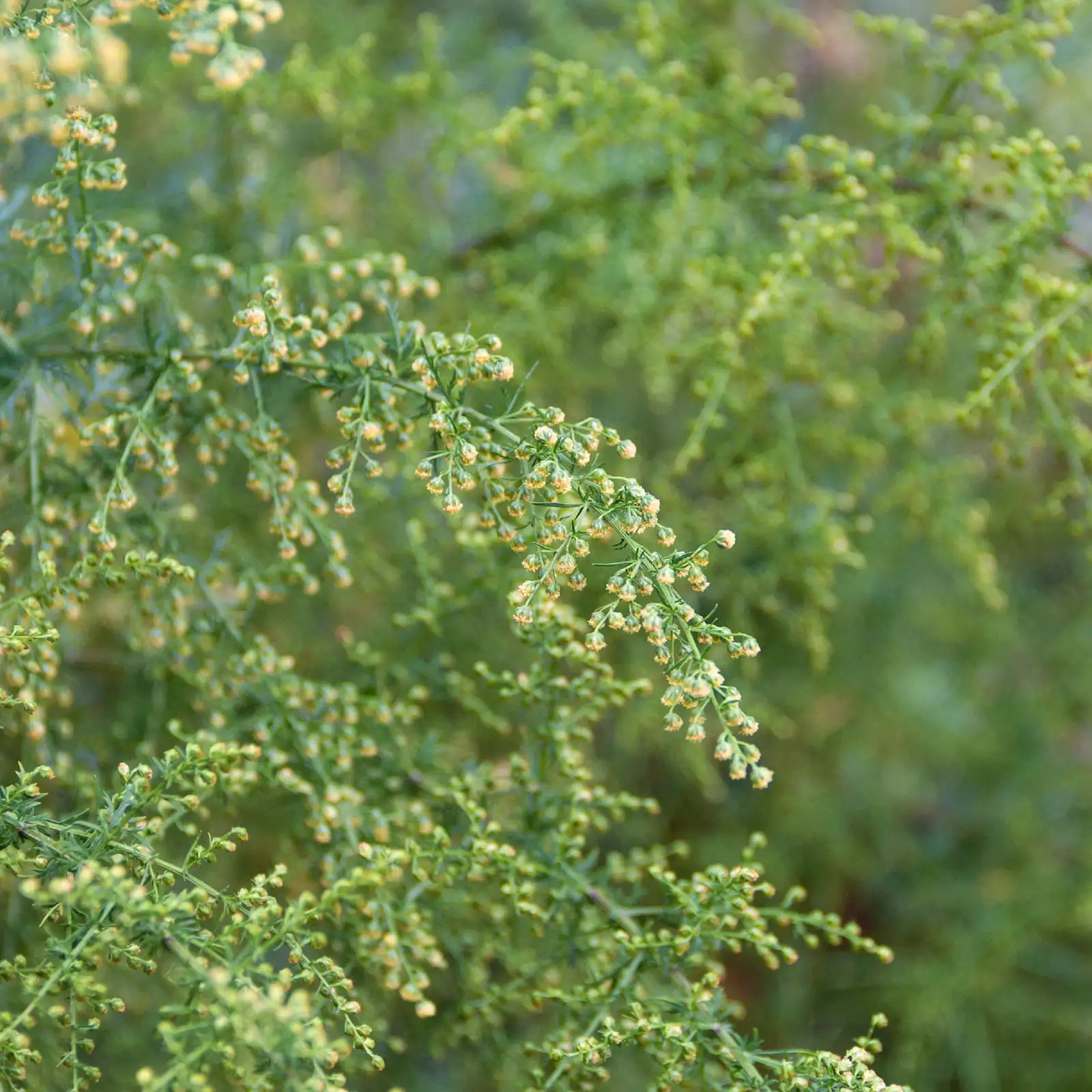
Sweet wormwood (Artemisia annua)
Sweet wormwood is an annual aromatic plant with finely divided, light green leaves and a distinctive scent. It grows quickly, producing abundant foliage in summer. Herbalists value its characteristic bitter aroma and varied plant compounds.
It belongs to the daisy family (Asteraceae). For our tincture, we use the above-ground parts of the plant (herba), harvested when the plant is well developed.
Sweet wormwood originates from Asia and is now grown in other parts of the world. Its strong aroma and place in different herbal traditions have made it a familiar plant in modern herbalism.
It continues to attract the interest of herbalists and researchers alike. We value it as a distinctive plant with a long history of traditional use and a character all its own.
Sweet wormwood tincture + Reishi tincture
- take reishi orally according to its product instructions
- reishi is traditionally included in herbal routines during demanding periods
Sweet wormwood tincture + Milk thistle tincture
- take milk thistle orally according to its product instructions
- milk thistle has a long tradition of use in herbal routines centred on the liver and digestion
Sweet wormwood tincture + Dandelion tincture
- take dandelion orally according to its product instructions
- dandelion is traditionally included in seasonal herbal routines centred on digestion
Why is Sweet Wormwood Tincture registered as a cosmetic product rather than a food supplement?
Sweet wormwood is a plant with a long tradition of herbal use, but there are no approved health claims for its use in food supplements in the European Union. For this reason, such products cannot be classified as food supplements.
In order for us to continue preparing the tincture in the traditional way and offering it as part of our range, it is registered as a cosmetic product. In this way, we remain true to the plant while also respecting the applicable guidelines.
Was a medicine for malaria developed from sweet wormwood?
Yes. Scientists isolated a compound called artemisinin from sweet wormwood (Artemisia annua), which became the basis for the development of modern antimalarial medicines.
The discovery dates back to the 1970s, when researchers recognised the potential of this plant based on traditional records. Today, artemisinin-based medicines are among the most important treatments used in the fight against malaria and are used worldwide.
It is important, however, to understand that medicines contain precisely isolated and studied compounds and are prepared in standardised forms, which differ from traditional herbal preparations.