

Self-Heal Tincture 100 ml – Organic
24,00 €
(incl. VAT)
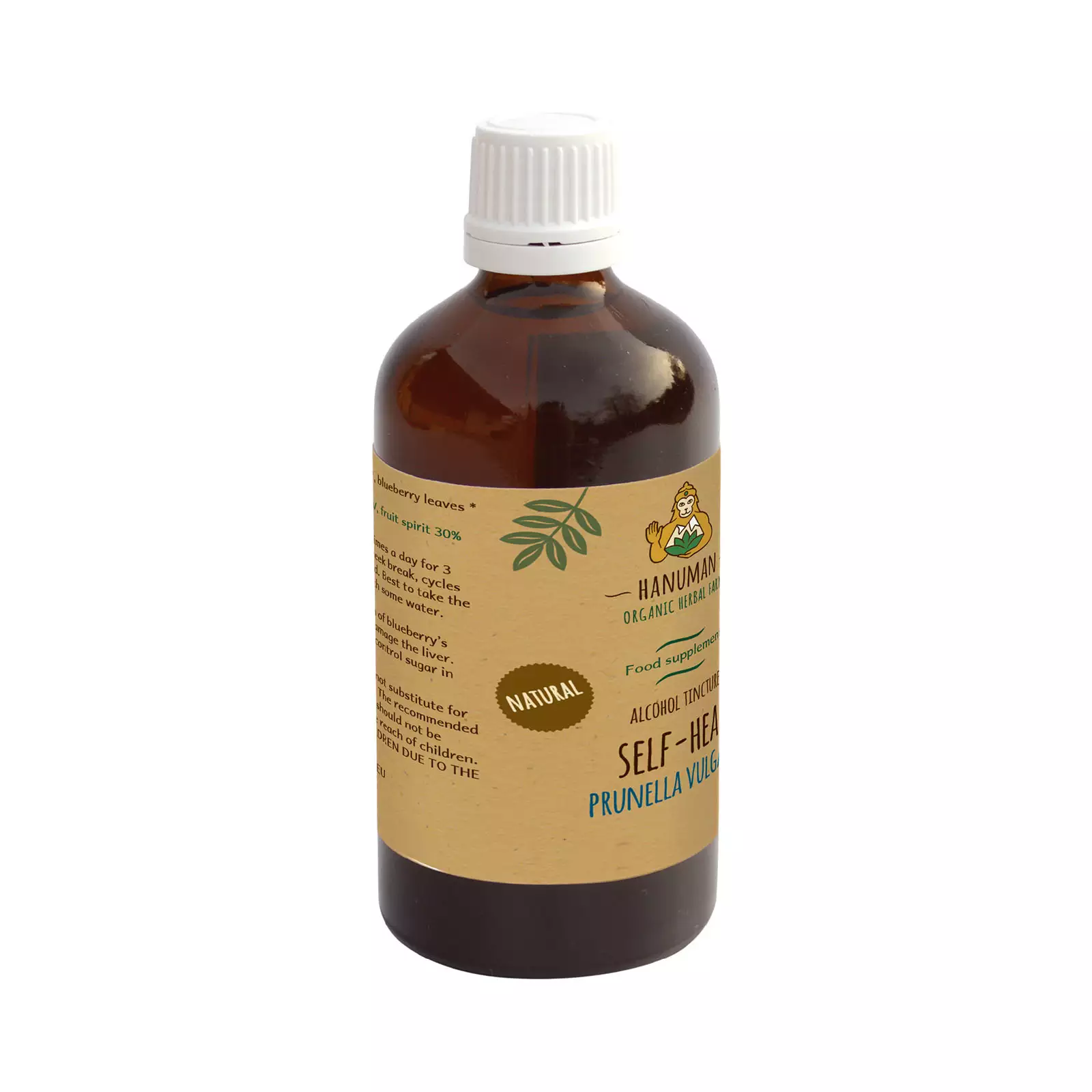
Self-Heal Tincture (Prunella vulgaris) is a natural food supplement made from organically grown self-heal herb, prepared using the traditional cold maceration method. Traditionally used to support the throat, mouth and a sense of inner balance.
Ingredients of the Self-Heal Tincture:
- self-heal herb (Prunella vulgaris, herba)
- fruit spirit (Slovenian origin, 40% vol. alcohol)
Description
Usage
About the herb
Combinations
FAQ
Self-Heal Tincture (Prunella vulgaris) is a natural herbal preparation made from self-heal herb using the traditional cold maceration method. We use the aerial parts of the plant (herba), which contain a variety of aromatic and other naturally occurring compounds, creating a broad spectrum of constituents while preserving the plant’s holistic character.
The alcohol content is carefully selected to suit the plant, allowing effective extraction of both water-soluble and alcohol-soluble compounds. This approach helps preserve a balanced profile of naturally occurring constituents and contributes to a high-quality, stable herbal preparation.
The self-heal used for our tincture comes from the Slovenian countryside, where it is ethically gathered by hand on our herbal farm. Harvesting is carried out with care for the plant and respect for natural cycles, helping preserve its vitality and authentic character.
Ingredients of the Self-Heal Tincture:
- self-heal herb (Prunella vulgaris, herba)
- fruit spirit (Slovenian origin, 40% vol. alcohol)
Concentration of Self-Heal:
- extraction ratio 1:5, 40% vol. alcohol
Packaging:
- 100 ml
- dark glass bottle with dropper
Quality of the Self-Heal Tincture:
- 100% natural ingredients
- certified organic (IKC UM, SI-EKO-002)
- free from pesticides, artificial colours and other additives</li
Recommended use of the Self-Heal Tincture:
- 20–25 drops
- up to 3 times daily
- you can start with a lower amount and gradually increase to 20 drops
- recommended for 3 weeks, followed by a break of at least 1 week
- in exceptional cases, it may be taken continuously for up to 2 months, followed by a break
How to take:
- add the tincture to a glass of water or take it from a spoon followed by some water
- preferably take on an empty stomach (before a meal or at least 1 hour after eating), as this allows for better absorption; there is no need to eat immediately afterwards
Tips for use:
- self-heal is traditionally associated with the mouth and throat, so you can hold the tincture in your mouth briefly before swallowing
- one bottle is sufficient for a 3-week course; for longer cycles, we recommend 2–3 bottles
Warnings:
- food supplements should not be used as a substitute for a varied diet and a healthy lifestyle
- do not exceed the recommended daily dose
- keep out of reach of children
- not suitable for children due to its alcohol content
- people sensitive to plants from the mint family (Lamiaceae) should use this product with caution
- during pregnancy and breastfeeding, consult an appropriate healthcare professional before use
Self-Heal (Prunella vulgaris)
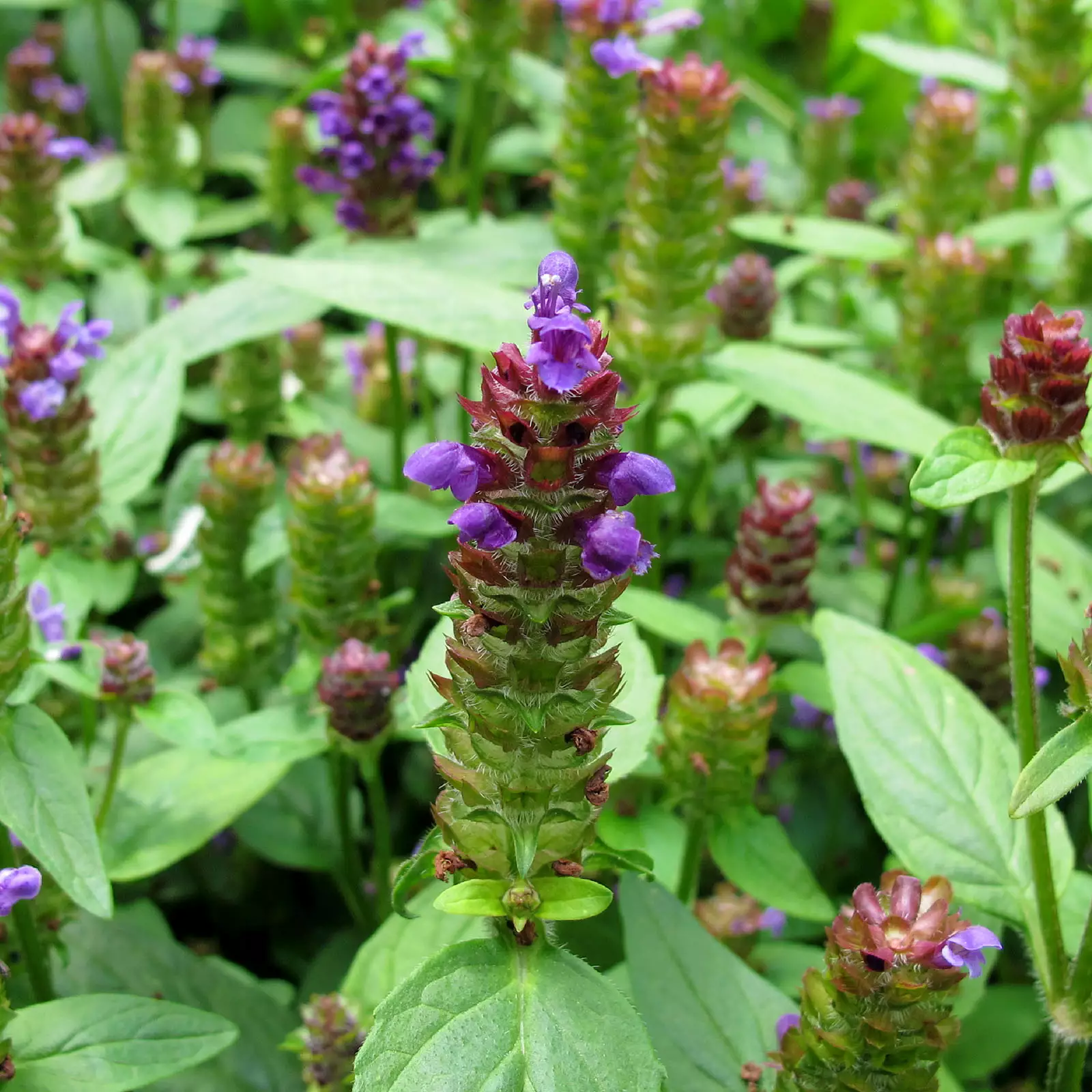
Self-heal is a small, delicate meadow plant that is easily overlooked, yet it can surprise us with its quiet resilience. Its purple flowers are gathered into distinctive compact flower heads, and the plant grows in meadows, along paths and at the edges of woodland. It has a calm, grounded character – a plant that does not demand attention, yet remains reliably present.
It belongs to the mint family (Lamiaceae), alongside familiar plants such as mint, lemon balm and thyme. This family includes many aromatic plants with distinctive scents and a long tradition of everyday use.
With self-heal, we use the aerial parts of the plant – the herb – harvested during flowering. In botanical terminology, this is written as Prunella vulgaris, herba. This part of the plant brings together the leaves, stems and flowers, preserving its complete herbal character.
Self-heal is also fascinating because of its wide distribution – it grows across much of the world and adapts readily to different environments. Its English name, “self-heal”, itself reflects its long history of traditional use. In folk herbalism, it has often been associated with the care of the mouth and throat, as well as with simple, everyday approaches to maintaining balance.
Traditionally, self-heal has been used during periods when people are looking for a greater sense of comfort and support for the throat and mouth. It is often included in everyday herbal routines as a gentle form of support, particularly during seasonal transitions or whenever the body seems to call for a calmer rhythm.
Traditional herbal use associates self-heal with supporting the mouth and gums, a soothing feeling in the throat and pharynx, general inner balance, and periods when gentle yet steady herbal support is desired.
There is also something beautiful in the idea of self-heal as a “quiet healer”. It is easy to overlook in a meadow, yet plants like this were once among the most valued – simply because they were always close at hand. Perhaps self-heal reminds us that strength is not always found in what is large or striking, but often in the simple, reliable companions of everyday life.
Self-Heal Tincture + Thyme Tincture
- both tinctures for internal use
- traditionally, self-heal and thyme complement each other well during periods when the throat feels more sensitive; self-heal brings a gentle quality, while thyme adds aromatic warmth
Self-Heal Tincture + Echinacea Tincture
- both tinctures for internal use
- a combination that brings together gentleness and responsiveness; self-heal acts as a gentle everyday companion, while echinacea is traditionally used during more demanding periods
Self-Heal Tincture + Propolis with Thyme & Sage
- tincture for internal use, propolis spray for local use in the mouth and throat
- traditionally, self-heal and propolis complement each other well during periods when the throat feels more sensitive; self-heal provides gentle herbal support from within, while propolis with thyme and sage offers convenient local care for the mouth and throat
Can I use Self-Heal Tincture for gargling?
Yes, self-heal has traditionally also been used as part of mouth and throat care. You can dilute the tincture in water (for example, 10–15 drops in a glass of water) and use it for gargling or rinsing the mouth. This method is particularly suitable during periods when you are looking for gentle, local herbal care.
Why is it called “self-heal”?
The English name “self-heal” comes from the plant’s long history of use in traditional herbalism. Self-heal was often one of the first plants people turned to for everyday needs, as it grew almost everywhere and was readily available.
The name does not mean that the plant “heals by itself”, but rather reflects the way people traditionally regarded it – as a reliable herbal companion associated with supporting the body’s natural processes. In this sense, self-heal symbolises trust in the body and its natural ability to find its way back towards balance when given appropriate support.