

Nettle Seed Tincture 100 ml – Organic
24,00 €
(incl. VAT)
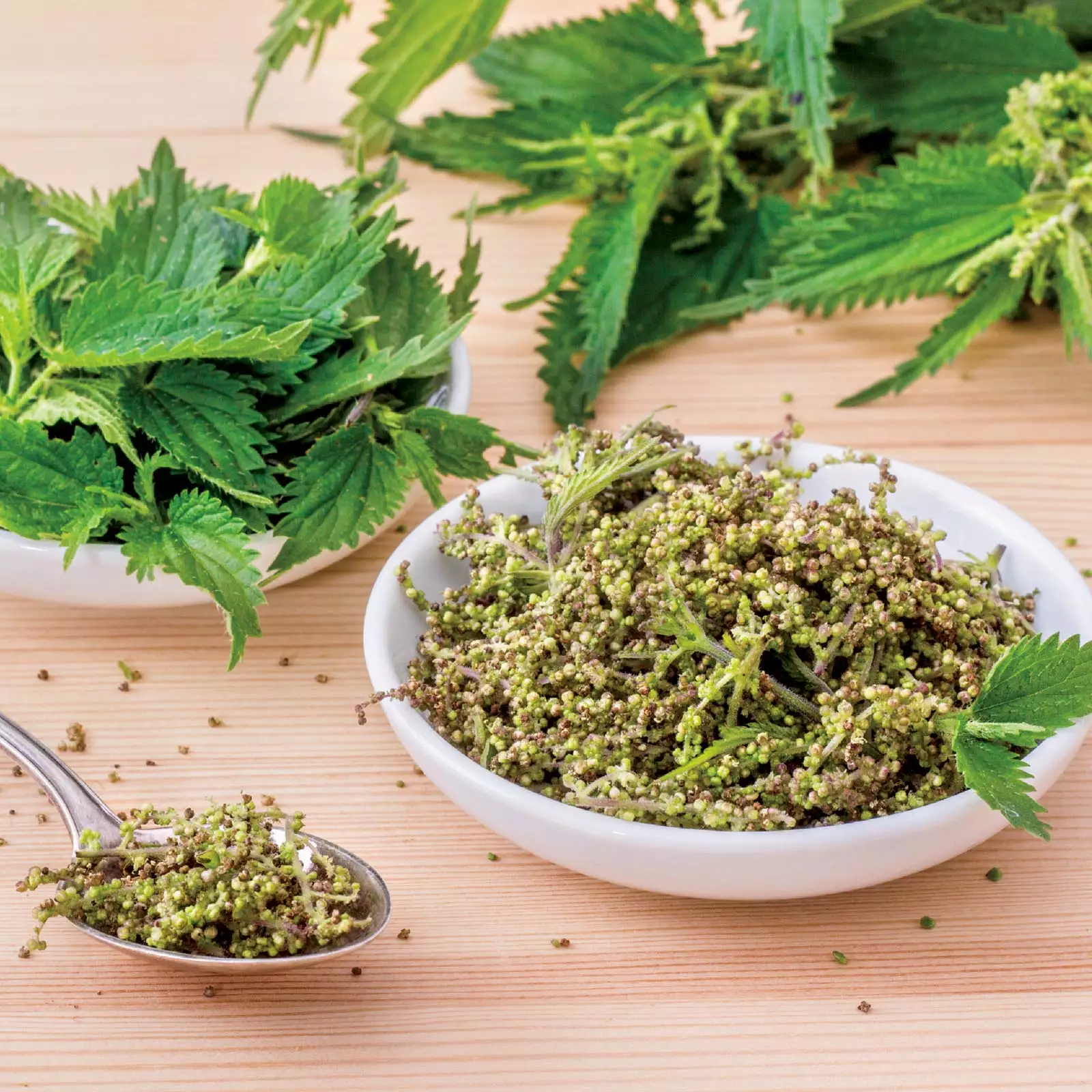
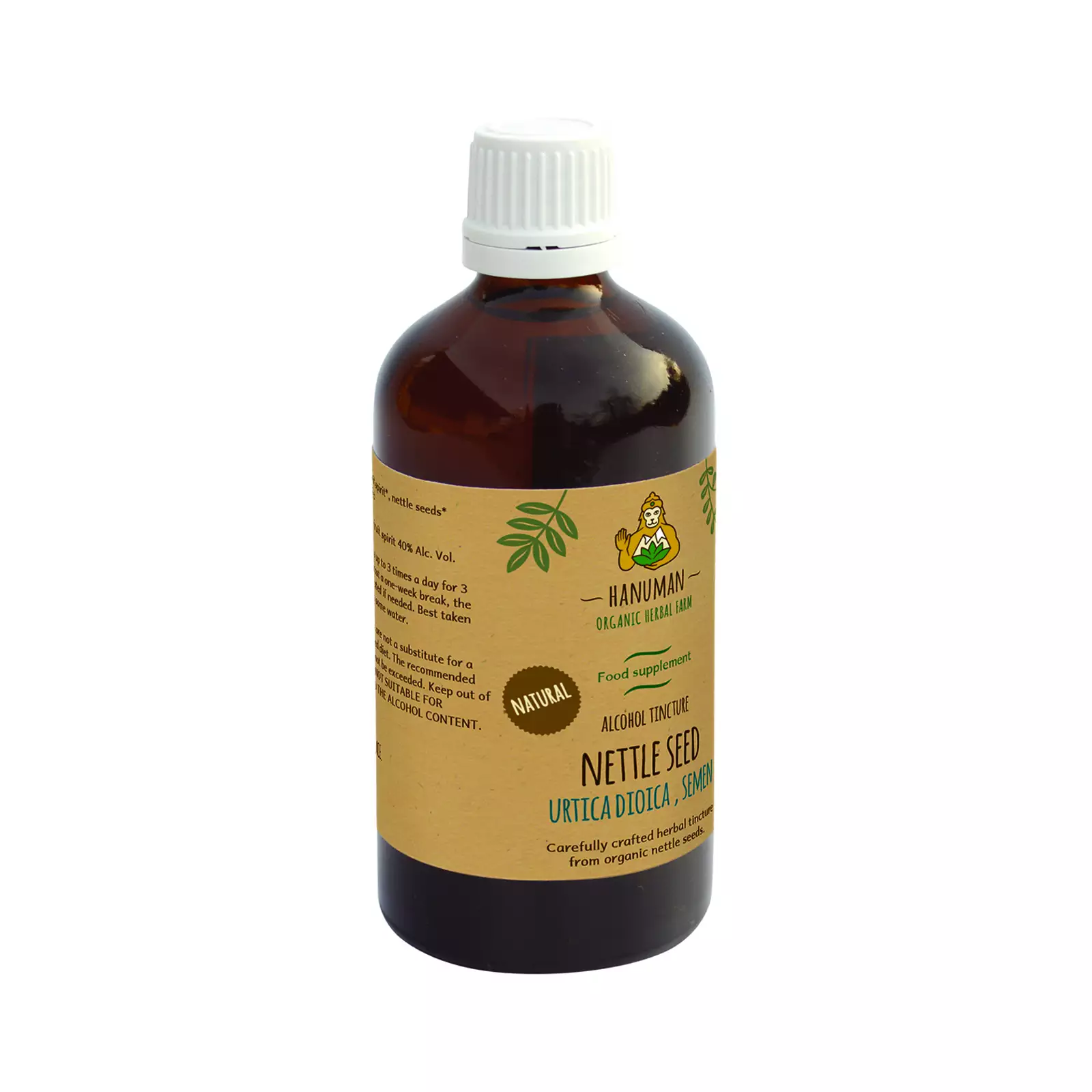
Nettle seed tincture is a concentrated herbal preparation made from Slovenian organic nettle seeds, prepared using the traditional cold maceration method. Nettle seeds have long been valued by herbalists and are considered one of the most interesting traditional uses of nettle when we want to offer the body additional support and help maintain a sense of inner balance.
Ingredients of nettle seed tincture:
- nettle seeds (Urtica dioica, semen)
- organic fruit spirit
Description
Usage
About the herb
Combinations
FAQ
Nettle Seed Tincture is a liquid herbal preparation made from nettle seeds (Urtica dioica, semen), prepared using the traditional cold maceration method. This method helps preserve a broad spectrum of naturally occurring compounds that the seeds develop as the plant completes its life cycle.
We use a carefully selected alcohol concentration to achieve a balanced extraction of different plant constituents. In this way, the tincture retains the rich and full character of nettle seeds, which have long been valued by herbalists.
We grow nettles in an organic environment or carefully gather them from unspoilt natural areas in Slovenia. The seeds are harvested by hand in late summer, when they are fully mature. They are then gently dried and processed into tincture.
Ingredients of Nettle Seed Tincture:
- nettle seeds (Urtica dioica, semen) (Slovenian origin, organic)
- organic fruit spirit (Slovenia), 40% alcohol by volume
Nettle seed concentration:
- extraction ratio 1 : 3, 40% alcohol by volume
Packaging:
- 100 ml
- dark glass bottle with dropper
Quality of Nettle Seed Tincture:
- 100% natural ingredients
- certified organic (IKC UM, SI-EKO-002)
- free from pesticides, artificial colours and other unnecessary additives
- grown and processed in Slovenia
Recommended use of nettle seed tincture:
- 20–30 drops
- 2–3 times daily
- you may start with a smaller amount and gradually increase it to 20–30 drops
- recommended for 3 weeks, followed by at least 1 week off or by switching to another tincture
- for longer periods of use, we recommend taking regular breaks
How to take nettle seed tincture:
- add to a glass of water or take on a spoon, followed by water
- preferably take before a meal or at least 1 hour after eating, as this allows the tincture to be better absorbed
- there is no need to eat immediately after taking the tincture
Tips for use:
- nettle seeds are valued by herbalists as one of the most interesting traditional ways of using nettle and, due to their gentle nature, are also suitable for longer periods of use
- for one cycle, we recommend 1 bottle; for longer use, 2–3 bottles with breaks in between
- the tincture can be included in your daily herbal routine as part of a balanced lifestyle
- many herbal enthusiasts traditionally include nettle seeds during periods when they wish to offer the body additional support and maintain a sense of vitality
Warnings:
- food supplements should not be used as a substitute for a varied and balanced diet and a healthy lifestyle
- do not exceed the recommended daily dose
- keep out of reach of children
- due to its alcohol content, this product is not suitable for children
- do not use in case of known hypersensitivity to nettle (Urtica dioica)
- during pregnancy and breastfeeding, consult a qualified professional before use
- if you are taking medication or have a medical condition, consult your doctor or pharmacist before use
Nettle (Urtica dioica)
Nettle is one of the most valued plants in European folk herbalism. It is easily recognised by its characteristic serrated leaves and stinging hairs, yet behind its modest appearance lies a plant with an exceptionally long tradition of use. For centuries, people have associated nettle with strength, resilience and vital energy.
It belongs to the nettle family (Urticaceae). Several other plants are part of this family, but stinging nettle is by far its best-known and most widespread representative.
For this tincture, we use nettle seeds (Urtica dioica, semen). They are harvested at the end of summer, when the plant completes its annual cycle and the seeds contain the richness intended for new life.
Nettle seeds hold a special place among herbalists. Although most people are more familiar with the young spring leaves, many traditional herbalists believed that one of the plant’s most precious parts could be found in its seeds. In some parts of northern and eastern Europe, nettle seeds were added to porridge, bread and other foods and were valued as a precious gift of late summer.
Interestingly, some herbalists referred to nettle seeds as the “hidden treasure of the nettle”. They believed that the plant stored its strength and vital energy in the seeds for the following year. Because a seed represents the beginning of new life, nettle has symbolised resilience, fertility and inner strength in many traditions.
In herbal tradition, nettle seeds are valued as a gentle yet precious way of using the plant. They are often included during periods when we wish to offer the body additional support and maintain a sense of vitality and inner balance.
Traditionally, nettle seeds are used as part of herbal preparations intended to support general well-being and a sense of vital energy. Because of their distinctive nature, many herbal enthusiasts also like to include them in longer periods of use.
Nettle Seed Tincture + Milky Oat Tincture
- both tinctures for internal use
- traditionally, nettle seed and milky oat complement each other during periods of increased demands; milky oat brings a sense of gentleness and nourishing support, while nettle seed, with its distinctive character, complements a feeling of vitality and inner balance
Nettle Seed Tincture + Reishi Tincture
- both tinctures for internal use
- traditionally, nettle seed and reishi are combined as support during periods of exhaustion; nettle seed brings a sense of vitality, while reishi, with its deep and calming nature, complements a feeling of inner stability and balance
Nettle Seed Tincture + Regeneration Tincture
- both tinctures for internal use
- this combination brings together nettle seed, adaptogenic herbs and medicinal mushrooms; traditionally, herbal enthusiasts include it during periods when they wish to offer the body additional support and maintain a sense of vitality
What is the difference between nettle seeds and nettle leaves? Are there any studies?
Yes. Although they come from the same plant (Urtica dioica), the leaves, seeds and roots differ considerably in their composition and traditional use.
Nettle leaves are rich in minerals, chlorophyll, carotenoids and polyphenols. Traditionally, they are used especially in spring and are among the most popular parts of the plant. Research has shown that nettle leaves have high antioxidant activity.
Nettle seeds represent the final stage of the plant’s life cycle. Compared with the leaves, they contain considerably more fatty oil and a different balance of individual compounds. Analyses show that the seeds are particularly rich in fats and also contain a range of phenolic compounds and antioxidants.
Nettle roots also hold a special place in herbalism. In this way, the plant offers us three very different and interesting parts – green leaves, precious seeds and deep roots. Each has its own traditional use and characteristic composition.
In folk herbalism, the leaves are associated mainly with the green, springtime nature of the plant, while the seeds have long been regarded by herbalists as the “hidden treasure of the nettle”. The roots, on the other hand, symbolise strength and connection with the earth.
For this reason, nettle seeds are not simply a “stronger version” of the leaves, but a different part of the same plant with a different composition and its own traditional character. This is part of the beauty of nettle – one plant offering us three entirely different treasures.