

Comfrey Tincture 100 ml – Organic
24,00 €
(incl. VAT)
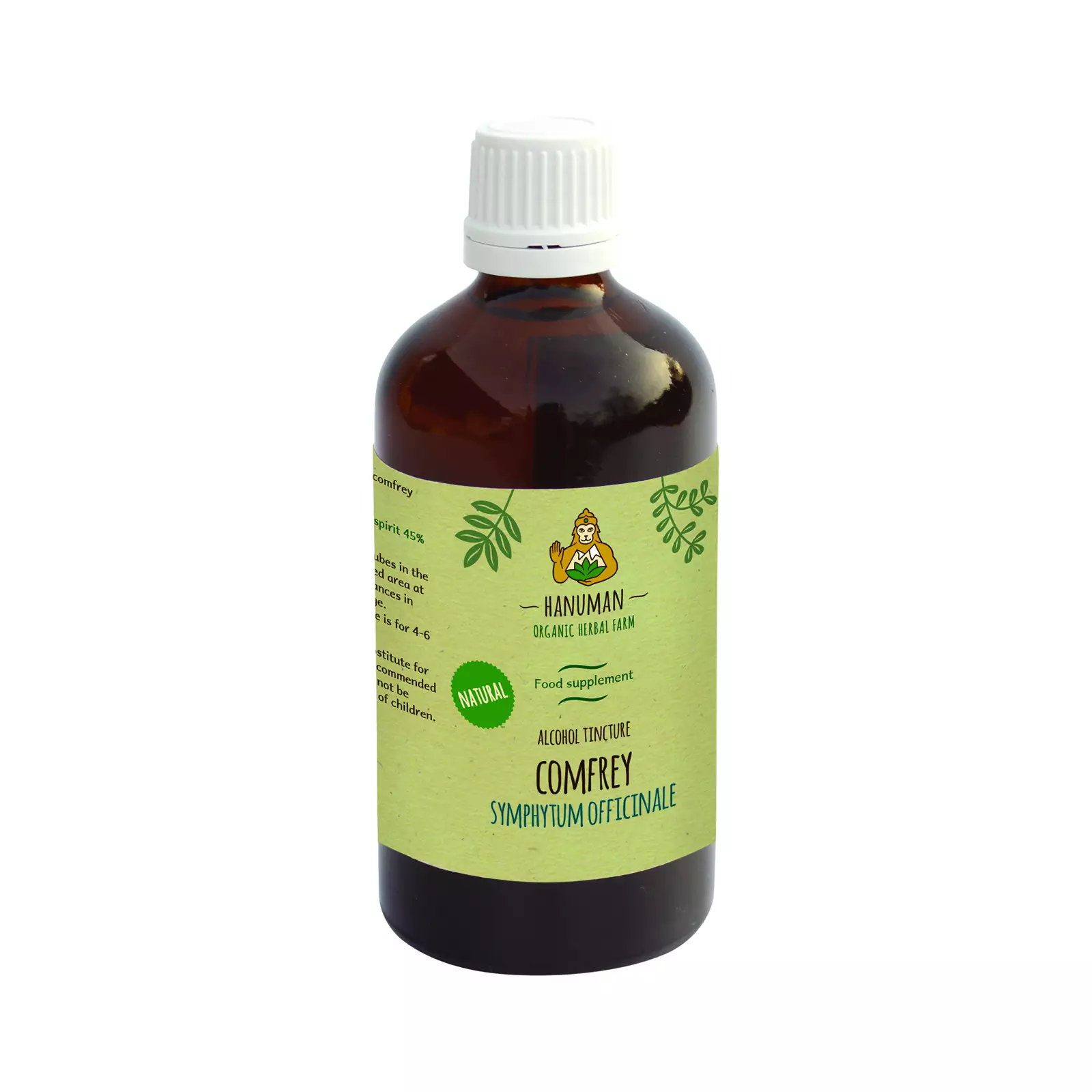
Comfrey tincture (Symphytum officinale) is a natural cosmetic product for external use, made from organically grown comfrey root. Prepared using the traditional cold maceration method, it is traditionally used for the care of the skin and areas of the body under physical strain.
Ingredients of Comfrey tincture:
- comfrey root (Symphytum officinale, radix)
- fruit spirit (Slovenian origin, 45% vol.)
Description
Usage
About the herb
Combinations
FAQ
Comfrey tincture (Symphytum officinale) is a natural cosmetic product for external use, made from comfrey root (radix). It is prepared using the traditional cold maceration method, which helps preserve a broad spectrum of naturally occurring plant compounds.
The alcohol content is carefully adjusted to allow effective extraction of alcohol-soluble compounds and to ensure the stability of the preparation over time. In this way, the rich plant profile characteristic of comfrey root is preserved.
Our comfrey is grown on our herbal farm in Slovenia, where we care for the plants throughout their entire growing cycle. The roots are dug by hand at the right time and carefully prepared for further processing.
Ingredients of Comfrey tincture:
- comfrey root (Symphytum officinale, radix)
- fruit spirit (Slovenian origin, 45% vol.)
Comfrey root concentration:
- extraction ratio 1:3
- 45% vol. alcohol
Packaging:
- 100 ml
- dark glass bottle with dropper
Quality of Comfrey tincture:
- 100% natural ingredients
- free from pesticides, artificial colours, preservatives and GMOs
- plants grown on our own organic herbal farm in Slovenia
Recommended use of Comfrey tincture:
- for external use only
- apply the tincture undiluted to the desired area of the skin
- use 1–2 times daily
- continuous use is recommended for up to 14 days, followed by a break
How to use Comfrey tincture:
- apply a few drops of the tincture to the skin and gently massage in
- it can also be used as a compress:
– mix 1 tablespoon of tincture with clay and a little water
– apply the mixture to a cotton cloth and place it on the desired area
– leave on for several hours or overnight
Tips for use:
- after applying the tincture, we recommend nourishing the skin with an ointment (e.g. Comfrey Ointment or Spruce Resin Ointment)
- one bottle is usually sufficient for several shorter periods of use, depending on the size of the area where it is applied
- use only on intact skin
Warnings:
- for external use only
- do not apply to open wounds or damaged skin
- avoid contact with eyes and mucous membranes
- not suitable for use during pregnancy
- keep out of reach of children
- due to naturally occurring alkaloids in comfrey, prolonged continuous use is not recommended
- for longer-term or repeated use, we recommend taking breaks between periods of application
Comfrey (Symphytum officinale)
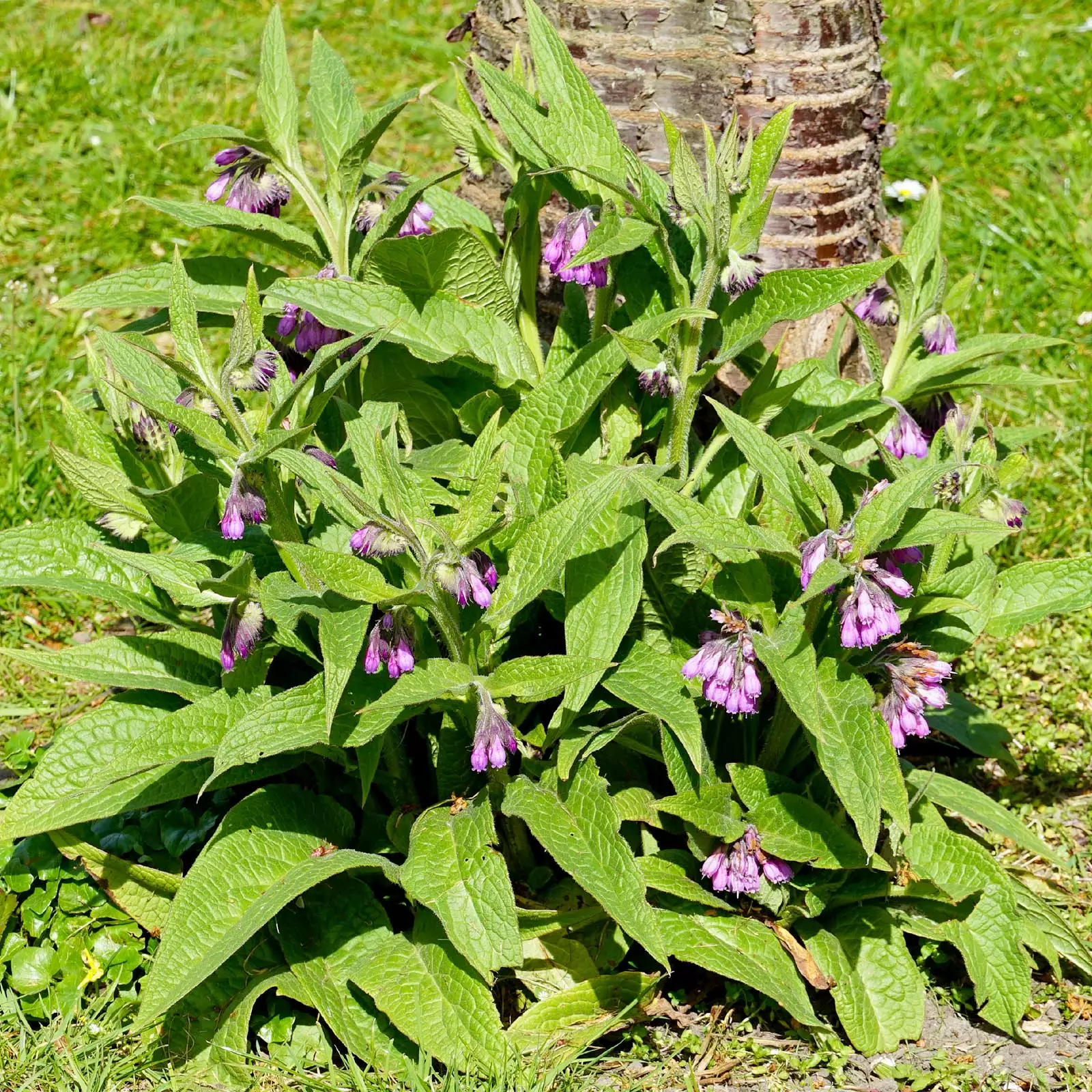
Comfrey is a strong, vigorous perennial that thrives in moist, fertile soil, along streams and ditches, at the edges of meadows and wherever the earth is rich and alive. It is easily recognised by its large, slightly rough leaves and bell-shaped flowers, which may be purple, pink, cream or whitish. There is something ancient and earthy about this plant – it is not a delicate garden herb, but a plant of depth, roots and patient renewal.
It belongs to the borage family (Boraginaceae), alongside lungwort, forget-me-not and borage. Plants in this family often have somewhat coarse or bristly leaves and stems, creating an interesting contrast with their delicate flowers.
In herbalism, the root (radix) is most commonly used, although the leaf (folium) is also sometimes included, particularly in preparations for external use. The root is fleshy, dark on the outside and pale within, and rich in naturally occurring plant compounds for which comfrey has long been valued in folk herbal tradition. It is the root that seems to carry the plant’s most concentrated, underground strength.
Comfrey has a long and fascinating history. Its Latin name Symphytum comes from a Greek word associated with the meaning “to grow together” or “to unite”. In folk tradition, it was also regarded as a herb associated with periods when the body needed rest, stillness and external support. In traditional rural herbal practice, comfrey was well known as one of those useful plants worth keeping close to the home. It was often planted near the house, at the edge of the garden or beside the compost heap, where it was valued as a versatile and useful plant.
Traditionally, comfrey is used primarily in external preparations for skin care and for areas of the body under physical strain, particularly after greater exertion or during periods when we wish for a greater sense of comfort, care and soothing. Because of its strong, earthy nature, comfrey has long been associated with depth, connection to the earth and slow renewal. Today, it is most commonly found in ointments, herbal oils and tinctures intended for external use.
Comfrey was once almost a symbol of the traditional home herbal cabinet. Old herbal stories describe it as one of those plants people kept close not only for its usefulness, but also for the sense of reassurance its presence brought to the home. Even today, comfrey reminds us that some plants are not here simply to be beautiful – they stand beside us quietly, grounded and steadfast.
Comfrey tincture + Comfrey Ointment
- tincture applied externally, ointment applied externally
- traditionally, both preparations are used when we wish to give a particular area extra care and attention; the tincture is applied first and absorbs quickly, while the ointment then creates a protective, nourishing layer that cares for the skin and helps maintain a feeling of softness
Comfrey tincture + Spruce Resin Balm
- tincture applied externally, ointment applied externally
- a combination that brings together the deep, earthy character of comfrey and the protective nature of resin; the tincture is applied first, while the Spruce Resin Ointment then coats, protects and nourishes the skin, particularly during periods of greater external strain
Comfrey tincture + Arnica tincture
- both tinctures applied externally
- traditionally, both herbs are used for skin care after greater physical exertion or strain; they can be alternated or combined in compresses when we wish to provide more comprehensive external care to a particular area
Why is comfrey not recommended for long-term use?
Comfrey naturally contains a group of compounds known as pyrrolizidine alkaloids (PAs). These substances can be metabolised in the body into reactive compounds that may affect the liver, particularly with prolonged or repeated exposure.
This association has also been investigated scientifically. Cases of serious liver problems have been reported in people who consumed comfrey internally over extended periods. Later research, including studies conducted within the US National Toxicology Program, has also shown in animal models that prolonged exposure to certain comfrey preparations may cause changes in liver tissue and DNA damage.
It is important to distinguish between different methods of use. Most of the available evidence concerning risk relates to internal use, where these compounds enter the body directly. With external application, exposure is considerably lower, but because comfrey naturally contains pyrrolizidine alkaloids, caution and limited periods of use are still recommended.
For this reason, we recommend using our Comfrey tincture externally for shorter periods – up to 14 days of continuous use – followed by a break. This allows us to work with the plant while also respecting its strength and natural limitations.