

Chamomile Tincture 100 ml – Organic
24,00 €
(incl. VAT)
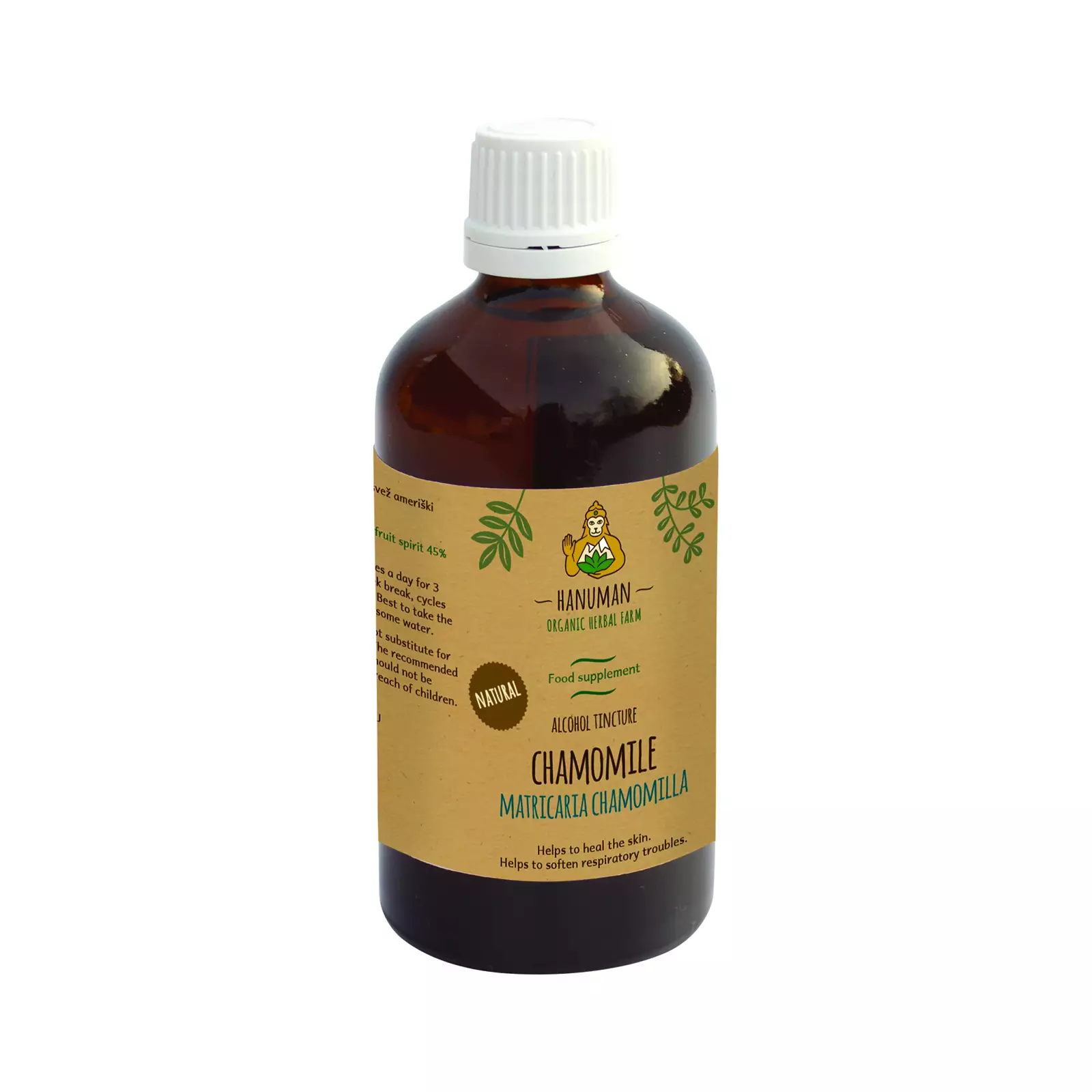
Chamomile tincture is a natural food supplement made from dried organic chamomile flowers, prepared using the traditional cold maceration method. It is traditionally used to promote relaxation, support digestion and care for the skin.
Ingredients of Chamomile tincture:
- Chamomile flowers (Matricaria chamomilla, flos)
- Organic Slovenian fruit brandy
Description
Usage
About the herb
Combinations
FAQ
Chamomile tincture is a liquid herbal preparation made from dried chamomile flowers (Matricaria chamomilla), using the traditional cold maceration method. This gentle process helps preserve a broad spectrum of naturally occurring compounds found in chamomile flowers.
The alcohol concentration is carefully adjusted to suit the properties of the dried flowers, allowing for effective extraction of both water-soluble and alcohol-soluble compounds. The result is a balanced herbal extract that retains chamomile’s characteristic gentle yet rich botanical profile.
Our chamomile is organically grown in Slovenia. The flowers are carefully harvested by hand and gently dried to preserve their quality, aroma and natural character.
Ingredients of Chamomile tincture:
- Chamomile flowers (Matricaria chamomilla, flos)
- Organic Slovenian fruit brandy, 30% alcohol by volume
Chamomile tincture concentration:
- Extraction ratio 1:6, 30% alcohol by volume
Packaging:
- 100 ml
- Dark glass bottle with dropper
Chamomile tincture quality:
- 100% natural ingredients
- Certified organic (IKC UM, SI-EKO-002)
- Free from pesticides and artificial colours
Recommended use of Chamomile tincture:
- 25–30 drops
- Up to 3 times daily
- You may start with a lower dose and gradually increase it
- The recommended duration of use is 3 weeks, followed by a break of at least 1 week or switching to another tincture
- If needed, it may be used for up to 2 months, followed by a break
How to take Chamomile tincture:
- Add the drops to a glass of water or take them directly from a spoon, followed by some water
- Preferably take on an empty stomach (before meals or at least 1 hour after eating) for better absorption
Tips for using Chamomile tincture:
- Chamomile is a gentle herb, traditionally used during periods of inner restlessness or digestive sensitivity
- One 100 ml bottle usually lasts approximately 3 weeks with regular use
- For a longer course, we recommend 1–2 bottles, depending on your daily dosage
- For external use, the tincture may be applied several times daily as needed. After application, consider protecting the skin with an ointment, such as Calendula ointment, as the alcohol in the tincture may cause mild dryness
Warnings:
- Food supplements should not be used as a substitute for a varied and balanced diet
- Do not exceed the recommended daily dose
- Keep out of reach of children
- Not suitable for children due to its alcohol content
- Use with caution if you are sensitive to plants of the Asteraceae family
- If you have an underlying medical condition or take medication, consult a healthcare professional before use
Chamomile (Matricaria chamomilla)
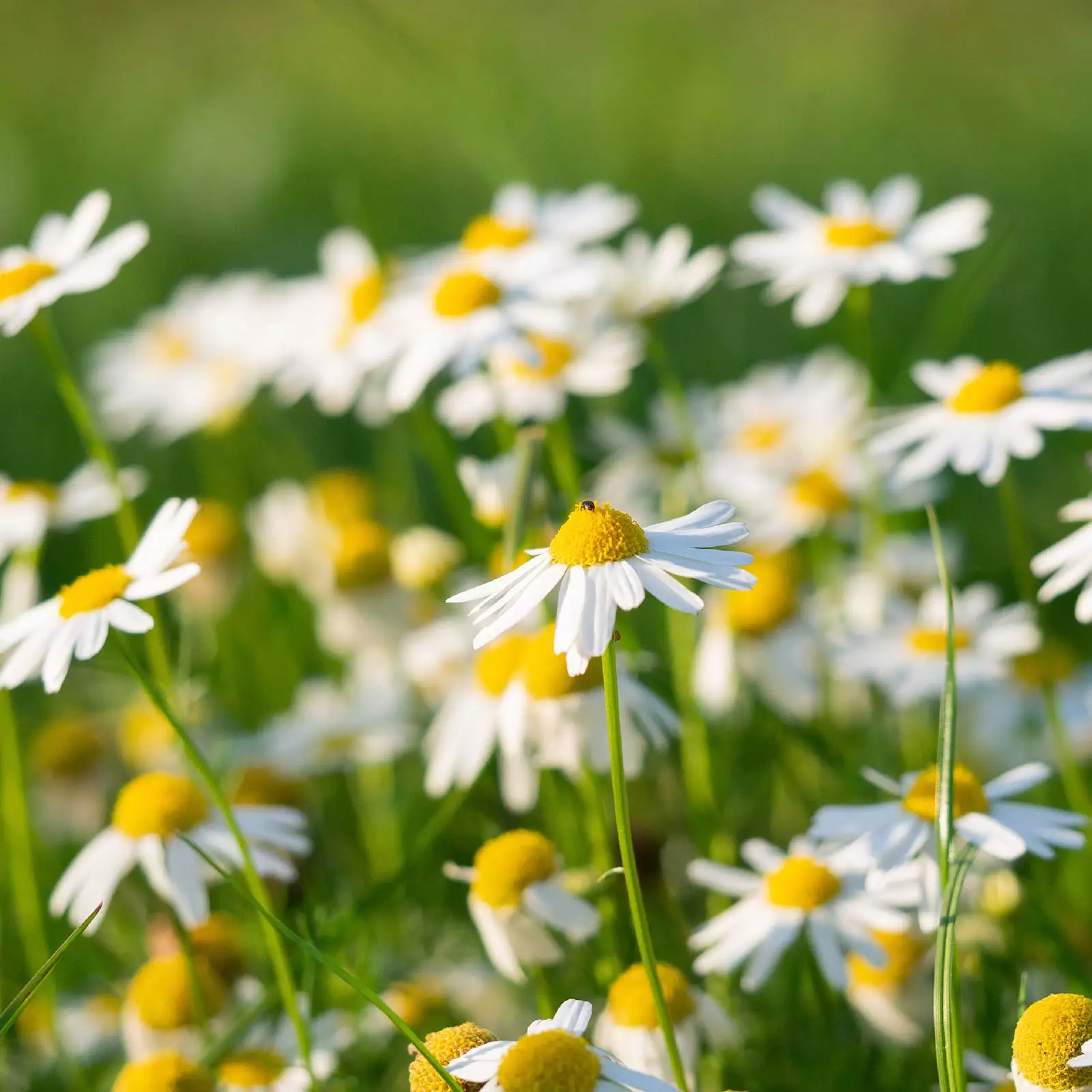
Chamomile is a delicate annual plant with small white petals and a sunny yellow flower centre. Its aroma is gentle, slightly sweet and soothing – even the presence of chamomile often brings a sense of warmth and calm.
It belongs to the daisy family (Asteraceae).
In herbalism, we use the flowers (flos), which are particularly rich in the characteristic aromatic and botanical compounds for which chamomile is valued.
An interesting detail lies in its Latin name, Matricaria, which derives from the word matrix, meaning womb. This gently reflects chamomile’s historical association with women’s well-being and inner balance. It is often called the “queen of herbal teas”, as it is one of the best-known and most versatile herbs in European herbal tradition.
Chamomile has a long history of traditional use during periods of inner restlessness, digestive sensitivity and times when we seek greater calm and relaxation. It is also commonly included in preparations for the care of the skin and mucous membranes, where it is valued for its gentle properties.
Today, we appreciate chamomile as a plant that brings softness, warmth and a sense of calm – a gentle reminder to slow down, pause for a moment and breathe.
Chamomile tincture + Dermafit balm
- Tincture for internal use, ointment for external use
- Chamomile is traditionally used during periods of skin sensitivity, while Dermafit ointment complements the routine with external care, helping to soothe and nourish the skin.
Chamomile tincture + Plantain tincture
- Both tinctures for internal use
- Plantain is traditionally used to support mucous membranes during periods of irritation, while chamomile complements this holistic approach with its gentle, soothing properties.
Chamomile tincture + Orpine tincture
- Both tinctures for internal or external use
- Both herbs are traditionally used during periods of skin sensitivity. They complement each other as part of a holistic approach, combining inner balance with external skin care.
Is chamomile oil more suitable for skin care than a tincture?
Chamomile oil or ointment is generally more suitable for skin care, as these preparations contain oil-soluble compounds while also protecting and nourishing the skin. They are gentler and do not have the drying effect of alcohol, making them particularly suitable for sensitive or irritated skin.
Chamomile tincture can also be used externally, but its alcohol content may cause mild dryness. It is often applied for short periods or used as the first step in a skincare routine, followed by an ointment or oil.
These two preparations complement each other beautifully – the tincture provides targeted herbal care, while the oil or ointment offers gentle protection and nourishment.
Are chamomile allergies common? What are the symptoms?
Allergic reactions to chamomile are uncommon, but they can occur, particularly in people who are sensitive to plants of the daisy family (Asteraceae). Caution is therefore recommended if you have a known allergy to related plants.
The most common symptoms include skin redness, itching and irritation, particularly when chamomile is applied externally. Allergic reactions following internal use are less common but may include irritation or discomfort in the mouth or digestive tract.
If you are sensitive to related plants, it is best to avoid chamomile until you have consulted a healthcare professional. If you have no known allergy but are trying a topical preparation for the first time, you can test a small amount on a limited area of healthy skin.