
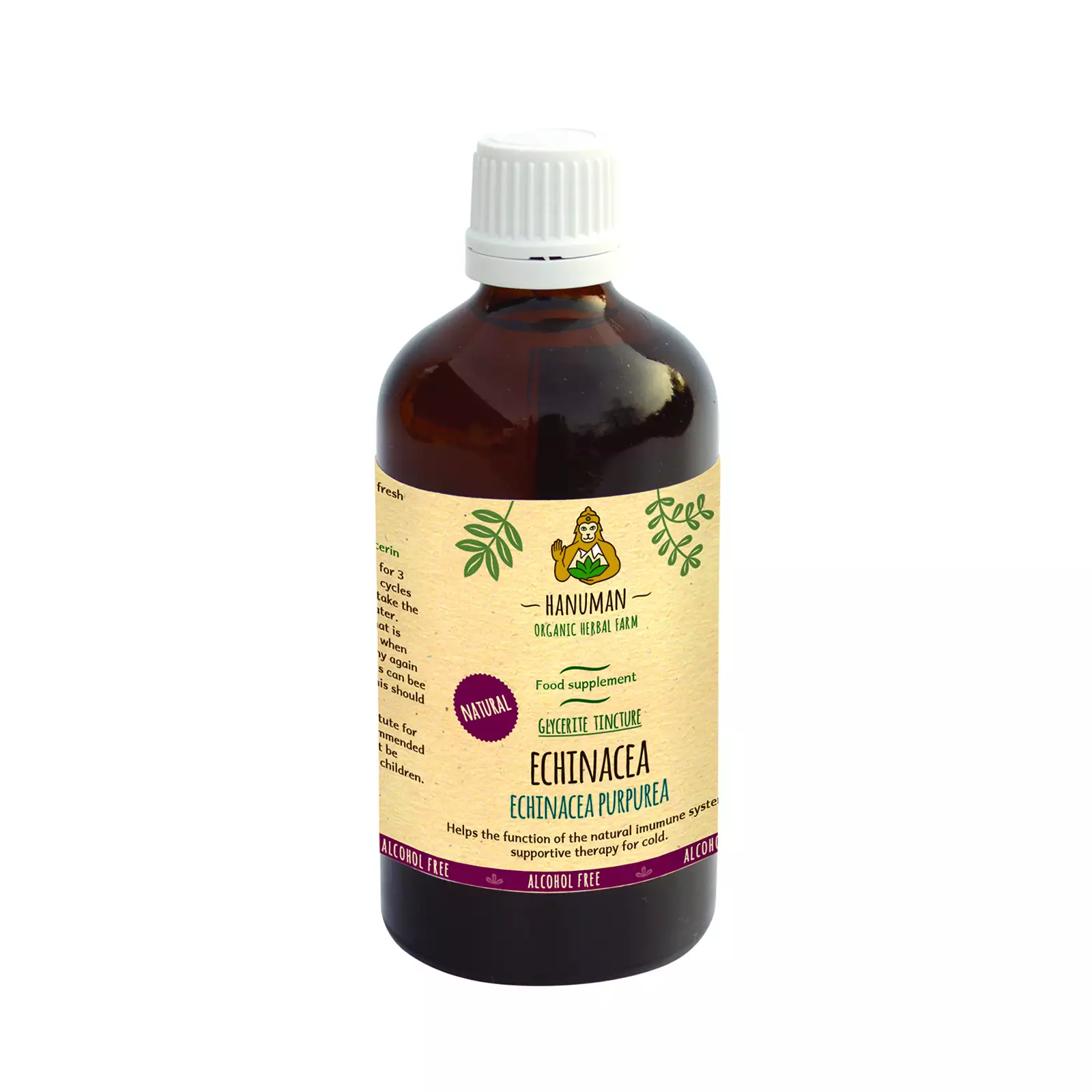

Alcohol-Free Echinacea Extract 100 ml – Organic
24,00 €
(incl. VAT)
Echinacea alcohol-free is an organic glycerine extract made from fresh Slovenian echinacea. Prepared from freshly harvested echinacea, it is traditionally valued for supporting the body's natural defences and is suitable for the whole family.
Ingredients of echinacea extract:
- fresh echinacea herb (Echinacea purpurea, herba recens)
- organic food-grade vegetable glycerine
- water
Description
Usage
About the herb
Combinations
FAQ
Alcohol-Free Echinacea Extract is a concentrated glycerite made from fresh echinacea herb (Echinacea purpurea, herba recens) using a gentle cold-maceration method. This process preserves a broad spectrum of naturally occurring compounds developed by the fresh plant during growth.
We use organic food-grade vegetable glycerine, carefully adjusted to the fresh herb. The result is a balanced, stable alcohol-free extract with a pleasant, slightly sweet taste.
Our echinacea is grown organically in Slovenia and gathered by hand at the right stage of growth, when the plant is full of vitality.
Ingredients:
- fresh echinacea herb (Echinacea purpurea, herba recens), Slovenia
- organic food-grade vegetable glycerine, non-EU
- water
Concentration:
- extraction ratio 1:3, 70% vegetable glycerine
Packaging:
- 100 ml
- dark glass bottle with pourer
Quality:
- 100% natural ingredients
- certified organic (IKC UM, SI-EKO-002)
- alcohol-free
Recommended use of echinacea alcohol-free:
- 1 teaspoon (approximately 5 ml)
- 3 times daily
- you may start with a smaller amount and gradually increase it
- recommended use is usually for 3 weeks or as needed
- in exceptional cases, it may be taken continuously for up to 2 months, followed by a break
How to take echinacea alcohol-free:
- take on its own or add to a glass of water, tea or juice
- preferably take before a meal or at least 1 hour after eating
- there is no need to eat immediately after taking the extract
Tips for using echinacea alcohol-free:
- echinacea is traditionally used for shorter, focused periods rather than as long-term daily support
- 1 bottle (100 ml) lasts approximately 2 weeks with regular use
- due to its pleasant, slightly sweet taste, the extract is also a popular choice for children
- an alcoholic echinacea tincture is also available
Warnings:
- food supplements should not be used as a substitute for a varied and balanced diet and a healthy lifestyle
- do not exceed the recommended daily dose
- keep out of reach of children
- not recommended for people with a known hypersensitivity to plants of the Asteraceae family
- during pregnancy and breastfeeding, consultation with a qualified professional is recommended
- in case of autoimmune conditions or when taking medicines that affect the immune system, consult a qualified professional before use
Echinacea (Echinacea purpurea)
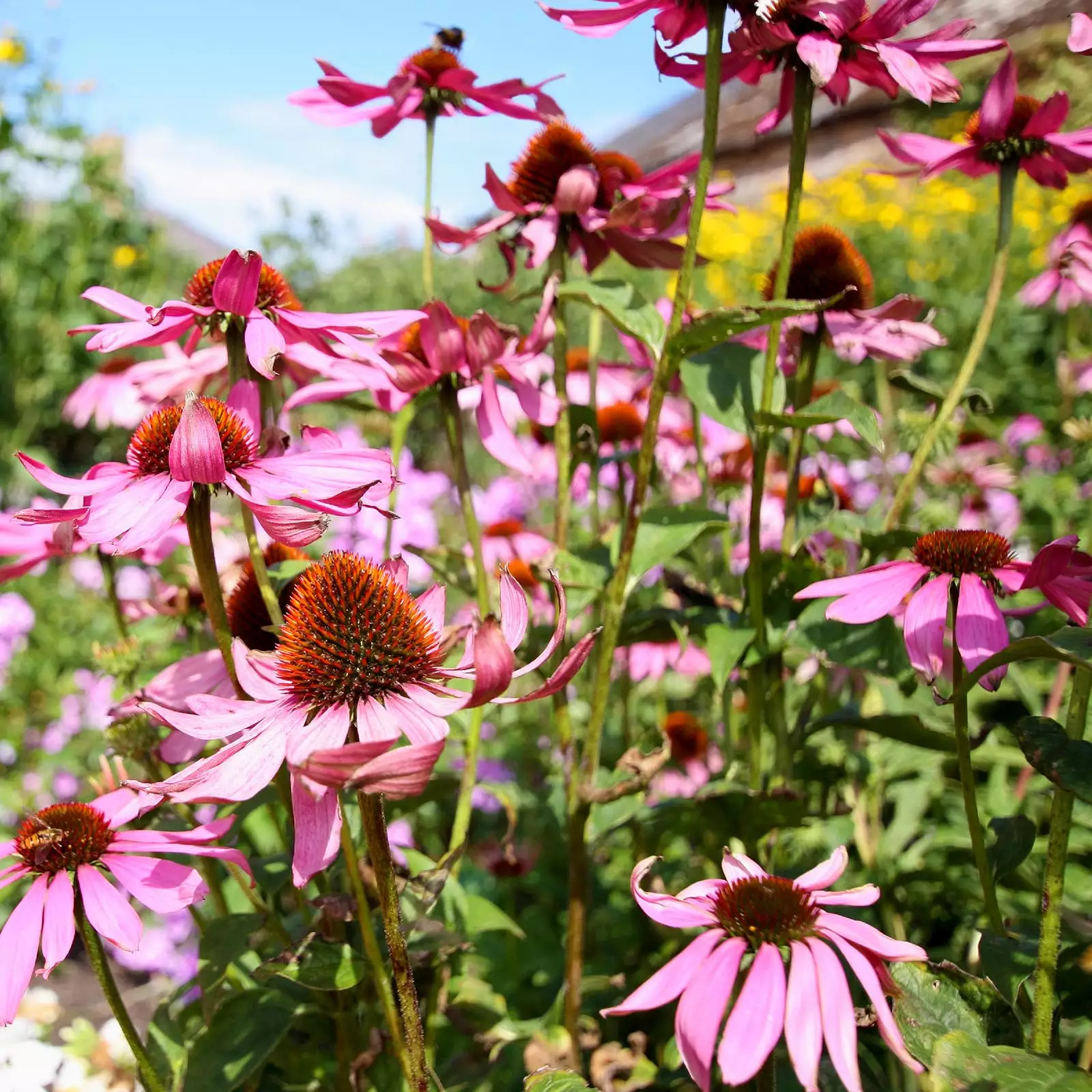
Echinacea is a perennial plant with distinctive pink-purple flowers and a strong, upright appearance. It originates from North America but is now also well known in European herbalism, where it is particularly valued during periods of seasonal challenges and at times when we wish to offer the body additional support.
It belongs to the Asteraceae family.
In herbalism, we mainly use the fresh aerial parts (herba recens), although the root (radix) is also commonly used, as the two parts of the plant have somewhat different profiles of naturally occurring compounds. The fresh herb is especially valued for making tinctures, as it retains a broad spectrum of plant constituents.
Echinacea is one of the most recognisable plants in modern Western herbalism. Its journey to Europe also has an interesting story. In the last century, Swiss herbalist Alfred Vogel became acquainted with echinacea during a visit to North America, where it had been used by Indigenous peoples. He brought the plant to Europe and began cultivating and using it in his herbal preparations, contributing significantly to its wider recognition.
In addition to Echinacea purpurea, there is also Echinacea angustifolia, which was highly valued in the traditional herbal practices of Indigenous North American peoples. Both species are used in herbalism today, each with its own particular characteristics.
Traditionally, echinacea is used during periods when we wish to support the body’s natural defences, particularly at the first signs of seasonal challenges. It is also commonly included in herbal preparations for the throat and pharynx and for general well-being during the colder months of the year.
Today, echinacea is generally regarded as a herb for shorter, more focused periods of use. Its character is quite distinct, so it is usually included when we wish to offer the body additional herbal support at particular times.
Echinacea alcohol-free + Thyme tincture
- alcohol-free extract for internal use, tincture for internal use
- traditionally, both herbs are included during periods of seasonal challenges; they complement each other in supporting the throat, pharynx and overall respiratory balance
Echinacea alcohol-free + Early winter support tincture
- alcohol-free extract for internal use, tincture for internal use
- a combination for shorter, focused periods; echinacea complements support for the body’s natural defences, while the herbal blend in Early winter support tincture provides a broader herbal approach
Echinacea alcohol-free + Reishi tincture
- alcohol-free extract for internal use, tincture for internal use
- reishi offers a calmer approach for longer-term support; together, they create a balance between shorter, focused periods of use and a more gradual approach
Echinacea alcohol-free + Propolis with thyme and sage
- alcohol-free extract for internal use, oral spray for local use
- the spray is used directly in the mouth and throat, while echinacea complements the herbal routine from within; a popular combination especially during the colder months of the year
Is an alcohol-free echinacea extract as effective as an alcohol tincture?
Both are made from the same fresh plant but use different solvents. Alcohol extracts a very broad spectrum of naturally occurring plant compounds, which is why tinctures are traditionally the most widespread form.
Vegetable glycerine extracts a somewhat different range of compounds. Its advantages are the pleasant taste and absence of alcohol, making it a gentler option for people who wish to avoid alcohol.
If alcohol is acceptable, the tincture is generally the more concentrated choice. The glycerite offers a mild and practical alcohol-free alternative.