

Walnut Tincture 100 ml – Organic
24,00 €
(incl. VAT)
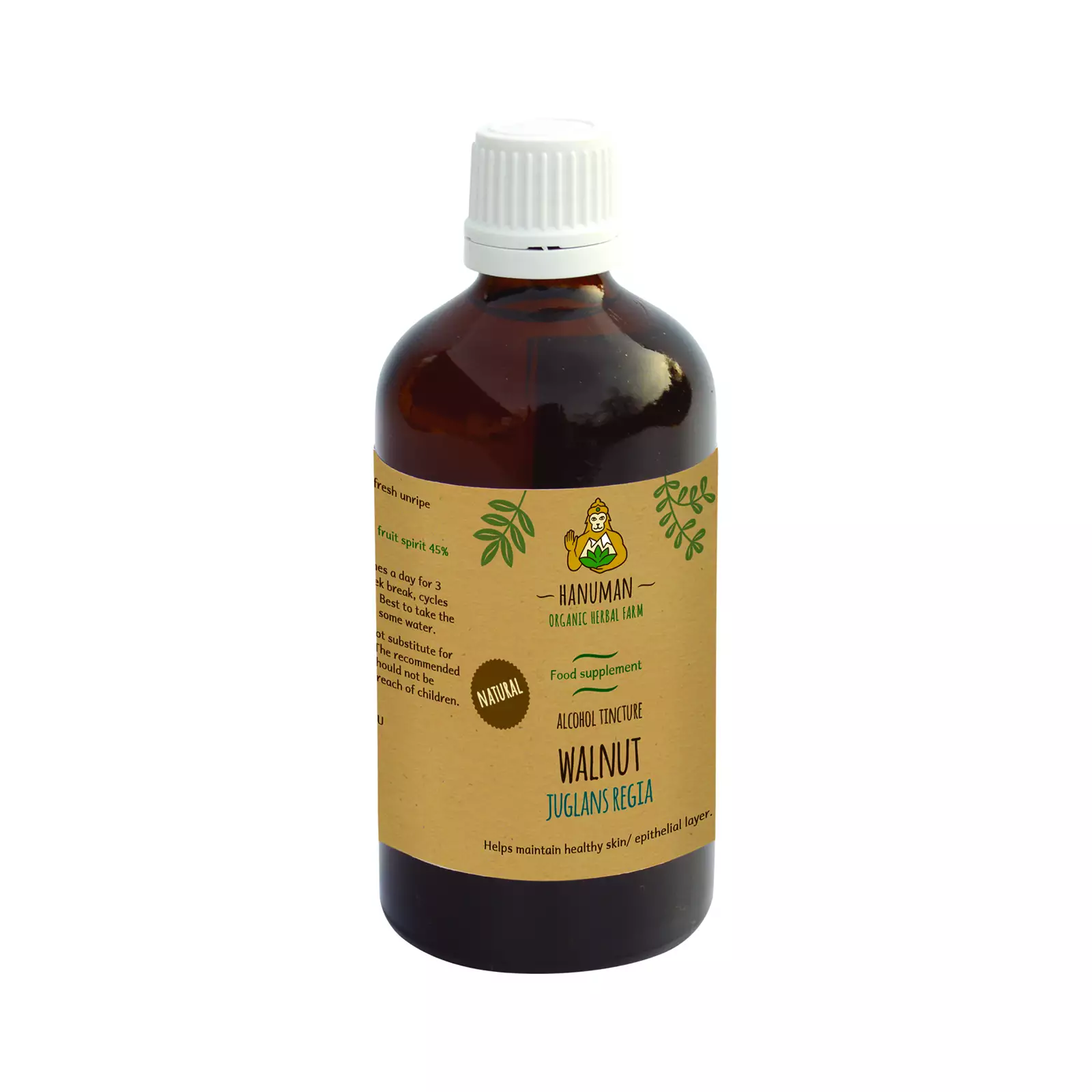
Green Walnut tincture (Juglans regia) is a natural food supplement made from unripe walnuts, prepared using the traditional cold maceration method. It is traditionally used to support skin health and digestion naturally.
Ingredients of Green Walnut tincture:
- Unripe walnuts (Juglans regia, fructus immaturus)
- Organic Slovenian fruit brandy
Description
Usage
About the herb
Combinations
FAQ
Green Walnut tincture is a concentrated herbal preparation made from unripe walnuts (Juglans regia), using the traditional cold maceration method. This gentle process helps preserve a broad spectrum of naturally occurring compounds that the plant develops during its early growth stages.
We carefully select the alcohol concentration to suit the properties of the unripe walnuts. This extraction method allows various compounds to pass effectively into the tincture, resulting in a balanced and stable herbal extract.
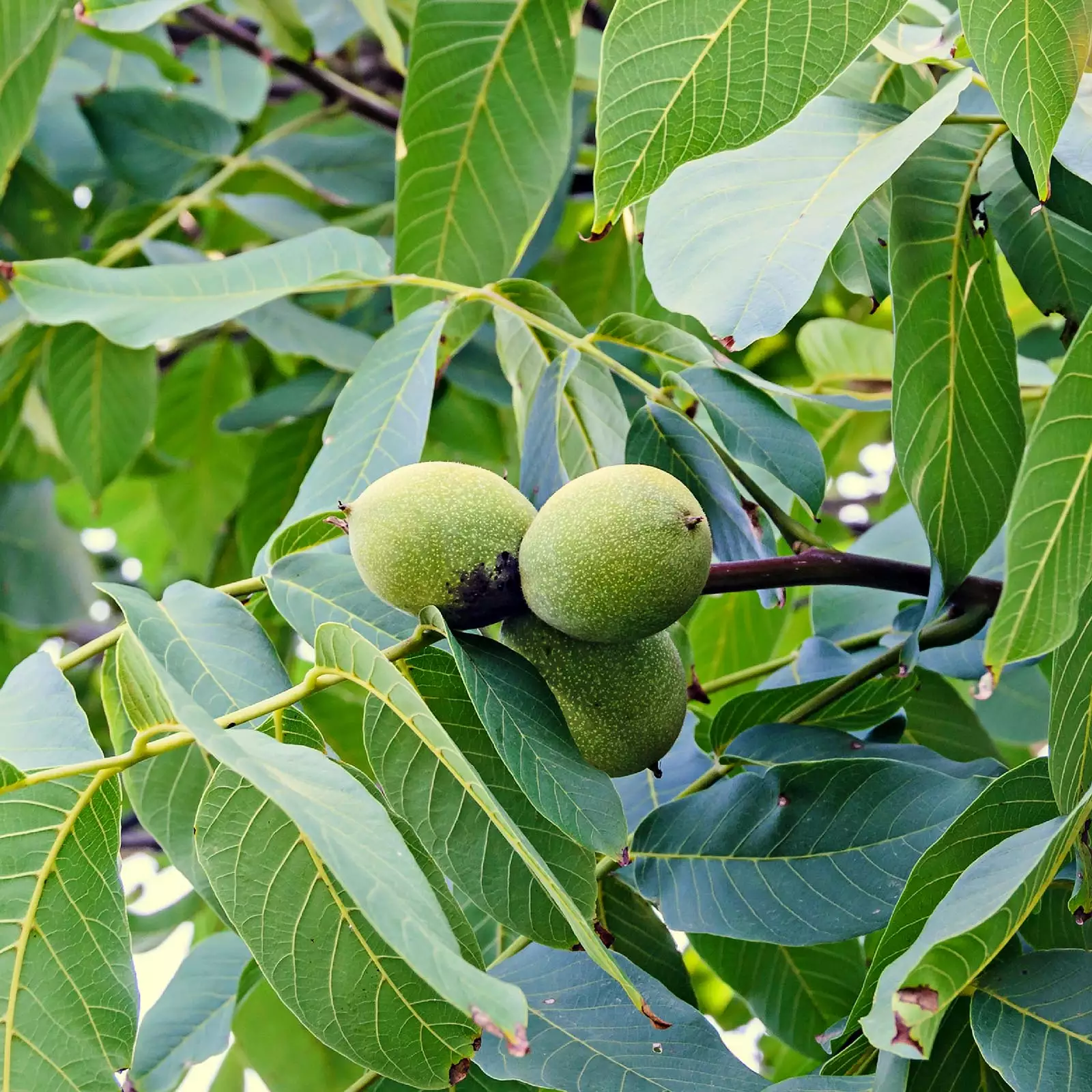
We harvest our unripe walnuts in Slovenia, while they are still soft and full of vitality. The trees are organically grown, with deep respect for the natural environment. Each walnut is carefully harvested by hand at the optimal stage of development to ensure the highest quality.
Ingredients of Green Walnut tincture:
- Unripe walnuts (Juglans regia, fructus immaturus)
- Organic Slovenian fruit brandy, 40% alcohol by volume
Green Walnut tincture concentration:
- Extraction ratio 1:2.5
- 40% alcohol by volume
Packaging:
- 100 ml
- Dark glass bottle with dropper
Green Walnut tincture quality:
- 100% natural ingredients
- Certified organic (IKC UM, SI-EKO-002)
- Free from pesticides, artificial colours, preservatives and GMOs
Recommended use of Green Walnut tincture:
- 20–30 drops
- Up to 3 times daily
- You may start with a lower dose and gradually increase it to 25–30 drops
- The recommended duration of use is 3 weeks, followed by a break of at least 1 week
- If needed, it may be used continuously for up to 2 months, followed by a break
How to take Green Walnut tincture:
- Add the drops to a glass of water or take them directly from a spoon
- Preferably take on an empty stomach (before meals or at least 1 hour after eating) for better absorption. There is no need to eat immediately afterwards
Tips for use:
- Unripe walnuts are traditionally harvested in early summer, while they are still soft and rich in naturally occurring compounds
- One 100 ml bottle lasts approximately 3 weeks with regular use
- You can incorporate the tincture into your daily routine – morning, midday and evening, always with a little water
Warnings:
- Food supplements should not be used as a substitute for a varied and balanced diet
- Do not exceed the recommended daily dose
- Keep out of reach of children
- Not suitable for children due to its alcohol content
- If you are taking medication, particularly blood-thinning medication, consult your doctor before use
- Not recommended during pregnancy or breastfeeding without consulting a healthcare professional
Walnut (Juglans regia)
The walnut is a majestic tree with a spreading crown and deep roots, bringing a sense of stability and presence to the landscape. In early summer, its unripe fruits are still soft, green and full of their characteristic bitterness, carrying within them a centuries-old herbal tradition.
It belongs to the walnut family (Juglandaceae).
In herbalism, we primarily use the unripe fruits (fructus immaturus), harvested while they are still soft enough to be cut with a knife and rich in aromatic, bitter and astringent compounds.
In folklore, the walnut is associated with protection, strength and inner stability. Walnut trees often stand beside traditional homesteads as silent guardians of the land. Their unripe fruits have long attracted attention because of their intense colour and their ability to stain the skin on contact, as though they held something dense, concentrated and almost mysterious within them. It is precisely these distinctive properties that led herbalists to incorporate green walnuts into various traditional preparations associated with inner balance.
Traditionally, walnut is used to support digestion and a sense of intestinal well-being. Its bitterness holds a special place in herbalism, where bitter plants have long been associated with seasonal transitions and traditional cleansing practices. Green walnut is also commonly included in herbal approaches aimed at supporting skin health and general well-being.
Today, we recognise walnut as a plant with a strong, concentrated character. Unlike some of the gentler meadow herbs, it has a more powerful presence – a reminder that sometimes a little bitterness is needed to help restore balance, both in the body and in life.
Green Walnut tincture + Calendula Balm
- Tincture for internal use, ointment for external use
- Green walnut is traditionally used to support digestion and skin health, while calendula gently nourishes and cares for the skin, complementing a holistic approach to well-being from the inside out.
Green Walnut tincture + Pine Cone tincture
- Both tinctures for internal use
- Both plants are traditionally used during periods when we wish to support overall vitality and the body’s natural balance.
Green Walnut tincture + Dandelion tincture + Yarrow tincture
- All three tinctures for internal use
- Such combinations are traditionally included in seasonal herbal routines to support digestion, the body’s natural rhythms and inner balance.
What is the difference between Black Walnut and English Walnut?
English walnut (Juglans regia) and black walnut (Juglans nigra) are closely related species, but they differ in both their chemical composition and traditional uses.
English walnut, which also grows in Slovenia, contains mainly polyphenols, flavonoids, tannins and smaller amounts of naphthoquinones, such as juglone. Its unripe fruits are rich in bitter and astringent compounds, traditionally associated in herbalism with supporting digestion and skin health. Walnut leaves are also covered by a European Medicines Agency (EMA) herbal monograph, which describes their traditional use for certain skin conditions.
Black walnut (Juglans nigra) generally contains higher concentrations of juglone and other naphthoquinones, alongside tannins and flavonoids. Due to this composition, it is more frequently mentioned in Western herbal literature in connection with targeted, intensive herbal approaches. Some studies, primarily laboratory (in vitro) research, have demonstrated the activity of compounds found in black walnut against various microorganisms. However, these findings cannot be directly translated into proven effects in humans.