
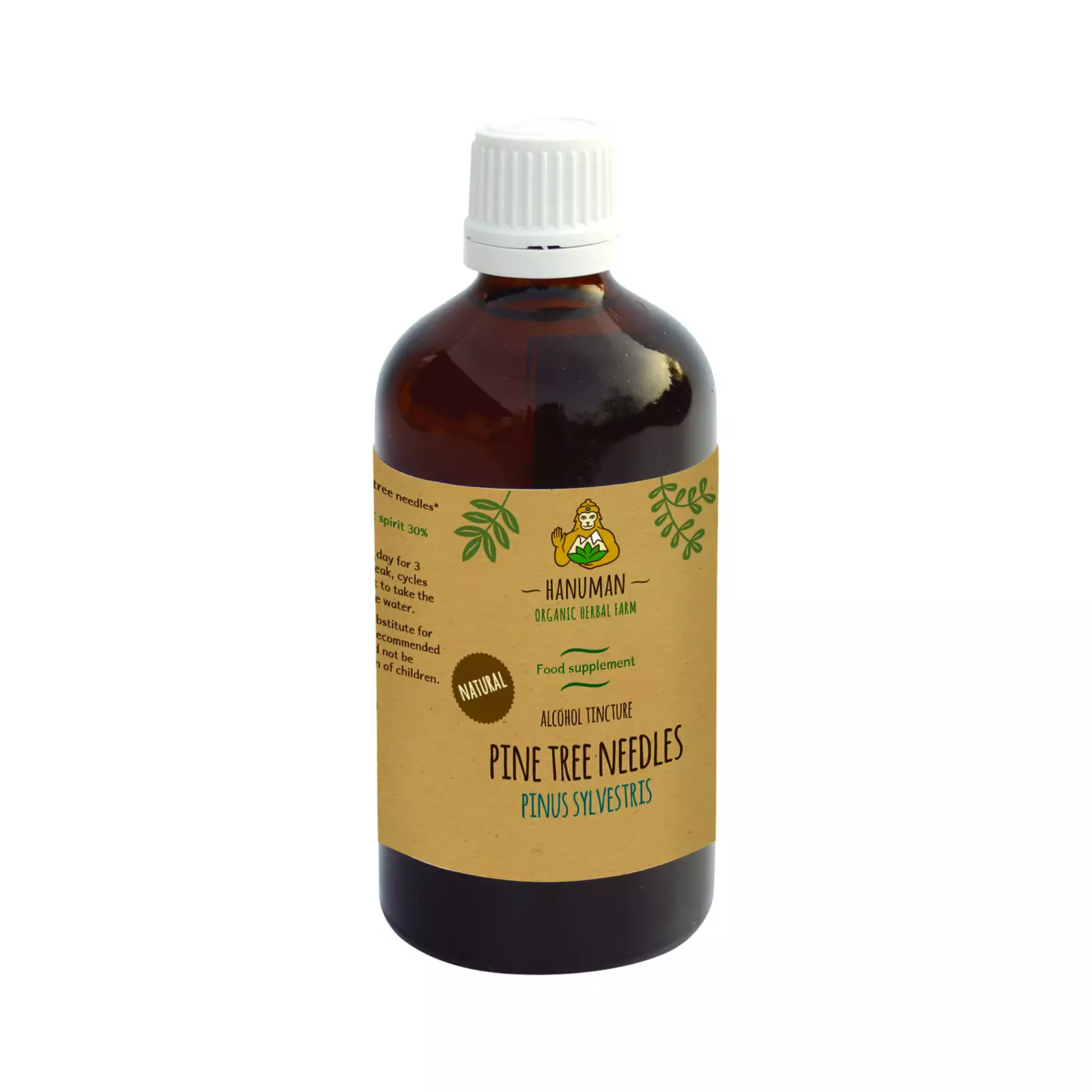

Pine Needle Tincture 100 ml – Organic
24,00 €
(incl. VAT)
Pine Needle Tincture is a natural food supplement made from organic Scots pine needles (Pinus sylvestris) using the traditional cold maceration method. It is traditionally used to support respiratory health, the body's natural defences and overall well-being.
Pine Needle Tincture Ingredients:
- pine needles (Pinus spp., folium)
- fruit spirit
Description
Usage
About the herb
Combinations
FAQ
Pine Needle Tincture is a natural food supplement made from carefully harvested fresh Scots pine needles (Pinus sylvestris) using the traditional cold maceration method. This process allows us to obtain a broad spectrum of naturally occurring plant compounds found in the needles.
The carefully selected extraction solvent containing 50% alcohol by volume allows for the extraction of various aromatic, resinous and water-soluble plant compounds. Our tincture is prepared through a single-stage alcohol extraction process, without additional heating or a separate water extraction.
We harvest our pine needles during winter in the clean natural surroundings of our herbal farm in Slovenia. Each harvest is carried out by hand, with care and respect for the trees and their natural rhythms.
Pine Needle Tincture Ingredients:
- fresh Scots pine needles (Pinus sylvestris, folium), Slovenian origin, organic
- organic fruit brandy and water, Slovenian origin
Pine Needle Concentration:
- extraction ratio: 1:5
- extraction solvent: 50% alcohol (v/v)
Packaging:
- 100 ml
- dark glass bottle with dropper
Pine Needle Tincture Quality:
- 100% natural ingredients
- certified organic (IKC UM, SI-EKO-002)
- no added artificial colourings or preservatives
Recommended Use of Pine Needle Tincture:
- 25–30 drops
- up to 3 times daily
- recommended use for 3 weeks, followed by a break of at least 1 week or switching to another tincture
- for extended use, including up to 2 consecutive months, consult a healthcare professional beforehand; take a break afterwards
How to Take Pine Needle Tincture:
- add the drops to a glass of water or take them on a spoon
- preferably take on an empty stomach (before a meal or at least 1 hour after eating); there is no need to eat immediately afterwards
Tips for Use:
- one bottle usually lasts approximately 3 weeks with regular use
- one bottle is generally sufficient for a 3-week course, while longer periods may require two or more bottles
- traditionally used during the colder months and seasonal transitions
Precautions:
- food supplements should not be used as a substitute for a varied and balanced diet
- do not exceed the recommended daily dose
- keep out of reach of children
- not suitable for children due to its alcohol content
- due to insufficient safety data, use is not recommended during pregnancy or breastfeeding, or for children under 12 years of age
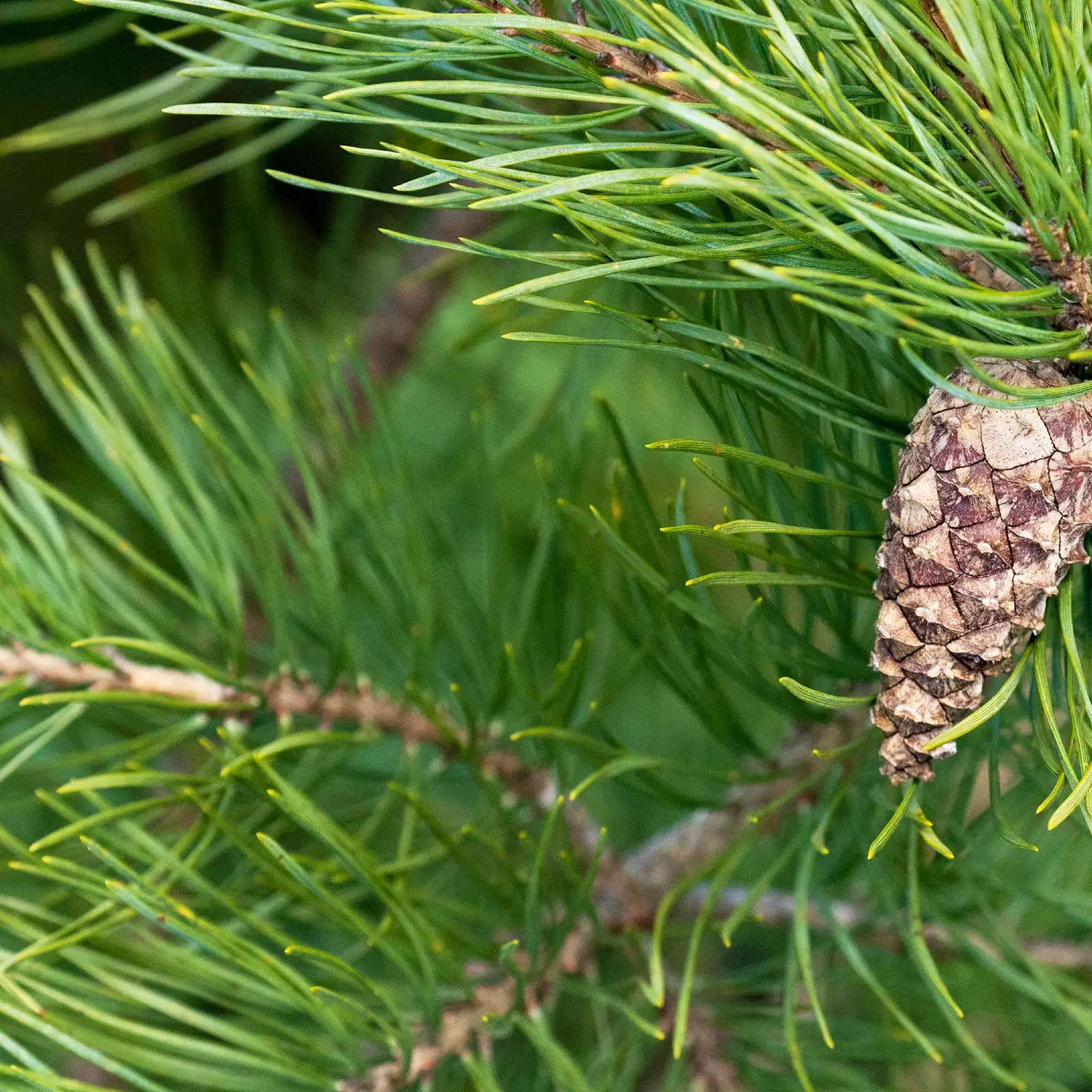
Scots Pine (Pinus sylvestris)
Scots pine is an evergreen tree that accompanies us throughout the seasons. Its needles remain green and fresh even in winter, symbolising strength, resilience and a deep connection with nature.
It belongs to the pine family (Pinaceae).
In herbalism, we primarily use pine needles and young shoots.
One of its most distinctive features is its fresh, resinous scent, which we often notice while walking through the forest. This characteristic aroma evokes a sense of openness and freshness.
Pine has a long history of traditional herbal use. It is particularly valued during the colder months, when we seek to support the body and enjoy a feeling of easier breathing.
Traditionally, pine is used:
- to support respiratory health,
- to promote a sense of easier breathing,
- during periods when the body needs extra warmth and support.
Pine Needle Tincture + Respiratory Balm
- tincture taken orally, salve applied externally
- pine needles are traditionally used to support respiratory health, while the salve complements the combination with external application to the chest, providing a comforting sense of warmth
Pine Needle Tincture + Thyme Tincture
- both tinctures taken orally
- pine is traditionally used during periods when respiratory support is desired, while thyme complements the herbal routine during the colder months
Do Pine Needles Affect the Spike Protein?
There is currently no reliable scientific evidence that pine needles directly affect the spike protein. Research suggests that certain plant compounds may interact with viruses or the spike protein under laboratory conditions.
What Is the Difference Between Pine Needle Tincture and Pine Cone Tincture?
Pine needles and pine cones come from the same tree, but each has its own distinctive characteristics, which are also reflected in their traditional uses.
Pine Needle Tincture (Pinus spp., folium) has a fresh, resinous, forest-like character and is traditionally associated with respiratory support, particularly during the colder months. Its flavour is lighter and fresher.
Pine Cone Tincture (Pinus spp., strobilus) has a richer, slightly sweet and more rounded flavour. It is traditionally associated with throat and chest comfort, offering a softer, more enveloping sensory experience.