

Centaury Tincture 100 ml – Organic
24,00 €
(incl. VAT)
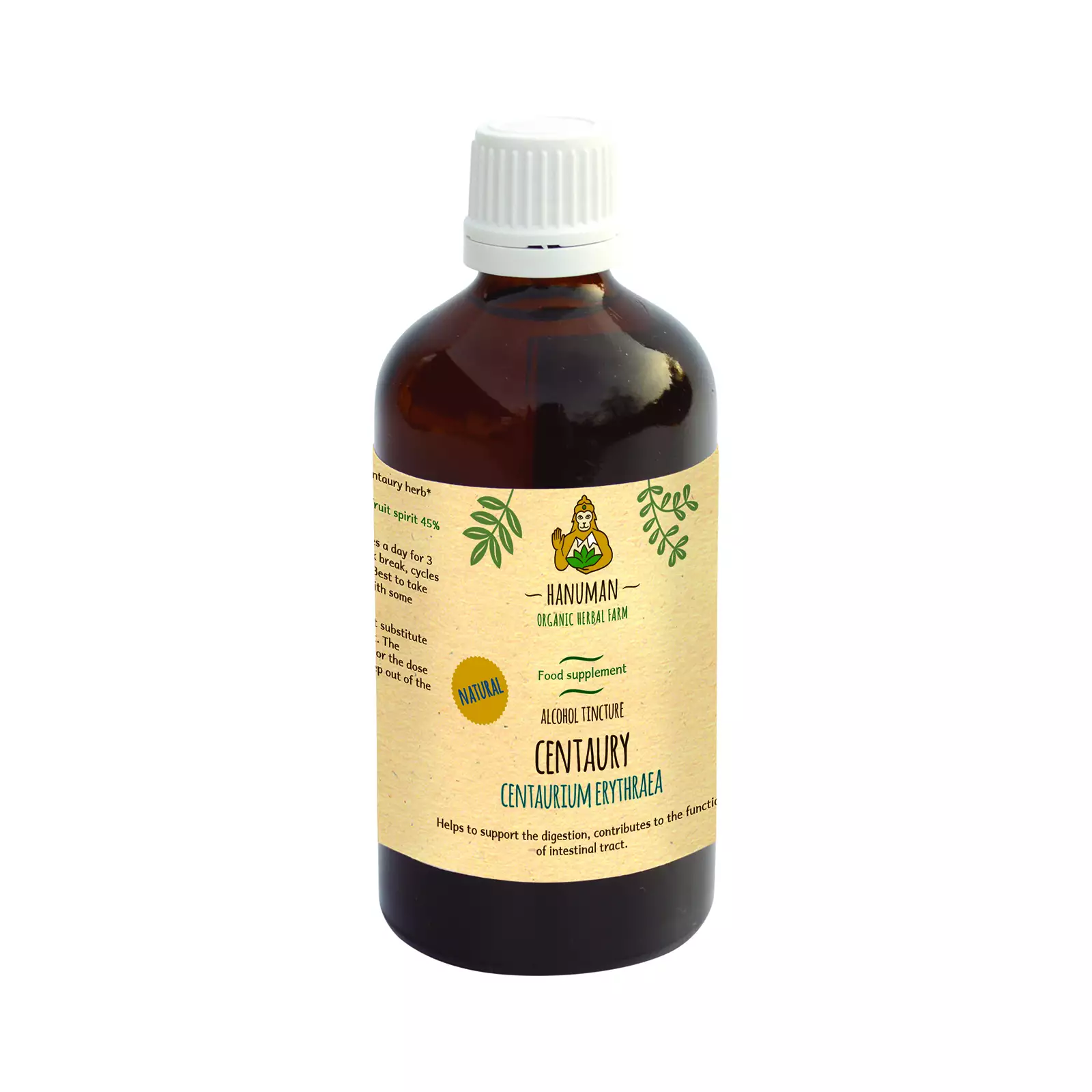
Centaury tincture (Centaurium erythraea) is an organic food supplement made from the bitter herb, prepared using the traditional cold maceration method. Traditionally used to support digestion and promote a sense of balance during periods when the body benefits from gentle bitter support.
Ingredients of Centaury tincture:
- centaury herb (Centaurium erythraea, herba)
- fruit spirit (organic, EU origin)
Description
Usage
About the herb
Combinations
FAQ
Centaury tincture is a natural extract made from centaury herb (Centaurium erythraea, herba), prepared using the traditional cold maceration method. This method helps preserve a broad spectrum of naturally occurring plant compounds that give the tincture its characteristic bitter taste and full-bodied profile.
The alcohol content is carefully adjusted to centaury, allowing both water-soluble and alcohol-soluble compounds to be extracted from the plant. The bitter compounds characteristic of centaury are particularly well extracted at this ratio, helping the tincture retain its full and balanced profile.
Most of the centaury herb we use is grown organically on our farm or occasionally ethically wild-harvested. When our own harvest is insufficient, we supplement it with carefully selected organic centaury of EU origin. The plants are gently processed to preserve their natural quality.
Ingredients of Centaury tincture:
- centaury herb (Centaurium erythraea, herba)
- fruit spirit (organic, EU origin, 40% vol. alc.)
Centaury concentration:
- extraction ratio 1:7, 40% vol. alcohol
Packaging:
- 100 ml
- dark glass bottle with dropper
Quality of Centaury tincture:
- 100% natural ingredients
- certified organic (IKC UM, SI-EKO-002)
- free from pesticides, artificial colours and other unnecessary additives
Recommended use of Centaury tincture:
- 25–30 drops
- up to 3 times daily
- you can start with a smaller dose and gradually increase to 25 drops
- take for 3 weeks, followed by a break of at least 1 week
- in specific cases, the tincture can be taken continuously for up to 2 months, followed by a break
How to take Centaury tincture:
- add to a glass of water or take from a spoon and follow with water
- preferably take on an empty stomach (before a meal or at least 1 hour after eating); there is no need to eat immediately afterwards
Tips for use:
- centaury is a distinctly bitter herb – tasting the bitterness on the tongue is part of its traditional use and helps stimulate digestive processes
- for one course (3–6 weeks), you will usually need 1–2 bottles
- you can hold the drops in your mouth briefly before swallowing, allowing the tincture to come into contact with the taste receptors
- if the taste is too strong, dilute the tincture in a larger amount of water
Warnings:
- food supplements should not be used as a substitute for a varied diet and a healthy lifestyle
- do not exceed the recommended daily dose
- keep out of reach of children
- due to its alcohol content, it is not suitable for children
- not recommended in cases of gastric or duodenal ulcers or increased stomach acidity, as bitter compounds may increase the secretion of gastric juices
- use during pregnancy and breastfeeding is not recommended without consulting a qualified professional
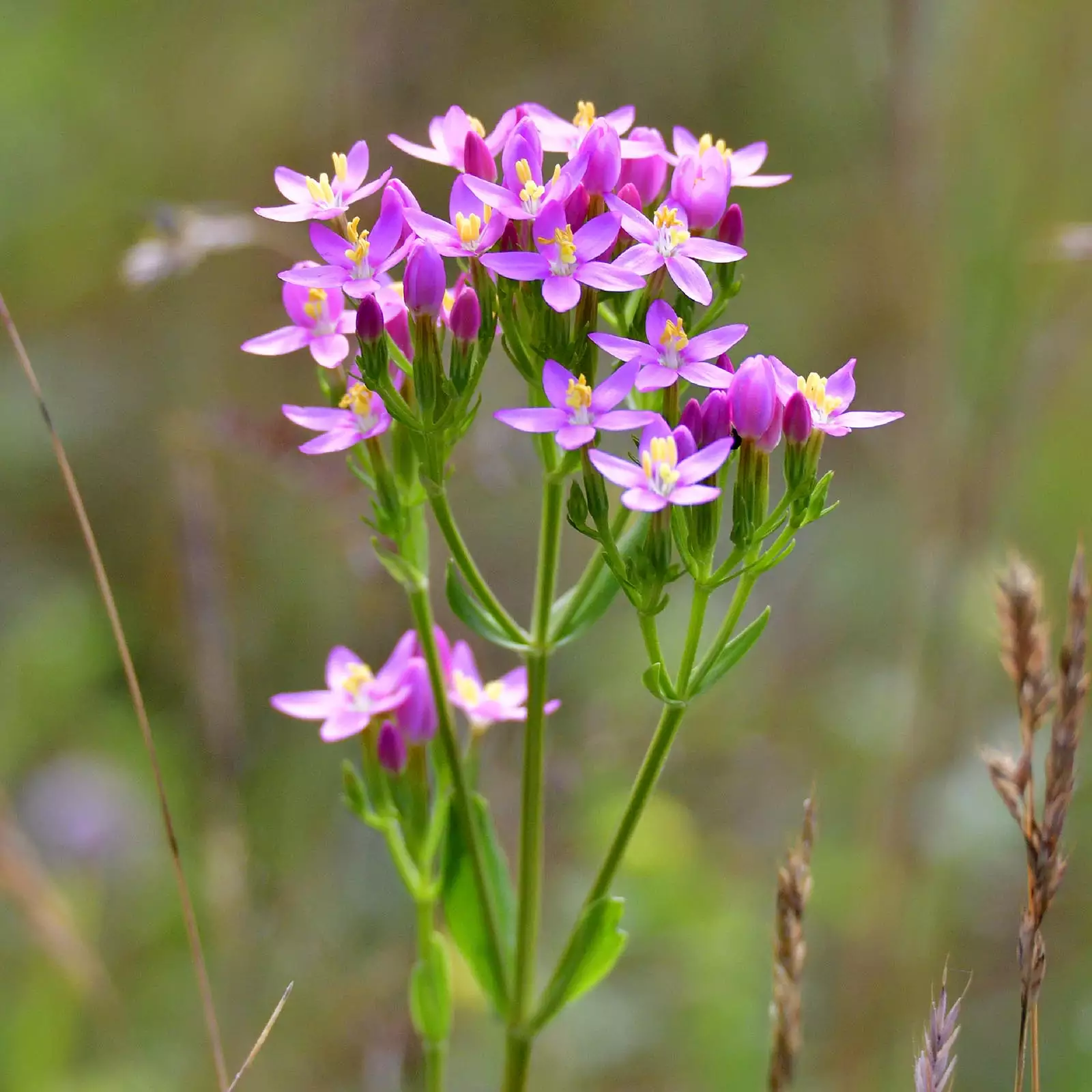
Centaury (Centaurium erythraea)
Centaury is a small, delicate plant with pink, star-shaped flowers, yet it carries a distinctly bitter and strong character. Although it may appear fragile, herbalists have long valued it as one of those plants whose bitterness brings a sense of awakening, clarity and inner order.
It belongs to the gentian family (Gentianaceae), which includes several other well-known bitter herbs. Plants in this family are often associated with their distinctive taste and their traditional use in herbal bitters and other herbal preparations.
In herbalism, we mainly use centaury herb (Centaurii herba), the aerial parts of the plant harvested during flowering. It is gathered carefully and at the right time, when the plant has developed its fullest character.
Centaury holds a special place in the European herbal tradition. Even its traditional name hints at its great value – as though it were worth “a hundred pieces of gold” or a remedy for “a hundred ailments”. In folk tradition, it was known as a bitter herb chosen not for its pleasant taste, but for the feeling it leaves behind. This is precisely what makes centaury so distinctive: it is neither extravagant in fragrance nor appearance, yet it leaves a clear, almost awakening impression.
Traditionally, centaury is used during periods when we wish to bring more order to our eating habits and when bitter herbal support feels appropriate. It is often associated with use before meals or during times when the body benefits from greater digestive balance. Its bitterness is also why many people experience it as a herb of awakening and inner clarity.
Centaury also has a long tradition of use for supporting digestion and maintaining a sense of balance in the digestive system. In herbal tradition, it can also be found in preparations used during periods of inner tension or restlessness, or whenever a greater sense of calm and balance is desired. It is precisely this combination of bitterness and delicacy that makes centaury one of the more fascinating herbs of European herbalism.
Centaury tincture + Yarrow tincture
- both tinctures taken internally
- traditionally, centaury and yarrow complement each other as gentle, balanced herbal support; centaury brings its characteristic bitterness and a sense of digestive clarity, while yarrow has traditionally been used to support a sense of harmony in the digestive system, particularly during periods of greater sensitivity
Centaury tincture + milk thistle seeds + Reishi tincture
- both tinctures taken internally, seeds taken internally
- traditionally, centaury, milk thistle and reishi complement each other as holistic herbal support; centaury brings its characteristic bitterness and a sense of digestive clarity, milk thistle has traditionally been used to support a sense of lightness in the liver area, while reishi adds a calm, grounding note and a sense of inner balance
Centaury tincture + Walnut tincture
- both tinctures taken internally
- traditionally, centaury and walnut complement each other as bitter herbal support; centaury brings its characteristic bitterness and a sense of digestive clarity, while walnut has traditionally been used during periods when we wish to bring a greater sense of inner balance and order into everyday life
Can taking bitter herbs increase my appetite so much that I gain weight?
No. Bitter herbs such as centaury may stimulate the sensation of hunger and help prepare the body for a meal in some people, but this does not mean that they cause excessive appetite or make it difficult to control food intake.
The usual amounts of centaury traditionally used do not cause an uncontrollable desire for food in most people. Body weight and feelings of hunger depend on many different factors, so taking bitter herbs alone does not generally lead to weight gain.