

Artichoke Tincture 100 ml – Organic
24,00 €
(incl. VAT)
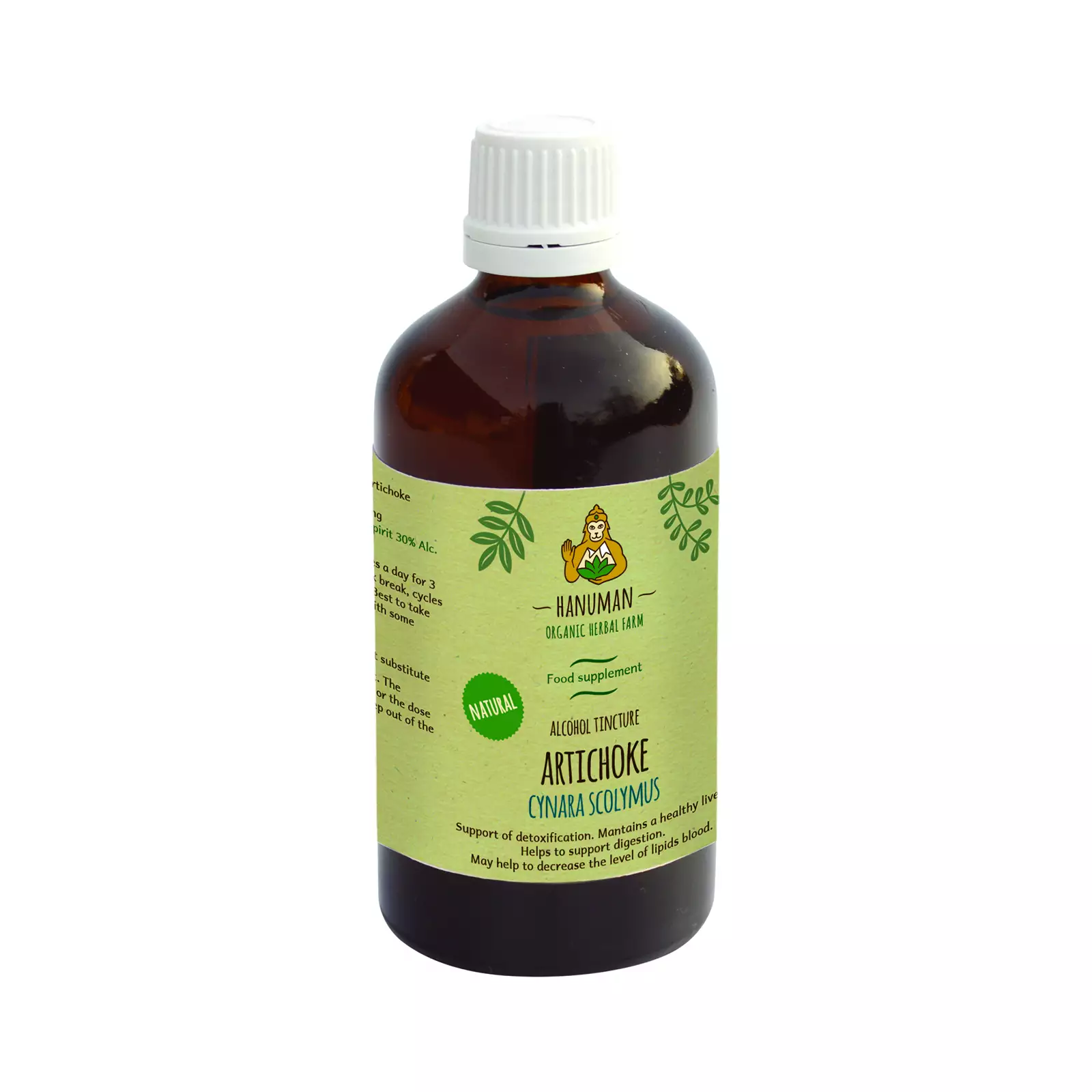
Artichoke tincture is a natural food supplement made from organically grown artichoke leaves (Cynara scolymus), prepared using the traditional cold maceration method. It is often used as gentle herbal support for digestion, the liver and metabolism – particularly during periods when the body benefits from a greater sense of lightness.
Ingredients of Artichoke tincture:
- artichoke leaf – Cynara scolymus (folium)
- Slovenian organic fruit spirit, 30% vol. alcohol
Description
Usage
About the herb
Combinations
FAQ
Artichoke tincture is a liquid herbal preparation made from artichoke leaves (Cynara scolymus, folium), prepared using the traditional cold maceration method. This method helps preserve a broad spectrum of naturally occurring plant compounds, giving the tincture its characteristic full-bodied profile.
We use a carefully selected alcohol concentration specifically suited to artichoke leaves, allowing for effective extraction of different groups of plant compounds. This helps maintain a good balance between the solubility and stability of the naturally occurring constituents.
The artichoke leaves are grown on our farm or sourced from trusted local growers, with preference given to organic cultivation. The plants are harvested by hand at the right time and gently processed soon after harvesting.
Ingredients of Artichoke tincture:
- artichoke leaf – Cynara scolymus (folium)
- Slovenian organic fruit spirit, 30% vol. alcohol
Artichoke leaf concentration:
- extraction ratio 1:6, solvent: fruit spirit 30% vol. alc.
Packaging:
- 100 ml
- dark glass bottle with dropper
Quality of Artichoke tincture:
- 100% natural ingredients
- certified organic (IKC UM, SI-EKO-002)
- free from pesticides, artificial colours and other unnecessary additives
Recommended use of Artichoke tincture:
- 25–30 drops
- 3 times daily
- you can start with a smaller dose and gradually increase to 25–30 drops
- recommended use for 3 weeks, followed by a break of at least 1 week
- in specific cases, the tincture can be used continuously for up to 2 months, followed by a break
How to take Artichoke tincture:
- add to a glass of water or take from a spoon, followed by water
- preferably take on an empty stomach (before a meal or at least 1 hour after eating), as this may support better absorption
- there is no need to eat immediately afterwards
Tips for use:
- artichoke is naturally a bitter herb and is often taken before meals as part of a daily routine
- for one course (3 weeks), 1 bottle is usually sufficient; for longer cycles (up to 2 months), we recommend 2–3 bottles
- the drops can be taken throughout the day (morning–midday–evening) or before larger meals
- due to its characteristic bitter taste, the tincture can be diluted in a larger amount of water
Warnings:
- food supplements should not be used as a substitute for a varied and balanced diet and a healthy lifestyle
- do not exceed the recommended daily dose
- keep out of reach of children
- due to its alcohol content, this product is not suitable for children
- not suitable for people with bile duct obstruction
- if you have gallstones, consult a doctor before use
- not recommended in cases of hypersensitivity to plants from the Asteraceae family
- during pregnancy and breastfeeding, consult a doctor or pharmacist before use
Artichoke (Cynara scolymus)
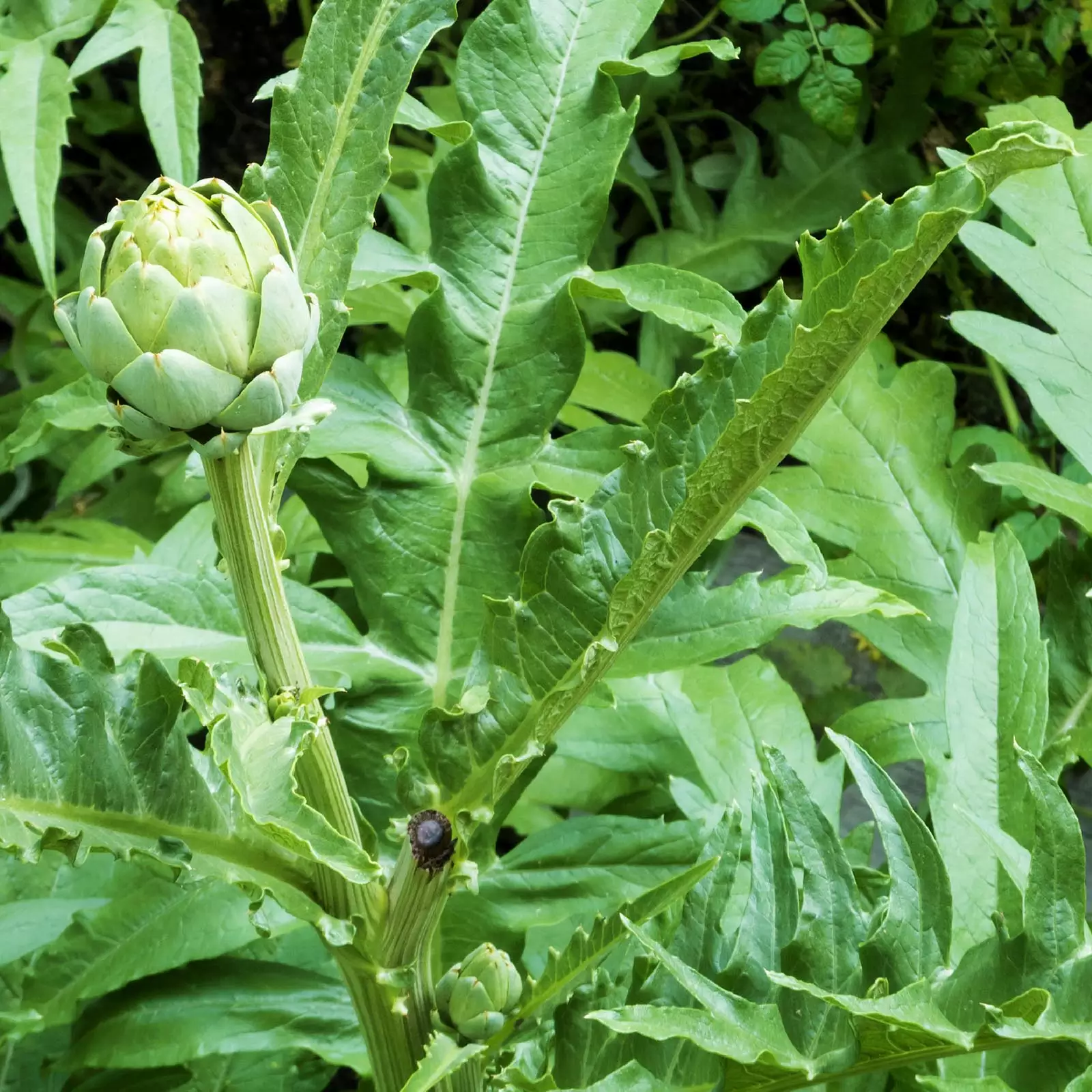
Artichoke is a powerful yet elegant plant with large, deeply divided leaves and a distinctive flower bud, which we also know as a highly valued vegetable. At first glance, it appears almost regal – slightly prickly, yet remarkably beautiful – carrying within it something of the Mediterranean sun, abundance and ancient garden wisdom.
It belongs to the daisy family (Asteraceae), alongside plants such as dandelion, calendula, chamomile and milk thistle. Although today we often associate artichoke primarily with food, it also has a long history in herbal tradition.
In herbalism, we mainly use the leaf (folium). The leaves have a distinctly bitter taste and are particularly valued for preparing herbal extracts, infusions and tinctures. Bitterness in plants has traditionally been associated with the digestive rhythm and a sense of inner flow.
Artichoke originates from the Mediterranean region, where it was already highly valued in ancient times. The ancient Greeks and Romans appreciated it as a special garden crop, and later it became associated with refined, almost festive food. Interestingly, the artichoke we eat is actually an unopened flower bud – if left unharvested, it opens into a large, striking purple flower with an almost thistle-like appearance. Perhaps this is why artichoke seems to stand somewhere between food, ornamental plant and herb.
In traditional herbalism, artichoke is often included during periods when we wish to bring a greater sense of lightness and balance into everyday life, particularly after heavier meals or during times of a less balanced routine. As a distinctly bitter herb, it has often accompanied periods of transition – after richer foods, during seasonal changes or whenever we wish to pay greater attention to digestion and metabolic balance. Its character is distinctly bitter, dry and clear, which is why many people experience it as a herb associated with order, flow and a sense of inner cleansing from heaviness.
Artichoke is also closely connected with the old Mediterranean tradition of eating bitter plants before meals or including them in the spring and early summer diet. Such plants were regarded not simply as food, but as part of the natural rhythm of the year – something that, after the winter months, helped reconnect people with a sense of freshness, movement and balance.
Artichoke tincture + Milk Thistle Seeds
- tincture taken internally, seeds taken internally
- traditionally, artichoke and milk thistle complement each other as bitter herbs, often used during periods when we wish to support a sense of lightness after meals and bring more balance to the digestive rhythm; artichoke brings its characteristic bitterness, while milk thistle gently complements it
Artichoke tincture + Yarrow tincture
- both tinctures taken internally
- yarrow has traditionally been used to accompany digestive processes and therefore combines well with artichoke during periods when we wish to bring a greater sense of balance and rhythm to the body, particularly after richer or less balanced meals
Artichoke tincture + Parasite tincture
- both tinctures taken internally
- artichoke is often included as herbal support for the digestive system, while herbal blends such as Parasite tincture are traditionally used during specific periods when we wish to give the body more focused attention; together they form a holistic approach associated with a sense of cleansing and restoring inner balance
Is artichoke better as an herbal infusion or as a tincture?
Both forms have their place. The main difference lies in their concentration and how they are used. An artichoke infusion is gentler and can be enjoyed as part of a daily ritual, introducing the herb gradually.
Artichoke tincture is a more concentrated preparation, extracting not only water-soluble compounds but also other naturally occurring plant constituents. This allows for a more concentrated preparation in a smaller amount. It is often chosen when more focused herbal support and a convenient way of incorporating artichoke into everyday life are desired – without the need to prepare an infusion.