
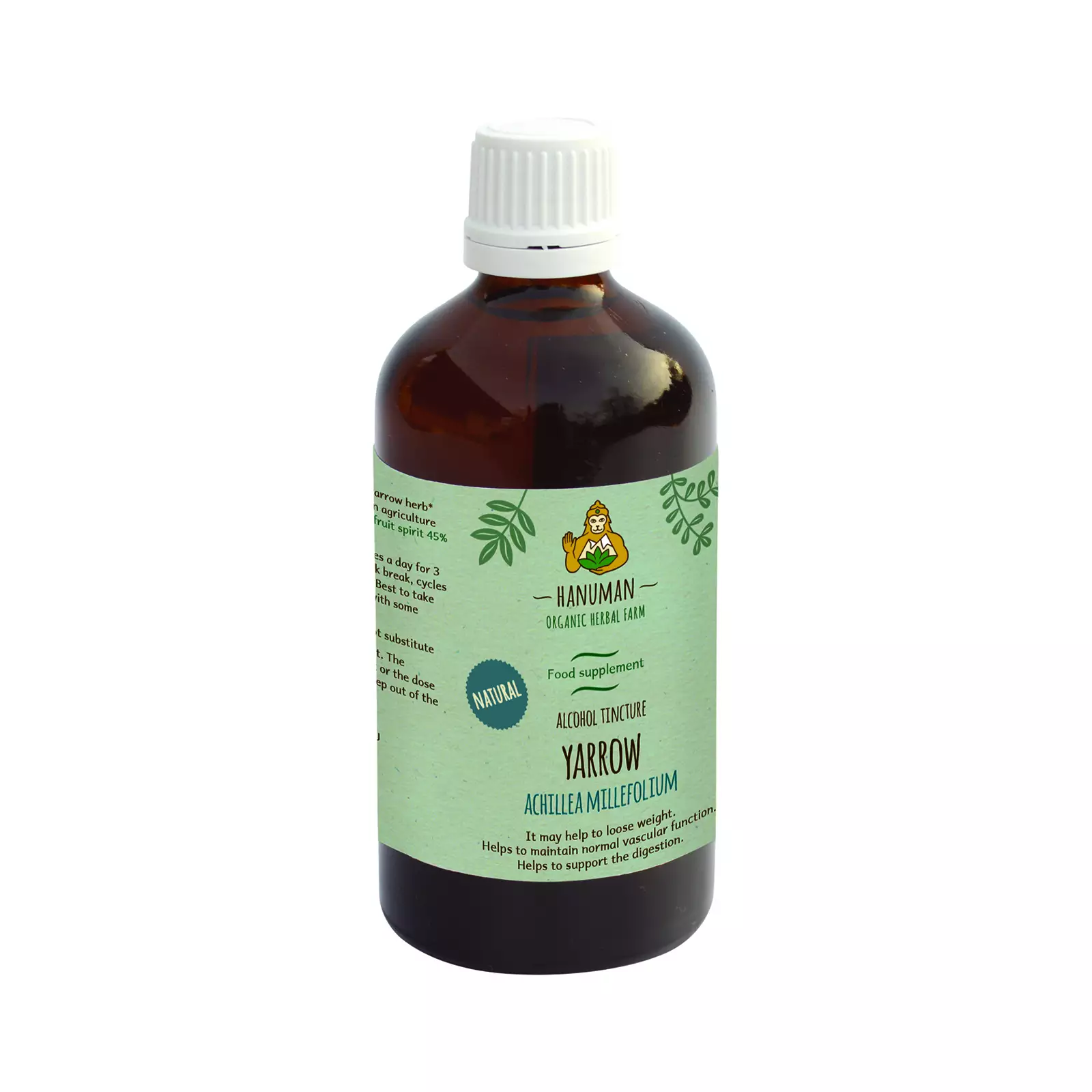

Yarrow Tincture 100 ml – Organic
24,00 €
(incl. VAT)
Yarrow Tincture (Achillea millefolium) is a 100% natural food supplement made from organically grown yarrow herb, prepared using the traditional cold maceration method. Traditionally used to support digestion, circulation and a sense of inner balance.
Ingredients of the Yarrow Tincture:
- yarrow herb (Achillea millefolium, herba)
- fruit spirit (Slovenian origin)
Description
Usage
About the herb
Combinations
FAQ
Yarrow Tincture (Achillea millefolium) is a natural herbal preparation made from yarrow herb using the traditional cold maceration method. We use the aerial parts of the plant (herba), which contain a rich variety of bitter compounds, essential oils and other naturally occurring constituents, creating a broad spectrum of plant compounds.
The alcohol content is carefully selected to suit the individual plant, allowing effective extraction of both water-soluble and alcohol-soluble compounds. This approach helps maintain a balanced profile of the different constituents in the tincture and allows the plant to retain its holistic character in the extract.
The yarrow used for our tincture comes from the Slovenian countryside, where it is either organically grown or ethically gathered in the wild. Harvesting is carried out by hand, with care for the plant and respect for natural rhythms, helping preserve its quality and vitality.
Ingredients of the Yarrow Tincture:
- yarrow herb (Achillea millefolium, herba)
- fruit spirit (Slovenian origin, 40% vol. alcohol)
Concentration of Yarrow:
- extraction ratio 1:6, 40% vol. alcohol
Packaging:
- 100 ml
- dark glass bottle with dropper
Quality of the Yarrow Tincture:
- 100% natural ingredients
- certified organic (IKC UM, SI-EKO-002)
- free from pesticides, artificial colours and other additives
Recommended use of the Yarrow Tincture:
- 25–30 drops
- up to 3 times daily
- you can start with a lower amount and gradually increase to 25 drops
- recommended for 3 weeks, followed by a break of at least 1 week
- in exceptional cases, it may be taken continuously for up to 2 months, followed by a break
How to take:
- add the tincture to a glass of water or take it from a spoon followed by some water
- preferably take on an empty stomach (before a meal or at least 1 hour after eating), as this allows for better absorption; there is no need to eat immediately afterwards
Tips for using Yarrow Tincture:
- yarrow is traditionally valued as a bitter herb, and its aromatic character makes it a popular companion around mealtimes or during periods when a greater feeling of lightness in the stomach is desired
- one bottle is sufficient for a 3-week course; for longer cycles, we recommend 2–3 bottles
- the drops can be held in the mouth briefly before swallowing to experience their characteristic bitter taste – this is also part of the traditional use of yarrow
Warnings:
- food supplements should not be used as a substitute for a varied diet and a healthy lifestyle
- do not exceed the recommended daily dose
- keep out of reach of children
- not suitable for children due to its alcohol content
- people sensitive to plants from the daisy family (Asteraceae) should use this product with caution
- during pregnancy and breastfeeding, consult an appropriate healthcare professional before use
Yarrow (Achillea millefolium)
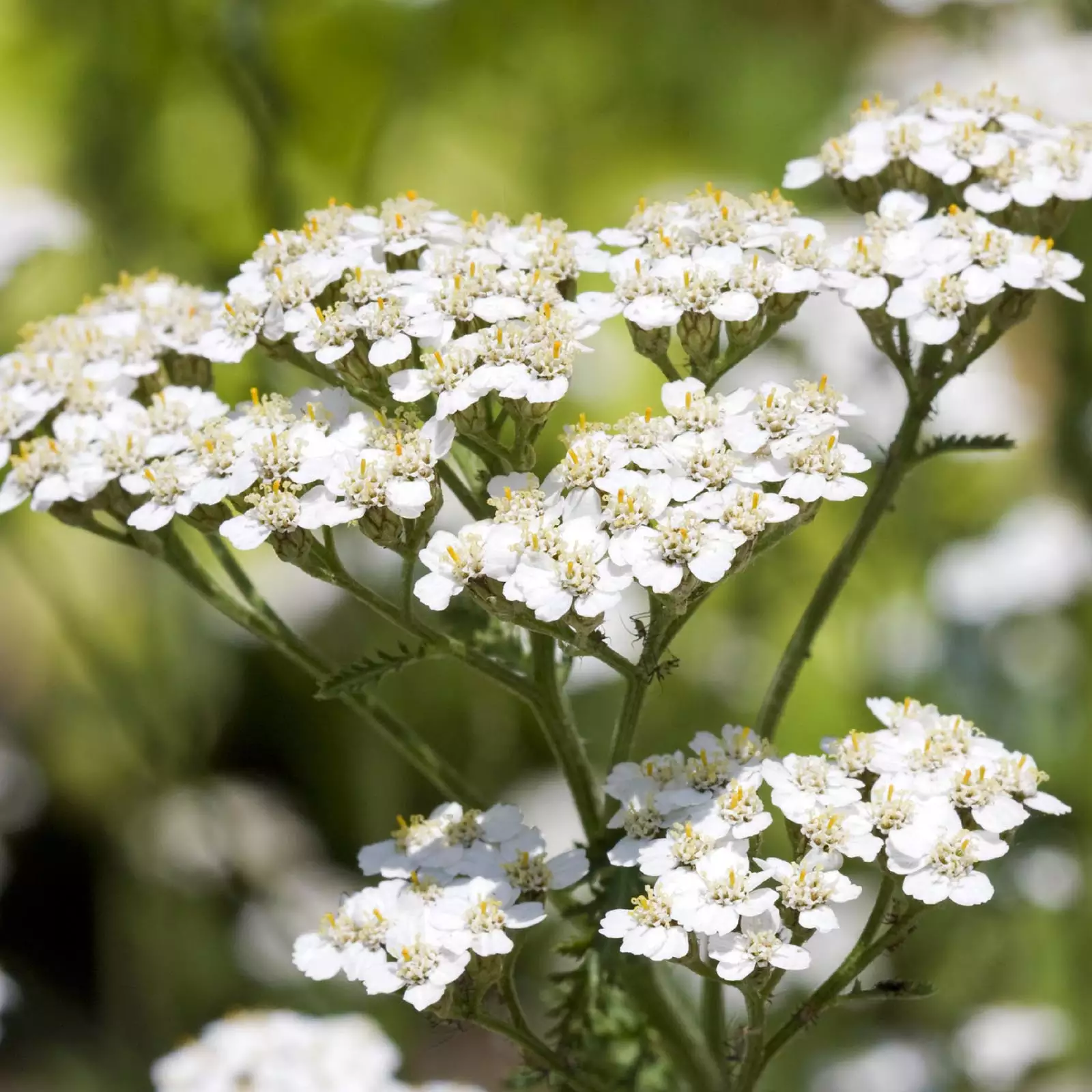
Yarrow is one of those plants that feels both simple and ancient, as though it has always accompanied people in meadows, along paths and in the home herbal cupboard. Its tiny white to pale pink flowers and finely divided leaves give it a delicate appearance, yet it has the character of a bitter, aromatic and remarkably versatile herb. There is both gentleness and inner strength in yarrow – qualities we often begin to notice only when we take the time to look at it more closely.
Yarrow belongs to the daisy family (Asteraceae), together with familiar plants such as chamomile, marigold and wormwood. Plants in this family are often recognised by their distinctive flower heads and their rich variety of aromatic compounds, developed through their interaction with the surrounding environment.
With yarrow, we use the aerial parts of the plant harvested during flowering – the herb, botanically referred to as Achillea millefolium, herba. This part combines the flowers, leaves and stems, allowing the preparation to capture the plant’s complete herbal character and natural rhythm.
Yarrow also has a fascinating story behind its name. The Latin name Achillea is believed to be connected with the Greek hero Achilles, who, according to tradition, knew the plant as a valuable herbal companion. The name millefolium means “a thousand leaves”, referring to its finely divided foliage, which gives the impression of countless tiny leaves. In Slovenia, yarrow has long been valued as a traditional household herb, often gathered during the summer months and carefully stored for later use.
Traditionally, yarrow is a herb people have turned to during periods when they are looking for a greater sense of inner order, lightness and balance. It has often accompanied richer meals, women’s monthly cycles and times when the body seems to call for gently bitter, aromatic herbal support. Its character is warm, slightly bitter and grounding, which is why many people associate yarrow with a feeling of balance.
Many customs and traditions are also connected with yarrow. In some regions, it wa
Yarrow Tincture + Centaury Tincture
- both tinctures for internal use
- traditionally, yarrow and centaury complement each other well as bitter herbal companions around mealtimes; centaury brings a more pronounced bitterness, while yarrow softens the combination and adds a sense of balance
Yarrow Tincture + Lady’s Mantle Tincture
- both tinctures for internal use
- a gentle combination traditionally valued by women; lady’s mantle brings softness and a sense of support, while yarrow adds structure and a slightly bitter character
Yarrow Tincture + Horse Chestnut Balm
- tincture for internal use, balm for external use
- a combination of internal and external care; yarrow can be included as part of an everyday herbal routine, while applying the balm to the legs brings a pleasant feeling of lightness
Is yarrow suitable during pregnancy?
Yarrow (Achillea millefolium) is not traditionally considered a first-choice herb during pregnancy, so its use during this period is generally avoided or limited. This is not necessarily because of direct harmful effects, but rather because yarrow contains essential oils and other active compounds that may influence smooth muscle activity and the body’s natural responses. During pregnancy, a more cautious approach is generally recommended, with preference given to herbs with a long history of safe use during this period.
Yarrow is also traditionally associated with the female cycle and with herbs used alongside the body’s natural rhythms, which is another reason it is generally not included during the particular and sensitive balance of pregnancy. The tincture also contains alcohol, providing an additional reason to avoid this type of preparation during pregnancy.
Occasional use in very small amounts, for example as part of a herbal tea blend, is sometimes seen in practice, but this should always be considered carefully and discussed with an appropriate healthcare professional. With concentrated preparations such as tinctures, a more cautious approach is recommended.
If you would still like to include herbs in your routine during pregnancy, gentler options such as lemon balm (Melissa officinalis, folium) or chamomile (Matricaria chamomilla, flos) are often chosen. Peppermint (Mentha × piperita, folium) may also occasionally be suitable as a mild tea, particularly in small amounts rather than as a concentrated preparation. As with all herbs during pregnancy, it is important to listen to your body and seek professional advice when needed.