

Buckwheat Tincture 100 ml – Organic
24,00 €
(incl. VAT)
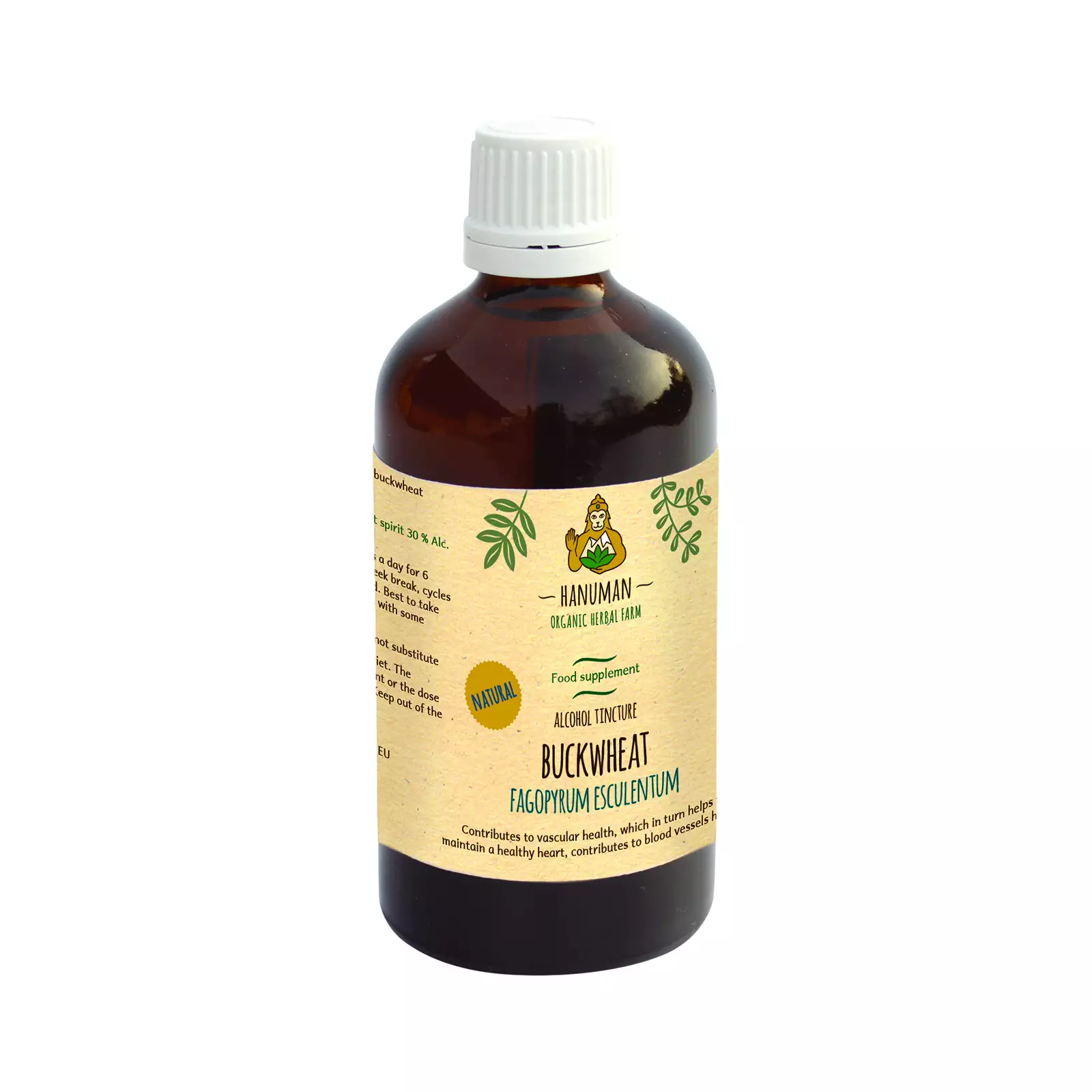
Buckwheat Tincture (Fagopyrum esculentum) is a natural food supplement made from organically grown Slovenian buckwheat flowers and leaves using the traditional cold maceration method. Traditionally used to support the vascular system and a feeling of light legs.
Ingredients of the Buckwheat Tincture:
- buckwheat flowers and leaves – Fagopyrum esculentum, flos cum folio (organic, Slovenian origin)
- fruit spirit, 30% vol. alcohol (organic, Slovenian origin)
Description
Usage
About the herb
Combinations
FAQ
Buckwheat Tincture (Fagopyrum esculentum) is a concentrated herbal preparation made from buckwheat flowers and leaves. It is prepared using the traditional cold maceration method, which helps preserve a broad spectrum of naturally occurring plant compounds and gives the tincture its rich character.
The alcohol content is specifically adjusted to suit buckwheat. As the plant contains mainly flavonoids, including rutin, along with other more water-soluble compounds, a lower alcohol concentration is used to support their effective extraction while maintaining the stability and shelf life of the preparation.
We grow our buckwheat on our herbal farm in Slovenia. The plants are carefully selected, harvested by hand and gently processed using methods shaped by many years of herbal practice.
Ingredients of the Buckwheat Tincture:
- buckwheat flowers and leaves – Fagopyrum esculentum, flos cum folio (organic, Slovenian origin)
- fruit spirit, 30% vol. alcohol (organic, Slovenian origin)
Concentration of Buckwheat Flowers and Leaves:
- extraction ratio 1:6, extraction solvent: fruit spirit 30% vol. alcohol
Packaging:
- 100 ml
- dark glass bottle with dropper
Quality of the Buckwheat Tincture:
- 100% natural ingredients
- certified organic (IKC UM, SI-EKO-002)
- free from pesticides, artificial colours and other additives
Recommended use of the Buckwheat Tincture:
- 25–30 drops
- 3 times daily
- you can start with a smaller amount and gradually increase to 25–30 drops
- recommended for 6 weeks, followed by a break of at least 1 week
How to take the Buckwheat Tincture:
- add to a glass of water or take from a spoon, followed by some water
- preferably take on an empty stomach (before a meal or at least 1 hour after eating), as this allows for better absorption; there is no need to eat immediately afterwards
Tips for use:
- buckwheat contains naturally occurring compounds that may increase the skin’s sensitivity to sunlight (photosensitivity), so avoid intense sun exposure while using the tincture
- for a 6-week course, we recommend 2 bottles
- the tincture can be combined with external herbal care, such as a balm, particularly during periods when your legs need a little extra support
Warnings:
- food supplements should not be used as a substitute for a varied and balanced diet and a healthy lifestyle
- do not exceed the recommended daily dose
- keep out of reach of children
- not suitable for children due to its alcohol content
- due to the potential photosensitising effect of buckwheat, avoid intense sun exposure and sunbeds while using the tincture
Buckwheat (Fagopyrum esculentum)
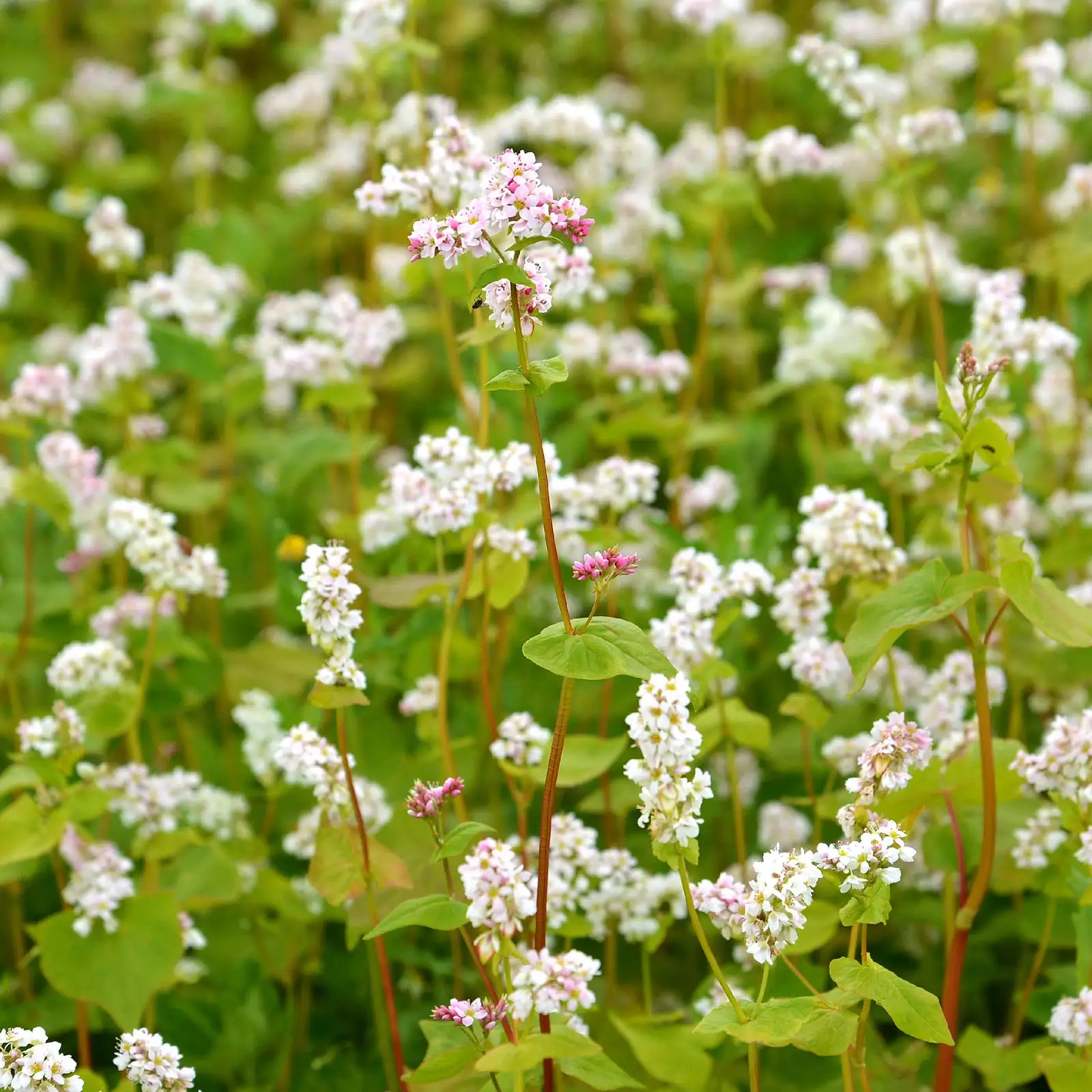
Buckwheat is a delicate yet distinctive plant, easily recognised by its small white to pale pink flowers and heart-shaped leaves. Although it is most commonly associated with its seeds and use as food, its flowers and leaves also have an established place in herbal tradition, where they are valued in connection with vascular support and a feeling of lightness.
Buckwheat belongs to the knotweed family (Polygonaceae), which means that botanically it is not a true cereal grain, even though it is often used in much the same way in cooking. For this reason, buckwheat is classified as a pseudocereal.
In herbalism, we primarily use the flowers and leaves – Fagopyrum esculentum, flos cum folio. These parts of the plant are particularly valued for herbal preparations such as tinctures and contain a rich spectrum of naturally occurring plant compounds, including flavonoids.
Buckwheat holds a special place in Slovenian tradition. It is more than simply a cultivated plant – it has become almost a symbol of simplicity, resilience and a close connection with the land. Historically, buckwheat was valued for its ability to grow in poorer soils and at higher elevations, where other crops did not always thrive. When buckwheat comes into flower, entire fields seem to glow with soft white blossoms. The flowers are also highly attractive to bees, making buckwheat a valuable nectar plant.
Traditionally, buckwheat flowers and leaves are used as part of herbal routines for vascular support, particularly during periods when a feeling of lightness in the legs and general well-being are desired. In traditional herbalism, buckwheat is valued as a plant that can be included in everyday herbal routines when gentle, steady plant-based support is preferred.
Buckwheat is also traditionally associated with maintaining healthy blood vessels and supporting cardiovascular well-being. For this reason, it is often valued as a herb connected with vascular vitality and a sense of healthy circulation.
Buckwheat Tincture + Horse Chestnut Balm
- tincture for internal use, balm for external use
- traditionally, buckwheat and horse chestnut complement each other well as internal and external herbal support for the vascular system; buckwheat provides gentle support from within, while Horse Chestnut Balm brings a feeling of lightness and comfort to the legs when applied to the skin
Buckwheat Tincture + Horse Chestnut Tincture
- both tinctures for internal use
- traditionally, buckwheat and horse chestnut complement each other as herbal support for the vascular system; buckwheat is associated with vascular vitality and a sense of healthy circulation, while horse chestnut adds its characteristic support for a feeling of light legs
Buckwheat Tincture + Shepherd’s Purse Tincture
- both tinctures for internal use
- traditionally, buckwheat and shepherd’s purse are combined during periods when greater balance is desired; buckwheat brings a sense of lightness, while the gentle character of shepherd’s purse complements a feeling of inner balance and stability
Is buckwheat photosensitising and how can this affect the skin?
Buckwheat, particularly its flowers and green parts, naturally contains compounds including fagopyrin, which is known for its photosensitising properties. This means that sufficiently high exposure to these compounds, combined with strong sunlight, may increase the skin’s sensitivity to UV radiation.
In sensitive individuals, increased photosensitivity may appear as redness, warmth, a burning sensation or irritation of sun-exposed skin. Such reactions do not occur in everyone and can depend on several factors, including the amount consumed, individual sensitivity and the intensity and duration of sun exposure.
As a precaution, it is sensible to avoid prolonged exposure to intense sunlight and sunbeds while regularly using preparations made from the flowering aerial parts of buckwheat.
How much time can I spend in the sun while taking Buckwheat Tincture?
There is no precise amount of time that can be considered safe for everyone. Individual responses vary depending on skin type, UV intensity, the amount of the preparation consumed and personal sensitivity.
As a precaution, avoid prolonged exposure to strong sunlight, particularly around midday. Normal shorter periods outdoors, such as walking in the morning or later in the afternoon, can be approached sensibly while using appropriate sun protection.
For longer periods outdoors, use additional protection such as clothing and shade. If you notice unusual redness, warmth, burning or increased skin sensitivity, avoid further strong sun exposure and discontinue the tincture until you have sought appropriate professional advice.
How is buckwheat traditionally used for fragile capillaries?
Buckwheat (Fagopyrum esculentum) naturally contains flavonoids, of which rutin is particularly well known. R