

Horse Chestnut Tincture 100 ml – Organic
24,00 €
(incl. VAT)
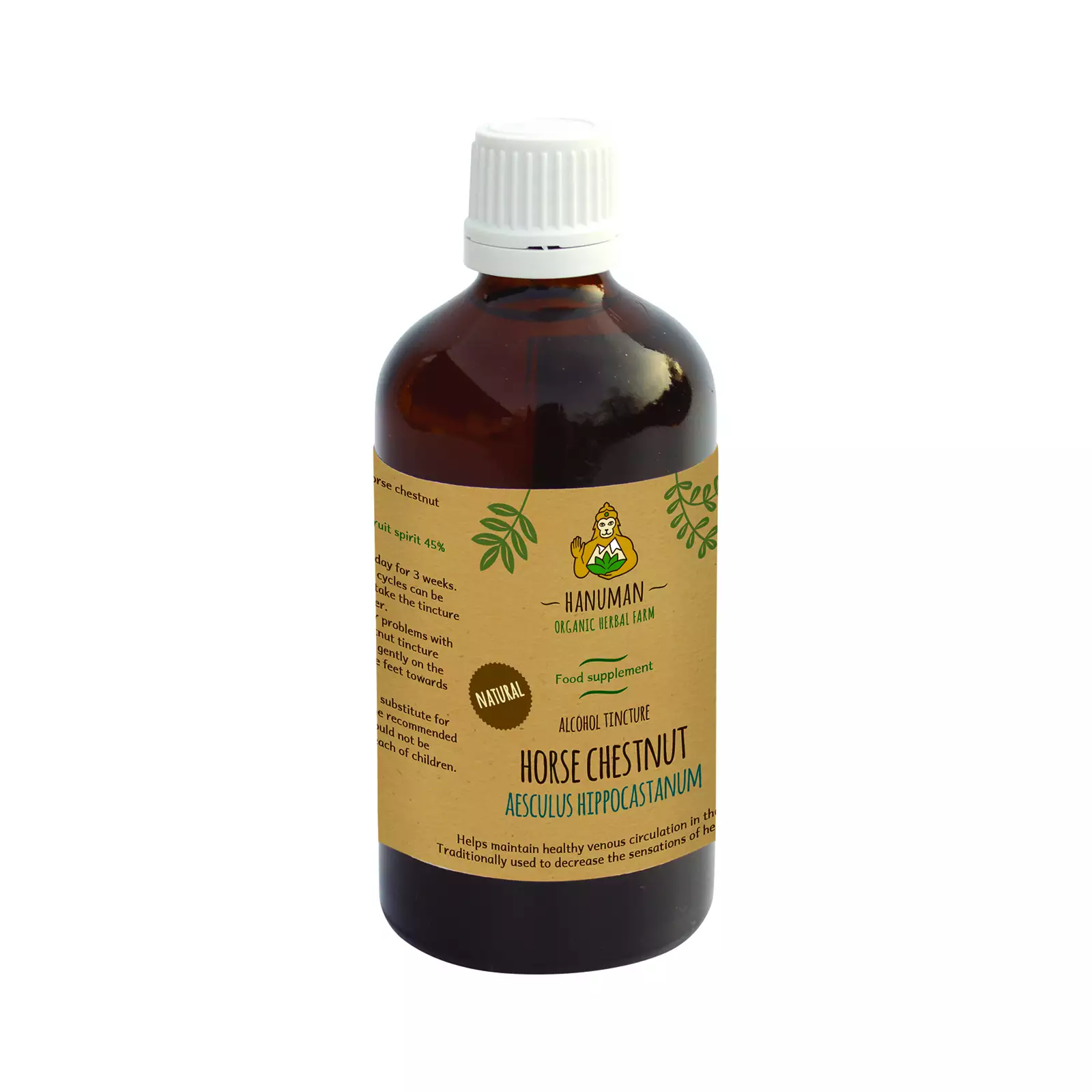
Horse Chestnut Tincture is a natural food supplement made from horse chestnut fruits using the traditional cold maceration method. This organic tincture made from Slovenian horse chestnuts is traditionally used to support circulation and a feeling of light legs.
Ingredients of the Horse Chestnut Tincture:
- horse chestnut fruit (Aesculus hippocastanum, fructus)
- fruit spirit (organic, Slovenian origin)
Description
Usage
About the herb
Combinations
FAQ
Horse Chestnut Tincture is a natural herbal preparation made from horse chestnut fruits (Aesculus hippocastanum) using the traditional cold maceration method. This method helps preserve a broad spectrum of naturally occurring plant compounds that give the tincture its distinctive richness.
The alcohol content is carefully selected to allow effective extraction of both water-soluble and lipophilic plant compounds. The result is a balanced extract that captures a broad spectrum of the plant’s naturally occurring constituents.
We gather our horse chestnuts from clean natural environments in Slovenia, with respect for nature and its rhythms. The fruits are collected by hand, with the understanding that the quality of a tincture always begins with the plant itself.
Ingredients of the Horse Chestnut Tincture:
- horse chestnut fruit (Aesculus hippocastanum, fructus)
- fruit spirit (organic, Slovenian origin)
Concentration of Horse Chestnut Fruit:
- extraction ratio 1:2, Solvent: fruit spirit 40% vol. alcohol
Packaging:
- 100 ml
- dark glass bottle with dropper
Quality of the Horse Chestnut Tincture:
- 100% natural ingredients
- certified organic (IKC UM, SI-EKO-002)
- free from pesticides and artificial colours
Recommended use of the Horse Chestnut Tincture:
- 25–30 drops
- 3 times daily
- you can start with a smaller amount (10–15 drops) and gradually increase to 25–30 drops
- recommended for 3 weeks, followed by a break of at least 1 week
- in exceptional cases, it may be taken continuously for up to 2 months, followed by a break
External use of the Horse Chestnut Tincture:
- the tincture can also be used externally, undiluted
- apply a few drops to the skin and gently massage upwards from the feet towards the heart
- use 1–3 times daily, as needed
- after application, you can follow with a balm, such as Horse Chestnut Balm, to help keep the skin soft
How to take the Horse Chestnut Tincture internally:
- add to a glass of water or take from a spoon followed by some water
- preferably take on an empty stomach (before a meal or at least 1 hour after eating), as this allows for better absorption; there is no need to eat immediately afterwards
Tips for use:
- horse chestnut is traditionally associated with a feeling of lightness in the legs, so the tincture is often used during periods when the legs are under greater strain, such as prolonged standing or sitting, or during hot weather
- for one 3-week course, one bottle is usually sufficient; for longer-term use, 2 bottles may be needed
- internal and external use can complement each other as part of a well-rounded herbal routine, for example together with Horse Chestnut Balm
Warnings:
- food supplements should not be used as a substitute for a varied diet and a healthy lifestyle
- do not exceed the recommended daily dose
- keep out of reach of children
- not suitable for children due to its alcohol content
- not recommended during pregnancy or breastfeeding
- do not apply to open wounds, mucous
Horse Chestnut (Aesculus hippocastanum)
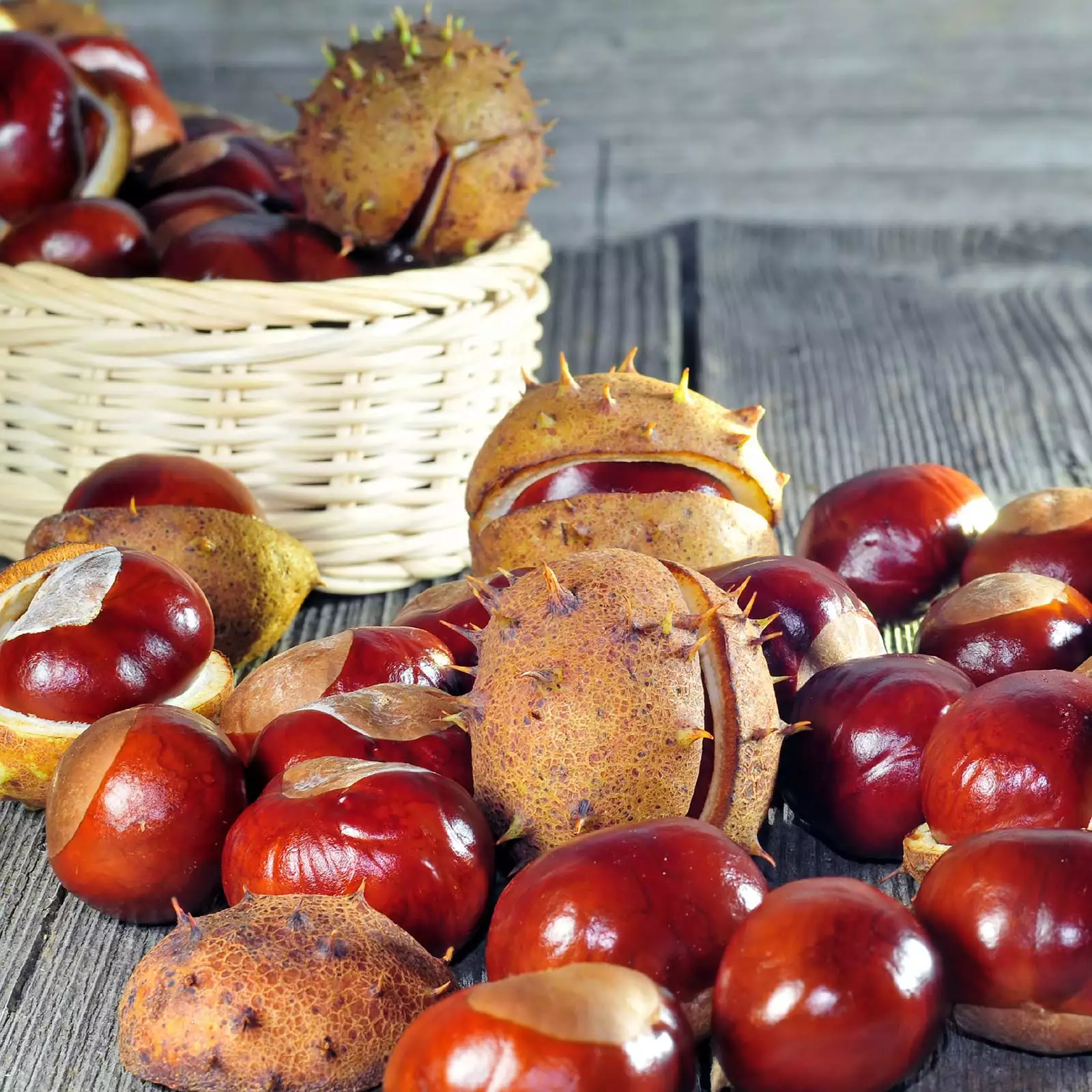
Horse chestnut is an impressive tree, easily recognised by its glossy brown fruits, large palmate leaves and upright, almost candle-like flower clusters. It grows in parks, along avenues and beside paths, where its presence creates a sense of stability and calm. In folk tradition, it was regarded as a tree of strength and protection.
It belongs to the Sapindaceae family.
In herbalism, we mainly use the fruit – the seed (semen), which ripens in autumn. This is the most distinctive part of the plant and has long been used in traditional herbal preparations.
Horse chestnut originates from the Balkan Peninsula, from where it spread throughout Europe. Its name hippocastanum comes from historical references associating the fruits with horses. In Slovenia, it also has another, quieter story – people would carry a horse chestnut in their pocket as a small talisman, associated with strength and resilience. Perhaps you remember picking one up from the ground in autumn – smooth, warm and almost alive in your hand.
Traditionally, horse chestnut is associated with a sense of lightness and flow in the legs, particularly during periods when they are under greater strain from prolonged standing or sitting. It is often included as part of an everyday herbal routine when a greater sense of balance and stability in the body is desired.
In herbal tradition, horse chestnut is also associated with general well-being, skin care and a sense of protection in more demanding external conditions. Its presence in herbal preparations is quiet yet deeply grounding – like a source of support that becomes noticeable over time.
Horse Chestnut Tincture + Horse Chestnut Balm
- tincture for internal use, balm for external use
- traditionally, horse chestnut is used as a well-rounded herbal approach to supporting circulation; the tincture provides internal support associated with a sense of lightness, while the balm complements it externally with gentle skin care and a relaxing sensation in the legs
Horse Chestnut Tincture + Buckwheat Tincture
- both tinctures for internal use
- traditionally, horse chestnut and buckwheat complement each other well; horse chestnut brings a sense of support and tone, while the gentler character of buckwheat adds a sense of stability and balance
Horse Chestnut Tincture + Shepherd’s Purse Tincture
- both tinctures for internal use
- a combination that brings together a sense of flow and gentle balance; horse chestnut has a more grounding character, while shepherd’s purse adds a lighter, more delicate quality to the overall herbal support
Horse Chestnut Tincture + Yarrow Tincture
- both tinctures for internal use
- traditionally, yarrow is associated with a sense of balance and natural rhythm in the body; together with horse chestnut, it creates a gentle yet steady herbal combination for periods of greater strain
Is horse chestnut more commonly associated with capillaries or veins?
In traditional herbal use, horse chestnut is more commonly associated with the venous system. It is used during periods when the legs are under greater strain, for example from prolonged standing or sitting, and when a greater sense of lightness and comfort in the legs is desired.
For capillary support, other plants such as buckwheat are often chosen, as they are traditionally associated with gentler support for the smaller blood vessels. Horse chestnut has a stronger, more grounding character and is therefore more commonly included in herbal preparations for general circulatory support, particularly those focused on the venous system.
In practice, different herbs are often combined to provide a broader spectrum of herbal support for both larger and smaller blood vessels.
Is horse chestnut suitable for internal use? Is it poisonous?
Raw horse chestnut seeds are not suitable for consumption and can be toxic. They contain naturally occurring compounds that may cause adverse effects if consumed in an unsuitable form or amount.
For internal use, horse chestnut should therefore only be used in appropriately prepared and standardised products intended specifically for oral consumption. Never eat raw horse chestnuts or use homemade preparations internally without appropriate professional guidance.
If you take medication, have a medical condition, are pregnant or breastfeeding, consult a doctor or pharmacist before using horse chestnut internally.