

Red Clover Tincture 100 ml – Organic
24,00 €
(incl. VAT)
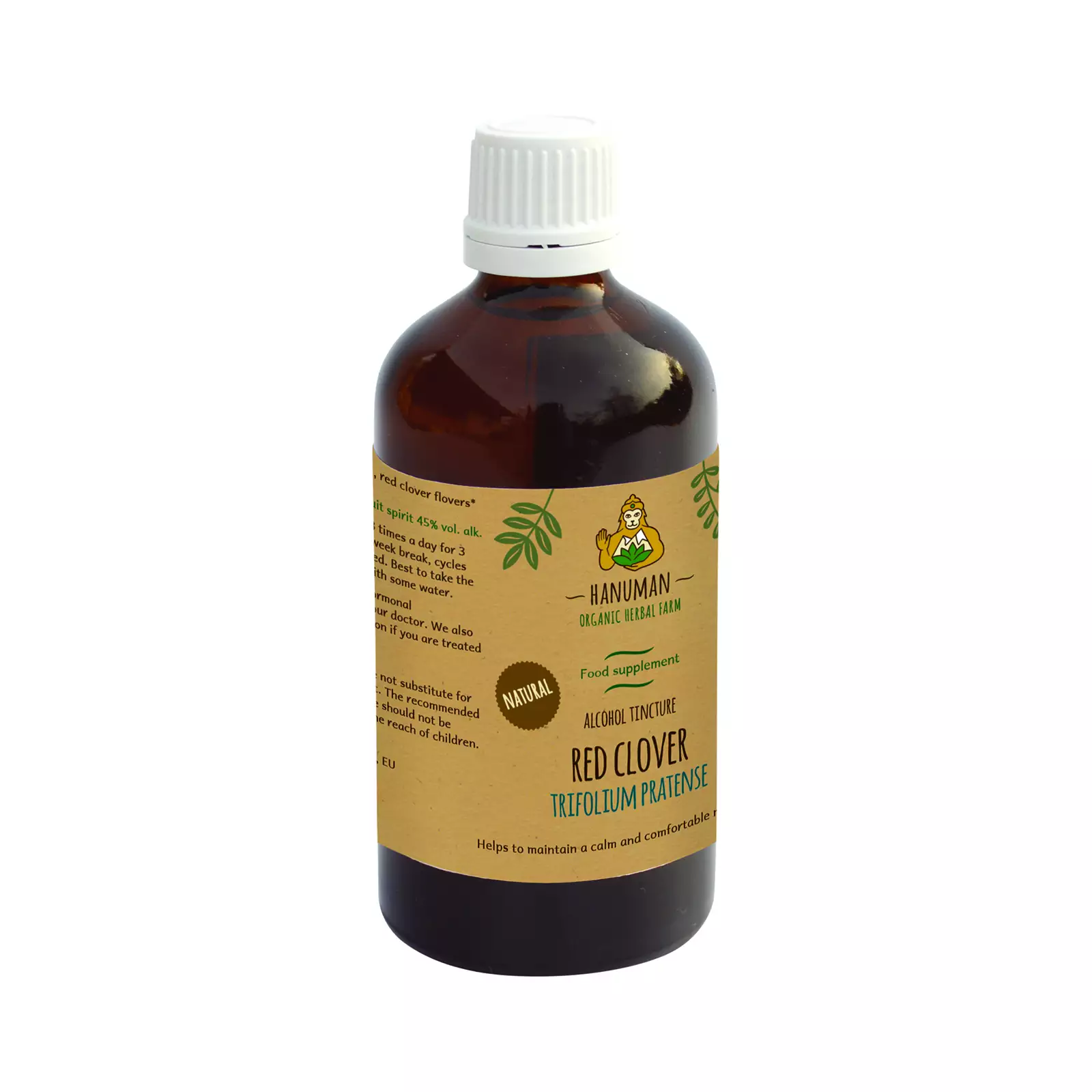
Red Clover tincture (Trifolium pratense) is a natural food supplement made from organic flowers using the traditional cold maceration method. It is traditionally used for support during menopause and for female hormonal balance.
Ingredients of Red Clover tincture:
- Red Clover flowers (Trifolium pratense, flos) – organic, Slovenian origin
- fruit spirit organic, Slovenian origin
and artificial colours
Description
Usage
About the herb
Combinations
FAQ
Red Clover tincture is a natural herbal preparation made from Red Clover flowers (Trifolium pratense, flos), prepared using the traditional cold maceration method. This process helps preserve a broad spectrum of naturally occurring plant compounds that develop during flowering.
The alcohol content is carefully adjusted to the delicate nature of Red Clover flowers. The lower alcohol content (30%) allows for effective extraction of water-soluble compounds while also capturing other important constituents of the plant. In this way, the tincture preserves the gentle, balanced character of the flowers and their natural plant profile.
We grow Red Clover on our own herbal farm in Slovenia. The plants are carefully cultivated and the flowers are harvested by hand at full bloom, when their natural qualities are at their peak.
Ingredients of Red Clover tincture:
- Red Clover flowers (Trifolium pratense, flos) – organic, Slovenian origin
- fruit spirit, 30% vol. alcohol – organic, Slovenian origin
Red Clover flower concentration:
- extraction ratio 1:6, 30% vol. alcohol
Packaging:
- 100 ml
- dark glass bottle with dropper
Quality of Red Clover tincture:
- 100% natural ingredients
- certified organic (IKC UM, SI-EKO-002)
- free from pesticides and artificial colours
Recommended use of Red Clover tincture:
- 25–30 drops
- 3 times daily
- you may start with a lower amount (15–20 drops) and gradually increase to 25 drops
- recommended for 3 weeks, followed by a break of at least 1 week
- in specific cases, it may be taken continuously for up to 2 months, followed by a break
How to take Red Clover tincture:
- add to a glass of water or take on a spoon
- preferably take on an empty stomach (before a meal or at least 1 hour after eating); there is no need to eat immediately after taking the tincture
Tips for use:
- Red Clover is traditionally associated with periods of transition and change, which is why it is often used in cycles
- one 100 ml bottle usually lasts approximately 3 weeks
- it is often used as part of a longer, rhythmic approach with regular breaks, or in combination with other herbs
Warnings:
- food supplements should not be used as a substitute for a varied and balanced diet and a healthy lifestyle
- do not exceed the recommended daily dose
- keep out of reach of children
- due to its alcohol content, it is not suitable for children
- not suitable for use during pregnancy
- if you are using hormonal preparations or have a hormone-sensitive condition, consult a qualified healthcare professional before use
Red Clover (Trifolium pratense)
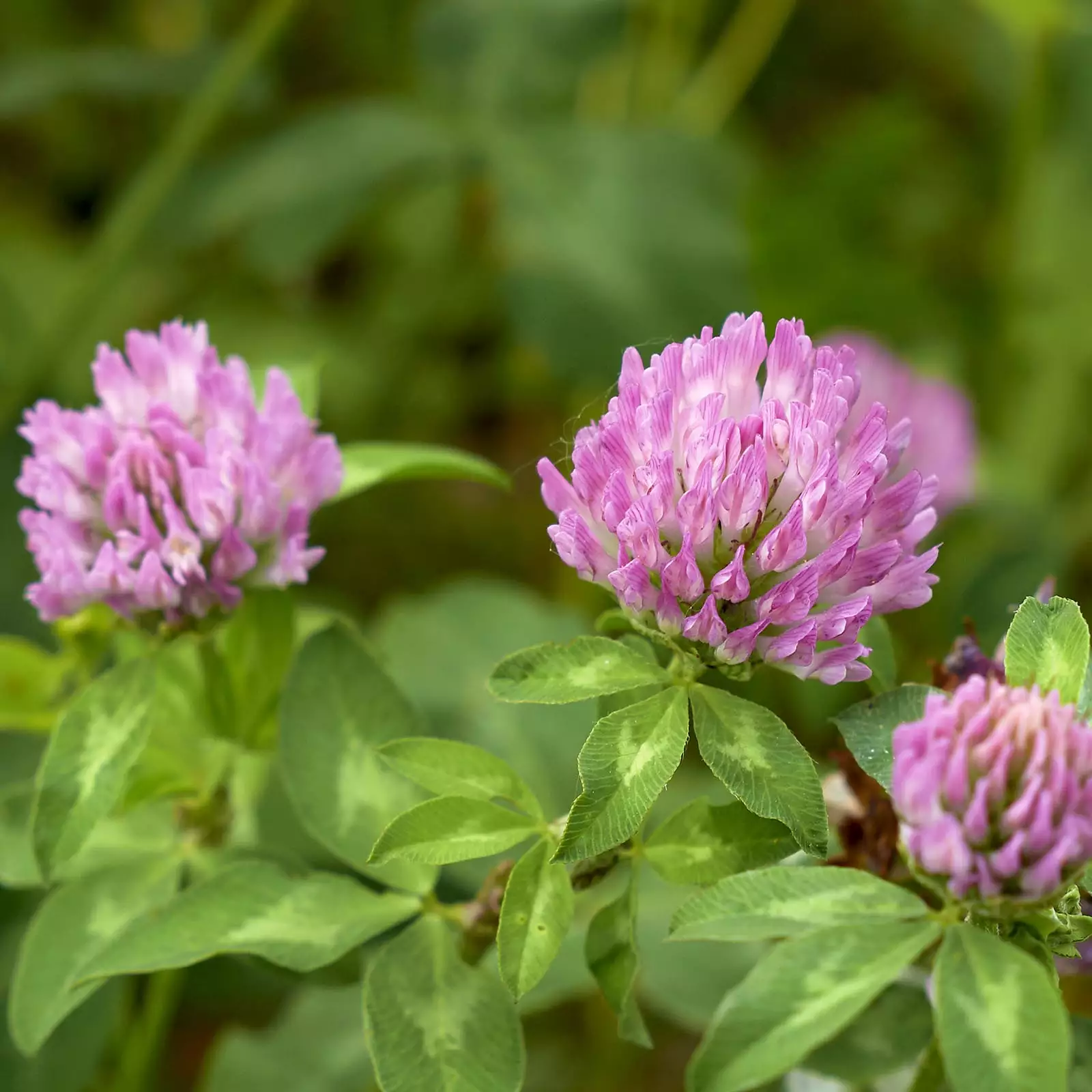
Red Clover is a delicate meadow plant with distinctive pinkish-purple flowers that resemble soft, rounded heads gently swaying in the breeze.
It grows in meadows, along paths and at the edges of fields, bringing a sense of softness and connection with the earth. There is something calm and almost nurturing about its character – as though the plant itself invites us towards balance and gentle support for the body.
It belongs to the legume family (Fabaceae).
In herbalism, we primarily use the flowers (Trifolii pratensis flos), gathered when the plant is in full bloom. At this stage, the flowers are at their richest and most vibrant. They can be used fresh or gently dried for tincture making, where the aim is to preserve as much of their natural plant profile as possible.
Red Clover has long been part of folk tradition. In meadows, it is often surrounded by bees, which are particularly attracted to its flowers – perhaps one of the reasons why the plant has become associated with fertility, abundance and cooperation. Clover has also long been considered a symbol of good fortune, particularly the rare four-leaf clover. It reminds us that sometimes the smallest discoveries can bring the greatest joy.
In folk tradition, Red Clover has often been associated with different stages of life, particularly gentle periods of transition when the body and its inner rhythms are seeking a new balance. It was a familiar part of everyday herbal preparations and simple home herbal routines.
Traditionally, Red Clover is included during periods when we wish to offer the body a sense of support and inner balance. It is often associated with a feeling of lightness and with herbal practices that accompany the body’s natural rhythms and transitions through life.
Traditional herbal use also places Red Clover among plants associated with balance and general well-being. It is often included in everyday herbal routines intended to encourage a closer connection with the body and its natural rhythm.
Red Clover tincture + Chasteberry tincture
- both tinctures taken internally
- Chasteberry is traditionally included during periods of cyclical change, while Red Clover offers gentle support; together, they complement a herbal routine centred around the body’s natural rhythms through different stages of life
Red Clover Tincture + Hormone Balance Tincture
- both tinctures for internal use
- red clover is traditionally valued as a gentle herbal support during periods of hormonal change, while Hormonal Balance combines selected herbs traditionally used to support female balance and well-being
- together, they offer complementary herbal support especially during periods when the body is adapting to natural hormonal changes
Red Clover tincture + Milk Thistle seeds + Shepherd’s Purse tincture
- tincture taken internally, seeds taken internally, tincture taken internally
- traditionally, combinations such as this are included during periods when we wish to support a sense of lightness and inner balance; Shepherd’s Purse and Milk Thistle provide a grounding foundation, while Red Clover gently rounds out the combination
Does Red Clover affect oestrogen or testosterone?
Red Clover contains isoflavones – naturally occurring plant compounds that can interact with oestrogen receptors in the body. Because of this property, they are classified as phytoestrogens.
Their activity is considerably weaker and more complex than that of the body’s own oestrogens, and Red Clover should not be understood as simply increasing oestrogen or decreasing testosterone levels. Its isoflavones have been studied particularly in relation to menopause and the natural hormonal changes that occur during this stage of life.
Can I take Red Clover if I am using hormone therapy?
If you are using prescribed hormone therapy, additional caution is recommended with Red Clover. Red Clover contains isoflavones – plant compounds that can interact with oestrogen receptors in the body.
Because of this activity, we recommend consulting your doctor or pharmacist before using Red Clover alongside hormone therapy.
This is particularly important when your hormonal system is already being influenced by prescribed treatment, as any additional herbal preparations or food supplements should be considered in the context of your individual therapy.
Can I use Red Clover if I have a hormone-sensitive condition, such as breast cancer?
If you have a hormone-sensitive condition, such as certain types of breast cancer, particular caution is required with Red Clover. Red Clover contains isoflavones – plant compounds that can interact with oestrogen receptors in the body.
Their activity is not the same as that of the body’s own oestrogen, but because of their interaction with oestrogen receptors, their suitability needs to be considered individually in hormone-sensitive conditions.
For this reason, Red Clover should not be used in these circumstances without first consulting your oncologist or another doctor familiar with your condition and treatment. This applies both during active treatment and afterwards.