

Japanese Knotweed Tincture 100 ml – Organic
24,00 €
(incl. VAT)
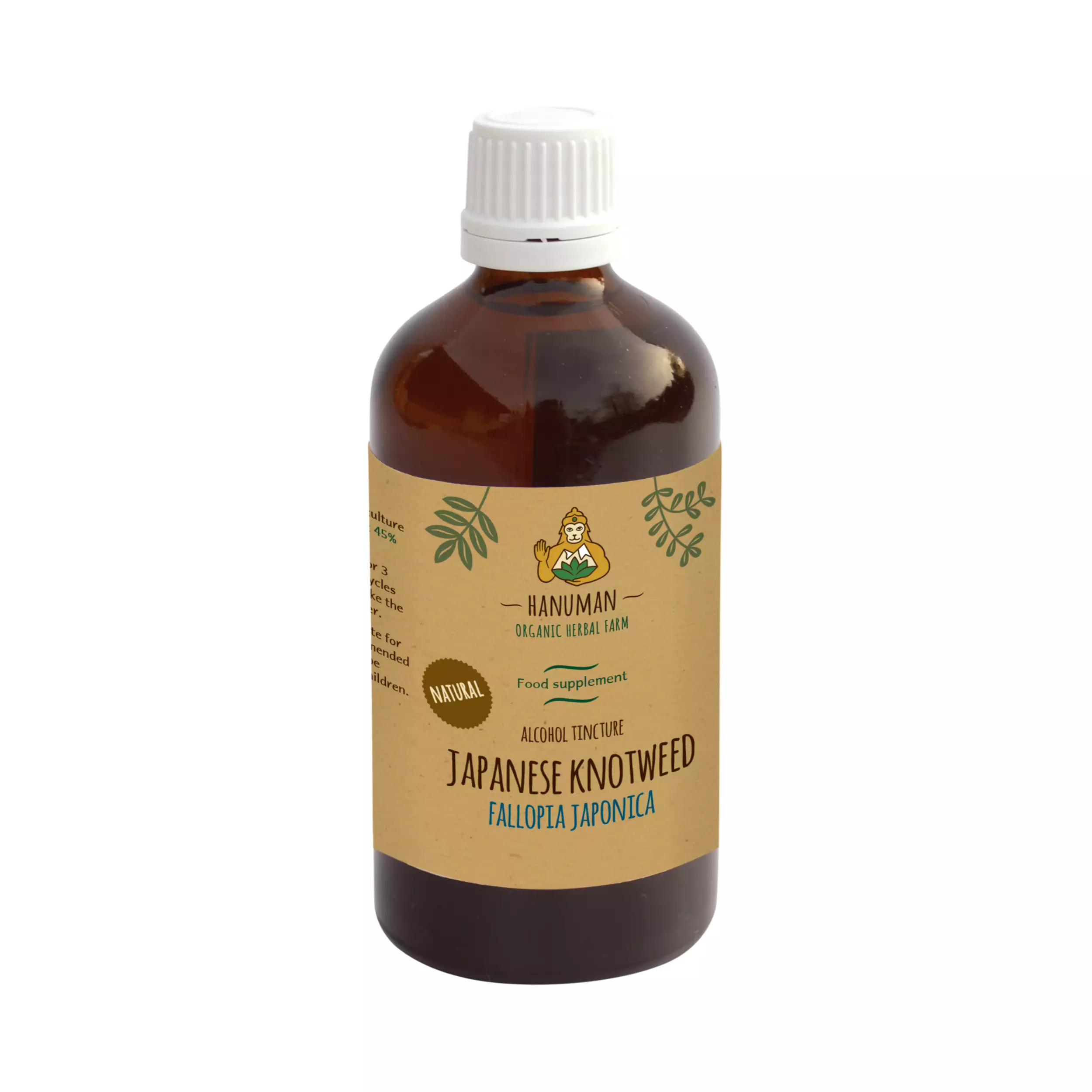
Japanese Knotweed Tincture (Fallopia japonica) is a natural food supplement made from organic root using traditional cold maceration. Traditionally included during periods of increased demands and as part of support for the body's general balance.
Ingredients:
- Japanese knotweed root (Fallopia japonica, radix), Slovenian origin, organic
- fruit spirit, Slovenian origin, organic, 40% alcohol by volume
Description
Usage
About the herb
Combinations
FAQ
Japanese Knotweed Tincture (Fallopia japonica) is a natural food supplement made from Japanese knotweed root (radix), prepared using the traditional cold maceration method. This method helps preserve a broad spectrum of naturally occurring plant compounds found in the root.
The Japanese knotweed root used for our tincture is harvested in Slovenia. It is gathered by hand, with care for the plant and respect for the natural environment.
Ingredients of the Japanese Knotweed Tincture:
- Japanese knotweed root (Fallopia japonica, radix), Slovenian origin, organic
- fruit spirit, 40% vol. alcohol, Slovenian origin
Concentration of Japanese Knotweed root:
- extraction ratio 1:3, 40% vol. alcohol
Packaging:
- 100 ml
- dark glass bottle with dropper
Quality of the Japanese Knotweed Tincture:
- 100% natural ingredients
- certified organic (IKC UM, SI-EKO-002)
- free from pesticides, artificial colours and other unnecessary additives
Recommended Use of Japanese Knotweed Tincture:
- 25–30 drops
- up to 3 times daily
- you can start with a lower dose and gradually increase it to 25 drops
- recommended use for 3 weeks, followed by a break of at least 1 week
- during periods of greater need, the tincture may be used continuously for up to 2 months, followed by a break
How to Take Japanese Knotweed Tincture:
- add the drops to a glass of water or take them on a spoon, followed by water
- preferably take on an empty stomach (before a meal or at least 1 hour after eating) for better absorption; there is no need to eat immediately afterwards
Tips for Use:
- Japanese knotweed is a plant with strong root energy, traditionally used during periods of increased physical or emotional demands
- one bottle (100 ml) lasts approximately 3 weeks with regular use
- the tincture can be used on its own or combined with other herbs according to your individual needs
Precautions:
- food supplements should not be used as a substitute for a varied and balanced diet
- do not exceed the recommended daily dose
- keep out of reach of children
- not suitable for children due to its alcohol content
- consult a healthcare professional before use if you are pregnant, breastfeeding or taking medication
- extra caution is advised for people taking blood-thinning medication
Japanese Knotweed (Fallopia japonica)
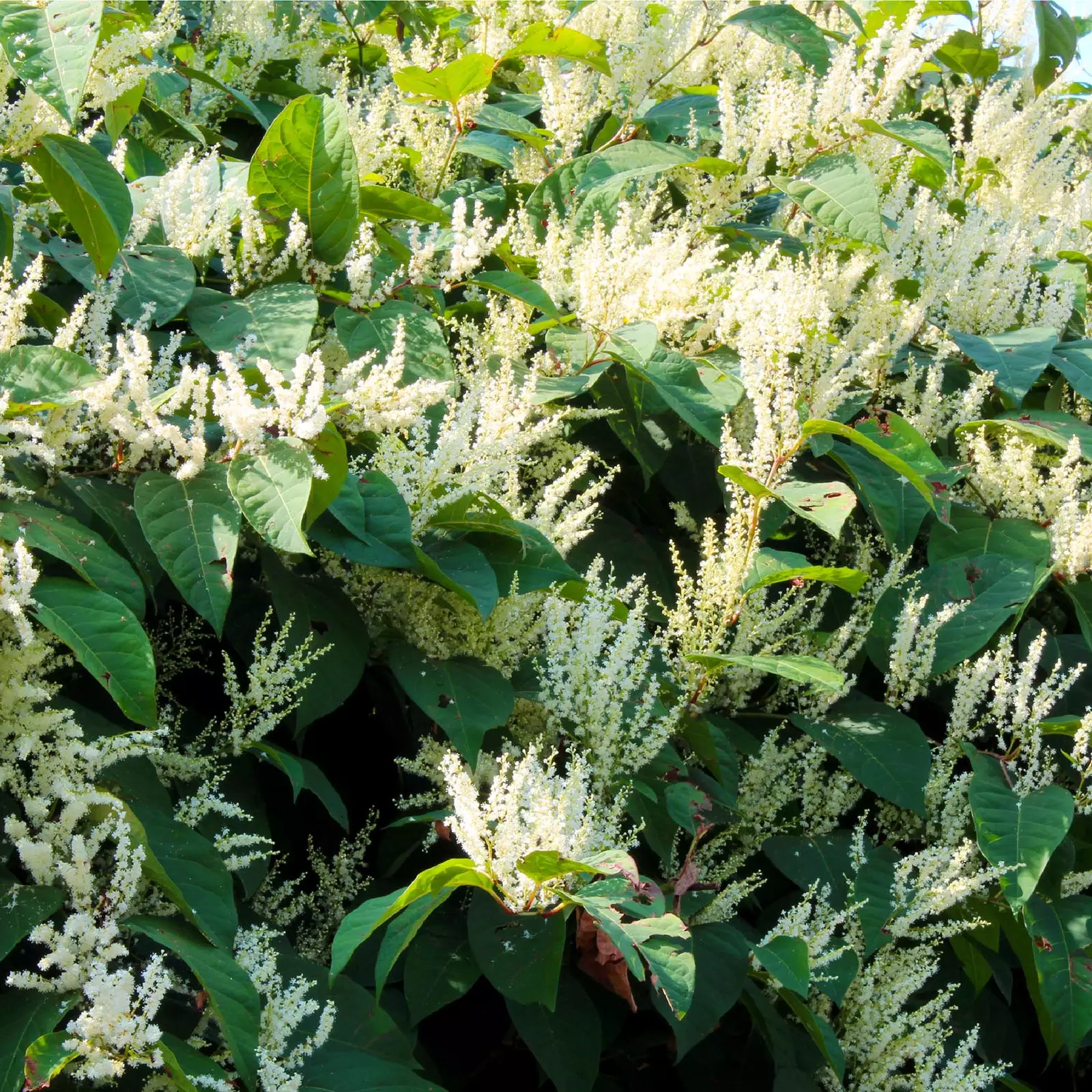
Japanese knotweed is a hardy, fast-growing plant with a powerful root system that extends deep into the soil. It is easily recognised by its hollow, bamboo-like stems, heart-shaped leaves and small, whitish flowers that appear in late summer.
It belongs to the knotweed family (Polygonaceae).
In herbalism, the root (radix) is the most commonly used part of the plant, as it contains the highest concentration of its characteristic plant compounds.
Native to East Asia, Japanese knotweed is now widespread throughout Europe, where it is often found along rivers, roadsides and the edges of settlements. Due to its remarkable vigour, it is classified as an invasive species. At the same time, this very strength offers an interesting insight into its character – deeply rooted, persistent and adaptable.
In traditional herbal practice, Japanese knotweed is used to support the body during periods of increased demands and to help maintain inner balance. It is often associated with a sense of stability and restoring balance after challenging periods.
The plant contains various natural compounds, including polyphenols such as resveratrol. Japanese knotweed has attracted increasing scientific interest in recent years, although its use is still largely described within the context of traditional herbal practices.
Japanese Knotweed Tincture + Wild Teasel Tincture
- both tinctures taken orally
- traditionally, both plants are used during periods of prolonged physical stress, complementing each other in providing holistic support for the body
Japanese Knotweed Tincture + Milky Oats Tincture
- both tinctures taken orally
- milky oats are traditionally used as gentle support during periods of exhaustion, while Japanese knotweed complements the combination by supporting overall balance
Japanese Knotweed Tincture + Rhodiola Tincture
- both tinctures taken orally
- rhodiola is traditionally used during periods of increased physical and mental demands, while Japanese knotweed provides complementary support during challenging times
What Is Resveratrol?
Resveratrol is a natural plant compound belonging to the polyphenol group. It is found in various plants, including Japanese knotweed (Fallopia japonica). Plants produce it as part of their natural defence against environmental stress.
Today, resveratrol is the subject of considerable scientific interest. In traditional herbalism, Japanese knotweed is used as part of a holistic approach to supporting the body through different stages of life.
Are There Other Plants That Contain Resveratrol?
Yes, resveratrol is a natural plant compound found in several different plants. Some of the best-known sources include grapes (Vitis vinifera), particularly their skins, as well as red wine, peanuts (Arachis hypogaea), certain berries such as blueberries, and mulberries (Morus spp.).
Japanese knotweed (Fallopia japonica) stands out for its relatively high resveratrol content, making it a plant of particular scientific interest.
What Else Can Japanese Knotweed Be Used For?
Japanese knotweed (Fallopia japonica) is valued not only in herbalism but also for its wider practical applications. Due to its rapid growth and abundant biomass, it is being studied as a potential source of plant fibres for paper and other materials. In some places, it is also used for compost or mulch.
Young shoots are enjoyed as wild food in certain cultures, while the plant can also serve as fodder for animals, particularly goats, which readily browse on it.
Its widespread presence and remarkable resilience remind us that even vigorous plants can have a place in a more circular and respectful relationship with nature.