

Calendula Tincture 100 ml – Organic
24,00 €
(incl. VAT)
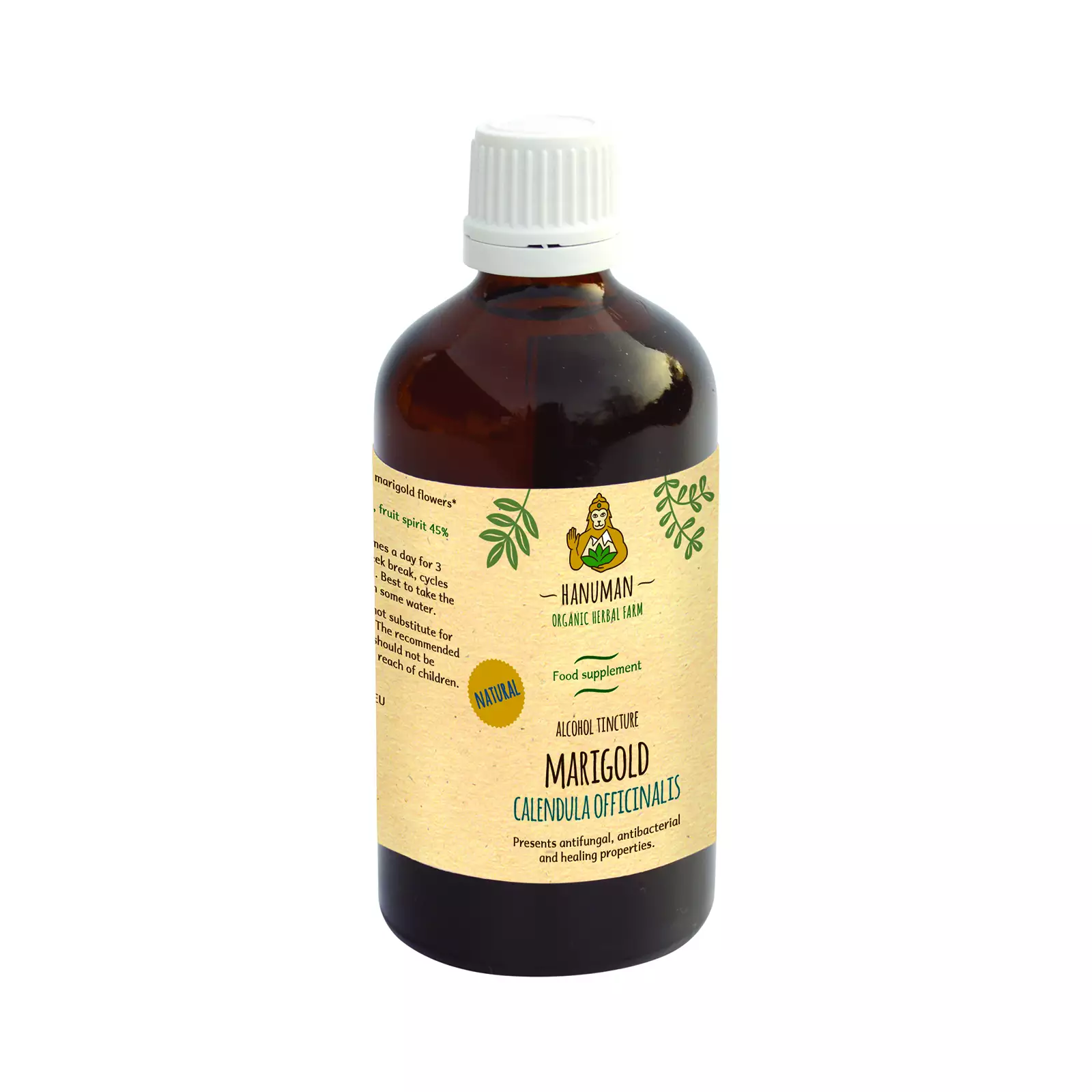
Calendula tincture is a natural food supplement made from organically grown Calendula flowers (Calendula officinalis) using the traditional cold maceration method.
It is traditionally used as gentle support for the skin and mucous membranes and during periods when we wish to support the body’s natural balance.
Ingredients of Calendula tincture:
- Calendula flowers (Calendula officinalis, flos) – organic, Slovenian origin
- fruit spirit, organic, Slovenian origin
Description
Usage
About the herb
Combinations
FAQ
Calendula tincture is a natural herbal preparation made from Calendula flowers (Calendula officinalis, flos) using the traditional cold maceration method. This process helps preserve a broad spectrum of naturally occurring plant compounds found within the flowers.
We use a carefully selected alcohol concentration specifically suited to Calendula. This allows effective extraction of different groups of plant compounds and creates a balanced herbal extract.
All our Calendula comes from Slovenia and is organically grown. The flowers are harvested by hand when they are at their most vibrant, carrying within them the warmth and energy of the sun.
Ingredients of Calendula tincture:
- Calendula flowers (Calendula officinalis, flos) – organic, Slovenian origin
- fruit spirit, 40% vol. alcohol – organic, Slovenian origin
Calendula flower concentration:
- extraction ratio 1:6, 40% vol. alcohol
Packaging:
- 100 ml
- dark glass bottle with dropper
Quality of Calendula tincture:
- 100% natural ingredients
- certified organic (IKC UM, SI-EKO-002)
- free from pesticides, artificial colours, preservatives and other unnecessary additives
Recommended use of Calendula tincture:
- 25–30 drops
- up to 3 times daily
- you may start with a lower amount and gradually increase to 25 drops
- recommended for 3 weeks, followed by a break of at least 1 week
- for longer-term use, the tincture may be taken continuously for up to 2 months, followed by a break
External use of Calendula tincture:
- dilute the tincture with water and use for gentle cleansing or as a compress
- if needed, it may also be used undiluted on small areas of intact skin
How to take Calendula tincture internally:
- add to a glass of water or take on a spoon, followed by some water
- preferably take on an empty stomach (before a meal or at least 1 hour after eating); there is no need to eat immediately after taking the tincture
Tips for using Calendula tincture:
- one 100 ml bottle lasts approximately 3 weeks with regular use
- when used externally, the tincture may slightly dry the skin, so it can be helpful to follow with Calendula Ointment
- before first external use, we recommend testing the tincture on a small area of skin
Warnings:
- food supplements should not be used as a substitute for a varied and balanced diet
- do not exceed the recommended daily dose
- keep out of reach of children
- due to its alcohol content, it is not suitable for children
- not recommended for people with a known sensitivity to plants of the Asteraceae family
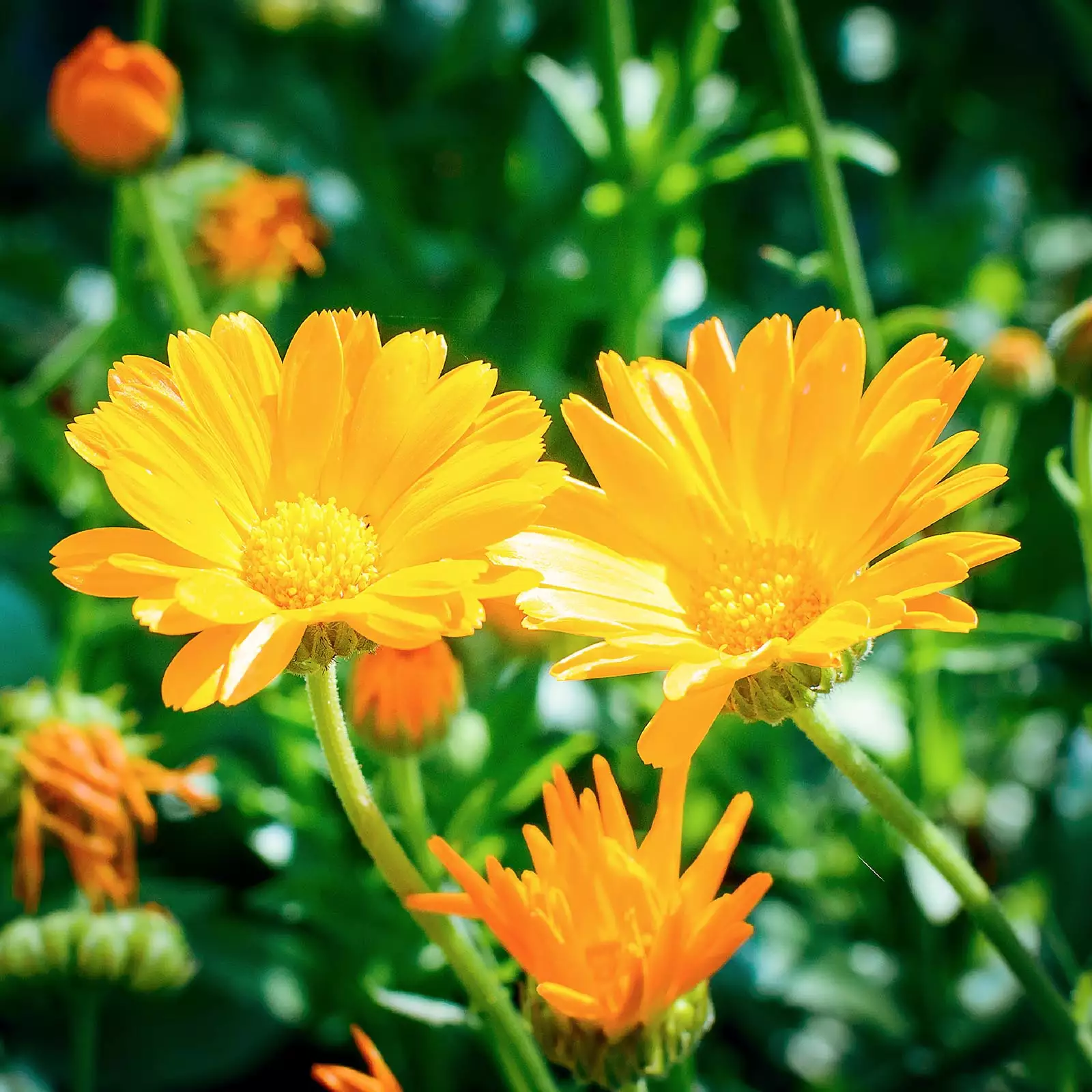
Calendula (Calendula officinalis)
Calendula is one of those plants whose colour alone brings a sense of warmth, softness and familiarity. Its sunny yellow to orange flowers open again and again, which is why the plant has long been associated with persistence, renewal and gentle strength. In the garden, it is not only a beautiful flower but also an old and trusted companion in traditional home herbalism.
It belongs to the daisy family (Asteraceae).
In herbalism, we primarily use the flowers or flower heads (Calendulae flos), and occasionally the tender aerial parts of the plant. The flowers in particular carry the qualities for which Calendula has long been valued in folk herbal tradition.
Calendula has a long history of use in European monastery gardens and traditional cottage gardens. It was one of those plants rarely missing from the surroundings of the home. Old traditions describe Calendula as a flower of the sun – not only because of its colour, but also because its flowers open in the light and close as evening approaches. In some places, it was planted near the entrance to the home as a symbol of warmth, protection and good intentions. In folk tradition, it was seen as a plant that could bring a little light even to more difficult or sensitive days.
Traditionally, Calendula is a plant people have long included in the care of the skin and mucous membranes and during periods when they wish to offer the body gentle yet reliable herbal support. It is often associated with a sense of soothing, softness and balance, giving it a special place in both internal and external herbal use.
Calendula is traditionally associated with supporting normal liver function and with soothing the throat, pharynx and vocal cords. It is also highly valued in traditional herbal practice for the care and protection of the skin. This broad range of traditional uses has made Calendula one of the most recognisable and versatile plants in home herbalism.
Calendula tincture + Calendula Balm
- tincture internally, ointment externally
- Calendula naturally connects internal and external herbal care; the tincture complements a holistic approach, while the ointment gently nourishes and cares for the skin where it is most needed
Calendula tincture + Walnut tincture
- both tinctures internally
- both plants have traditionally been included during periods when we wish to support the body’s natural balance; together they complement a holistic herbal approach
Calendula tincture + Burdock tincture
- both tinctures internally
- Burdock is traditionally included in herbal approaches focused on the skin; together with Calendula, it forms a well-established traditional combination
Calendula Tincture + Lymph Support Tincture
- both tinctures for internal use
- calendula is traditionally valued for gentle support of the lymphatic system and natural cleansing processes, while Lymphatic Support combines selected herbs traditionally associated with healthy lymphatic flow and elimination
- together, they offer complementary herbal support during periods when you want to encourage a sense of lightness, flow and inner balance
Are only orange Calendula flowers suitable for herbal use?
No. Herbal use is not limited exclusively to orange flowers. Both orange and yellow Calendula flowers (Calendula officinalis, flos) contain similar groups of naturally occurring plant compounds and are suitable for use in herbal preparations.
The difference in colour is mainly related to the carotenoid content, which gives the flowers their characteristic yellow to orange shades. Darker orange flowers generally contain somewhat higher levels of these pigments, which is why they are often particularly valued in herbal practice.
However, the quality of a herbal preparation depends on much more than colour. The time of harvest, drying method and subsequent processing of the plant also play an important role.
On our farm, we use exclusively orange Calendula flowers for our tinctures, harvesting them by hand when they are in full bloom.