

Early Winter Support Tincture 100 ml – Organic
26,00 €
(incl. VAT)
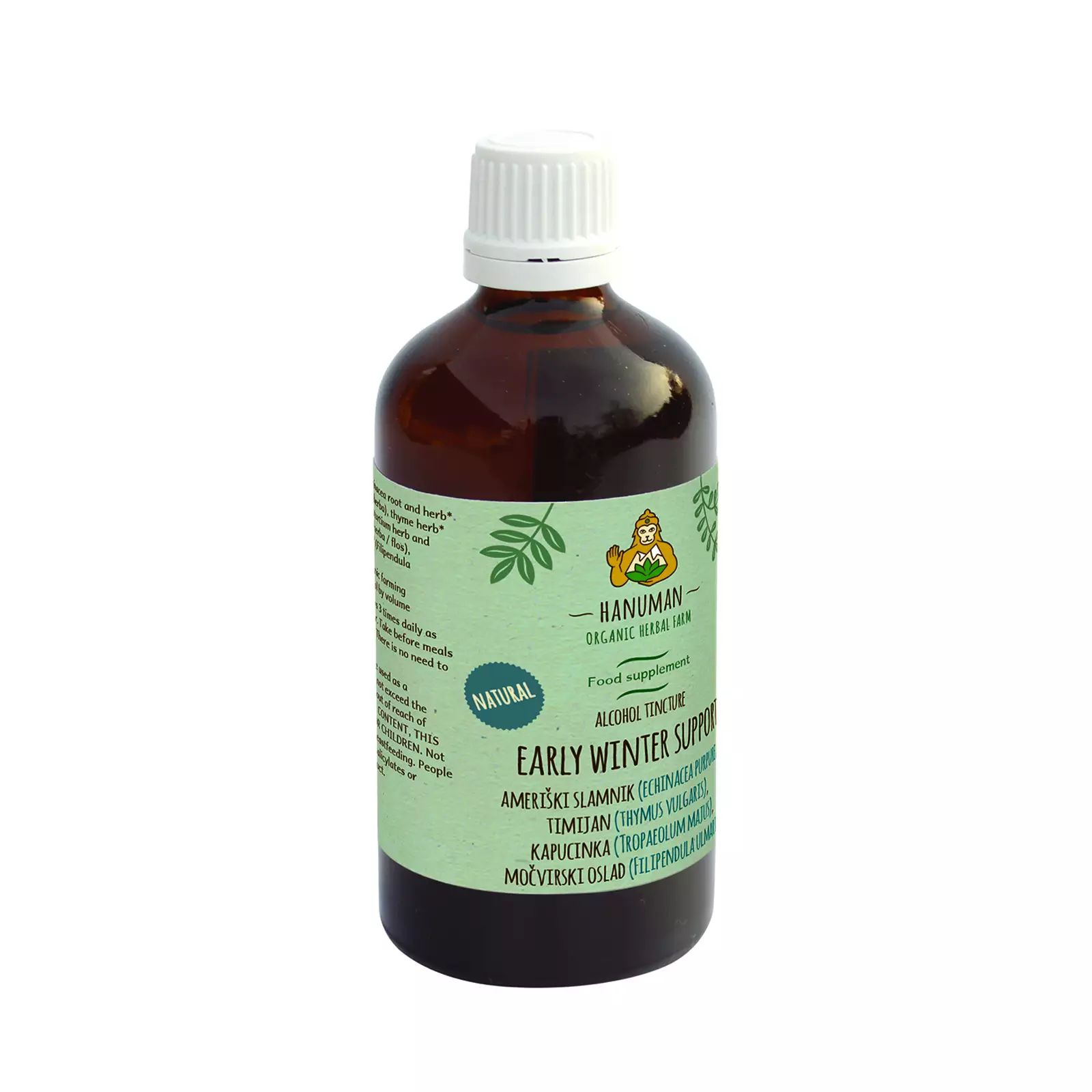
Early Winter Support Tincture is an herbal formula with echinacea, thyme, nasturtium and meadowsweet, prepared using the traditional cold maceration method. It is designed for short-term use when the first seasonal signs appear.
Ingredients:
- echinacea herb and root (Echinacea purpurea, herba et radix)
- thyme herb (Thymus vulgaris, herba)
- nasturtium herb and flowers (Tropaeolum majus, herba et flos)
- flowering meadowsweet herb (Filipendula ulmaria, herba)
- organic fruit spirit
Description
Usage
About the herb
Combinations
FAQ
Early winter support is a herbal tincture prepared using the traditional cold maceration method, which helps preserve a broad spectrum of naturally occurring plant compounds – from aromatic constituents to characteristic plant substances traditionally valued in herbalism during the colder months of the year.
The alcohol content (45%) is carefully selected to support the effective extraction of different constituents from herbs and roots. Alcohol helps extract both water-soluble and alcohol-soluble compounds from the plants, resulting in a balanced and rich herbal extract with a distinctive botanical character.
The plants come from Slovenian organic cultivation and are harvested and processed with a great deal of handwork, respect for nature and traditional herbalism.
Ingredients of Early winter support tincture:
- echinacea (Echinacea purpurea, herba et radix) – Slovenia
- thyme (Thymus vulgaris, herba) – Slovenia
- nasturtium herb and flowers (Tropaeolum majus, herba et flos) – Slovenia
- flowering meadowsweet herb (Filipendula ulmaria, herba) – Slovenia
- fruit spirit – Slovenia, 41% vol.
Herbal concentration:
- extraction ratio 1 : 4.5, 41% vol. alcohol
Packaging:
- 100 ml
- dark glass bottle with dropper
Quality of Early winter support tincture:
- 100% natural ingredients
- certified organic (IKC UM, SI-EKO-002)
- free from pesticides and artificial colours
- handcrafted in Slovenia
Recommended use of Early winter support tincture:
- 25–30 drops
- 3 times daily
- for more pronounced symptoms, adults may take 30 drops every 2 hours for a short period; this intensive use should be limited to 1 day, or a maximum of 2 days
- use as needed, at the first signs of seasonal discomfort
- continue until you feel better, then discontinue use
- if symptoms persist, consult a doctor or pharmacist
How to take:
- add the drops to a glass of water or take them on a spoon followed by some water
- preferably take on an empty stomach – before a meal or at least 1 hour after eating
- there is no need to eat immediately after taking the tincture
Tips for use:
- the tincture is intended for use when the body begins to show the first signs of seasonal discomfort
- it is not intended for long-term preventive use
- one 100 ml bottle usually lasts for approximately 3 weeks of use
- for a shorter course of use, one bottle is usually sufficient
- during use, we recommend rest, plenty of fluids and warm herbal drinks
Warnings for Early winter support tincture:
- food supplements should not be used as a substitute for a varied diet and a healthy lifestyle
- do not exceed the recommended daily dose
- keep out of reach of children
- due to its alcohol content, this product is not suitable for children
- not suitable for pregnant or breastfeeding women
- not suitable for people who are hypersensitive to echinacea, plants from the daisy family (Asteraceae), thyme, plants from the mint family (Lamiaceae), salicylates or non-steroidal anti-inflammatory drugs (NSAIDs)
- not suitable for children
- people who are hypersensitive to salicylates or aspirin should not use this product
- caution is advised for people with blood clotting disorders
- people with a stomach or duodenal ulcer should consult a doctor or pharmacist before use
- if you develop a high fever, difficulty breathing, purulent sputum, severe headaches, or if your condition worsens, consult a doctor
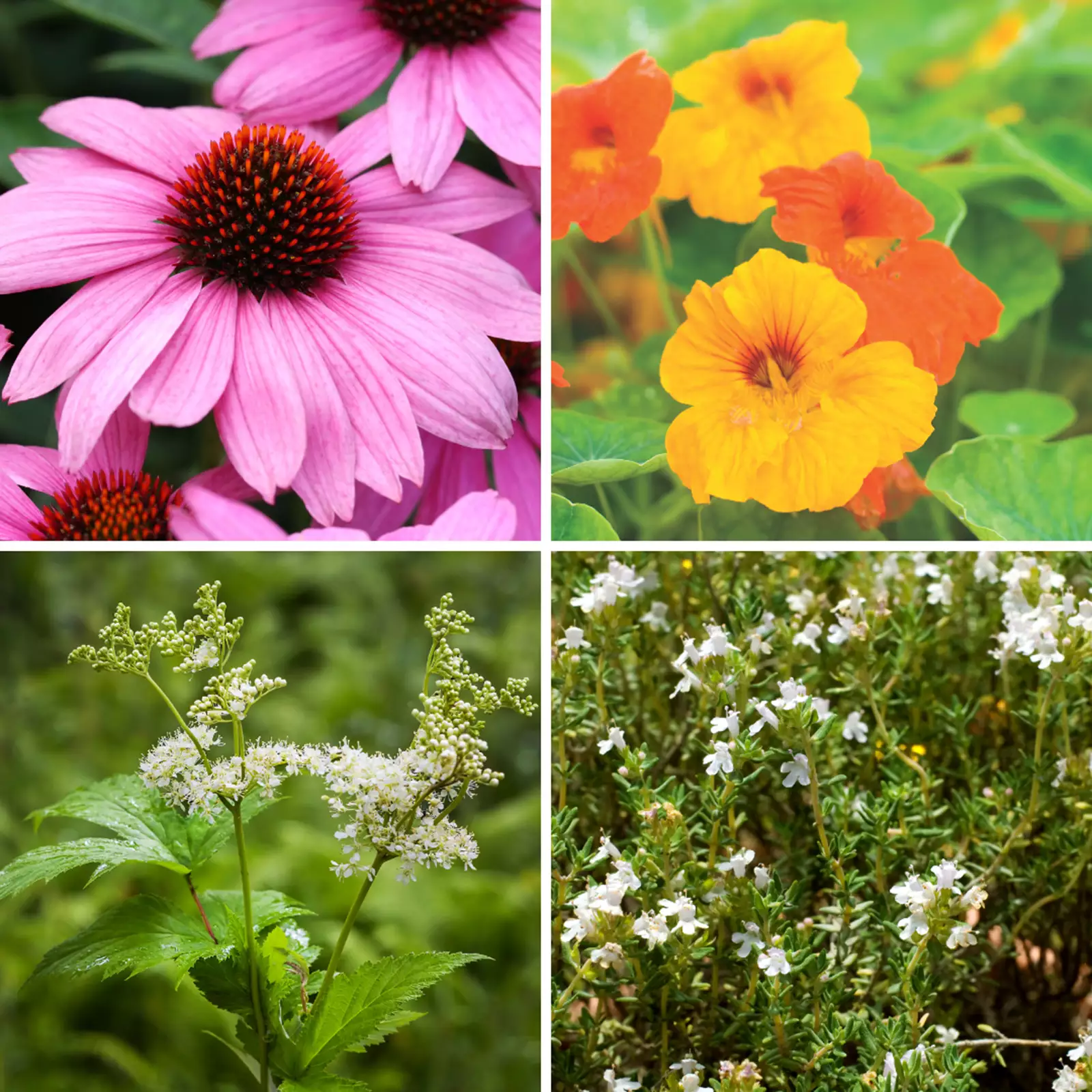
Echinacea (Echinacea purpurea)
Echinacea is a distinctive perennial with large purple-pink flowers and a prominent cone-shaped centre. It belongs to the daisy family (Asteraceae). In the tincture, we use the herb, or aerial parts of the plant (herba), harvested when the plant is at its peak.
It originates from North America, where it was known and used by many Indigenous peoples. The name Echinacea comes from the Greek word echinos, meaning hedgehog – a reference to its spiny flower centre. Traditionally, it is associated with times when the body needs additional support and a more focused inner response. In herbalism, it is particularly valued during the colder months and at the first signs of seasonal challenges.
Thyme (Thymus vulgaris)
Thyme is a low-growing, highly aromatic Mediterranean plant with small leaves and a warm, herbal-spicy fragrance. It belongs to the mint family (Lamiaceae). In the tincture, we use the herb, or aerial parts of the plant (herba), where its characteristic aroma is most concentrated.
Its name carries an interesting story – it is associated with the Greek word thymos, meaning courage, strength of spirit and inner fire. In folk tradition, thyme was a plant of fire, warmth and protection; it was used in homes, baths, incense and herbal preparations. Traditionally, it is associated with a feeling of warmth in the chest, support for the natural rhythm of breathing and greater ease during colder days. Its flavour is distinctive, warm and slightly pungent – like a little herbal fire in a bottle.
Nasturtium (Tropaeolum majus)
Nasturtium is a vibrant garden plant from the Tropaeolaceae family. In the tincture, we use the herb and flowers (herba et flos). Traditionally, it is associated with supporting natural resilience and well-being during times of seasonal challenges. Its characteristically peppery leaves and flowers give the tincture a fresh, lively and slightly fiery character.
Meadowsweet (Filipendula ulmaria)
Meadowsweet is a delicate meadow plant from the rose family (Rosaceae). In the tincture, we use the flowering herb (herba). Traditionally, it is associated with well-being, a sense of lightness and supporting the body during times of increased strain. Its fragrant flowers add a pleasant aromatic note to the tincture and round off the herbal formula with a gentle, balanced character.
Early winter support tincture + Propolis with thyme and sage
- take the tincture internally and use the propolis as needed throughout the day
- thyme complements both preparations beautifully, while sage and propolis add an aromatic, resinous note
- this combination is particularly pleasant during times of throat sensitivity and seasonal challenges
Early Winter Support tincture + Natural Immunity tincture
- both tinctures for internal use
- Early Winter Support is intended for seasonal herbal support during the colder months, while Natural Immunity complements it with adaptogenic herbs and medicinal mushrooms traditionally used to support vitality and the body’s natural balance
- together, they offer a broader herbal routine during autumn and winter or during periods of increased seasonal strain
Early Winter Support tincture + Honey Lip Balm
- Early Winter Support tincture for internal use, Honey Lip Balm for external use
- while Early Winter Support offers herbal support from within, Honey Lip Balm helps care for lips exposed to cold air, wind and dry indoor conditions
- this combination is especially practical during the colder months, when both the body and the skin are exposed to greater seasonal stress
Early Winter Support tincture + Respiratory Balm
- Early Winter Support tincture for internal use, Respiratory Balm for external use
- Early Winter Support provides traditional herbal support during the colder season, while Respiratory Balm offers an aromatic external care ritual with herbs traditionally associated with the respiratory area
- together, they create a complementary seasonal routine for colder days, especially when we want to combine internal herbal support with comforting external care
Can I use Early winter support tincture preventively?
Early winter support tincture is not intended for long-term preventive use. It is designed primarily for times when the body begins to show the first signs of seasonal challenges or when you feel that “something is coming on”.
Echinacea is traditionally used for shorter periods and in a more targeted way, making this formula better suited to occasional use rather than daily use over an extended period. This is why the tincture is designed to support the body at times when it may benefit from a little more warmth, rest and herbal support.
For longer-term support during the colder months, people often choose Reishi tincture, which is suitable for extended periods of use and for supporting the body’s overall balance. At certain times, some also choose Sweet wormwood tincture or the Complete detox set when they want to provide broader herbal support and give more attention to their overall well-being.