

Oak Tincture 100 ml – Organic
24,00 €
(incl. VAT)
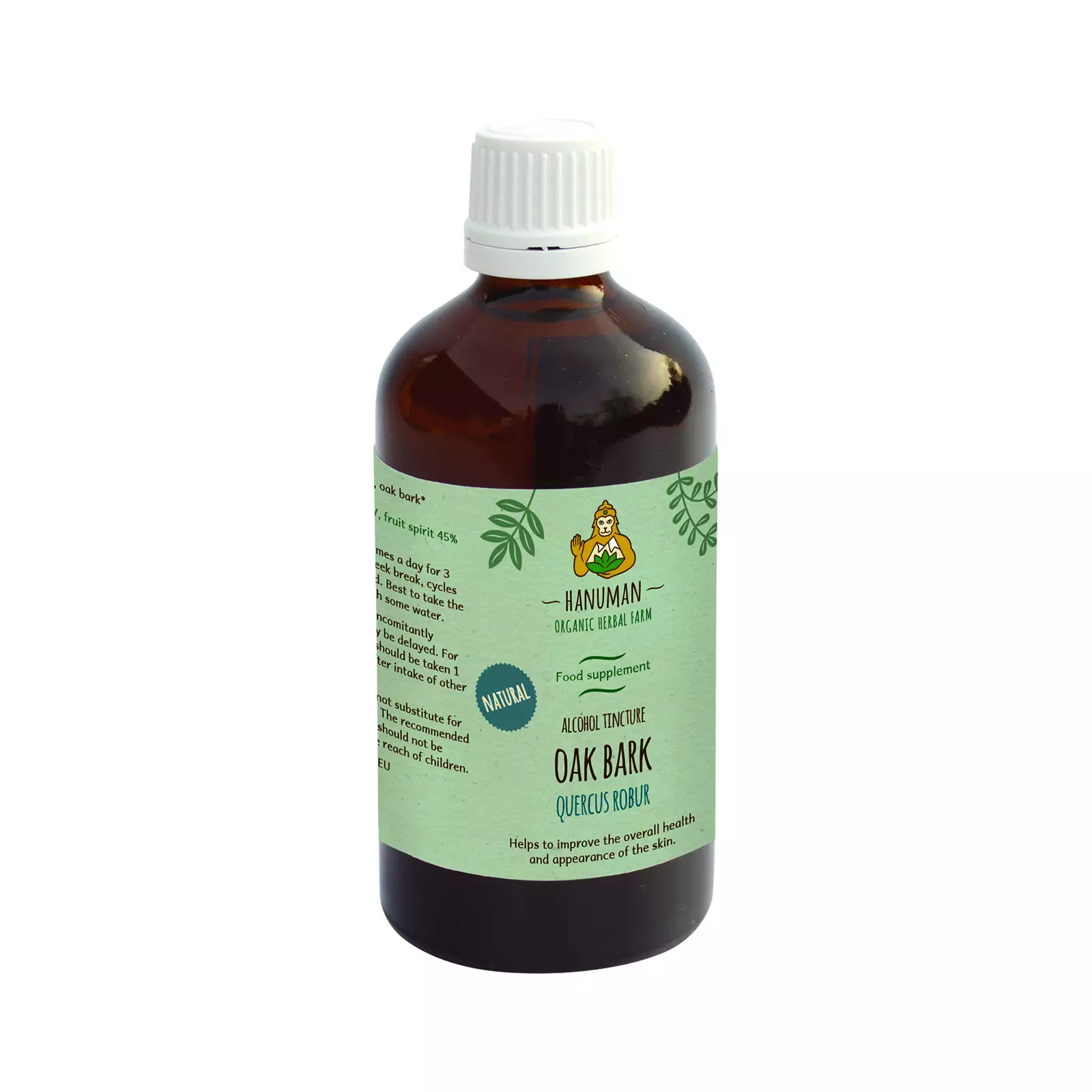
Oak Tincture (Quercus robur) is a natural food supplement made from fresh organic oak bark using the traditional cold maceration method. Traditionally used for skin care and to support a feeling of comfort and balance in the mucous membranes of the mouth and throat.
Ingredients of the Oak Tincture:
- oak bark (Quercus robur, cortex), fresh, organic, Slovenian origin
- fruit spirit, 40% vol. alcohol, organic, Slovenian origin
Description
Usage
About the herb
Combinations
FAQ
Oak Tincture (Quercus robur) is a natural food supplement made from fresh oak bark (cortex), prepared using the traditional cold maceration method. This method helps preserve a broad spectrum of naturally occurring plant compounds found in the bark.
We use a carefully selected alcohol content of 40% vol., which is particularly suitable for extracting compounds from oak bark. This combination of water and alcohol provides good extraction of tannins, the characteristic compounds found in oak bark, while also capturing other naturally occurring plant constituents.
We harvest oak bark carefully and with respect for the plant’s natural cycles. We use organically grown or ethically wild-harvested plant material, which is gathered by hand and processed in Slovenia.
Ingredients of the Oak Tincture:
- oak bark (Quercus robur, cortex)
- Slovenian fruit spirit, 40% vol. alcohol
Concentration of Oak Bark:
1:3, 40% vol. alcohol
Packaging:
- 100 ml
- dark glass bottle with dropper
Quality of the Oak Tincture:
- 100% natural ingredients
- certified organic (IKC UM, SI-EKO-002)
- free from pesticides, artificial colours and other unnecessary additives
Recommended use of the Oak Tincture:
- 20–25 drops
- 3 times daily
- you can start with a smaller amount (10–15 drops) and gradually increase to 25–30 drops
- recommended for 3 weeks, followed by a break of at least 1 week
External use:
- apply the tincture to the desired area 1–3 times daily
- it can be used undiluted or diluted with water (1:1), especially on sensitive skin
- apply with a cotton pad or gently massage into the skin
- after application, it is advisable to protect the skin with a balm, as the tannins in the tincture may have a slightly drying effect
How to take the Oak Tincture:
- add to a glass of water or take from a spoon
- preferably take on an empty stomach (before a meal or at least 1 hour after eating) for better absorption
- there is no need to eat immediately afterwards
Tips for use:
- oak bark is naturally rich in tannins, which give the tincture its characteristic strongly astringent taste and may also have a mildly constipating effect
- 1 bottle (100 ml) lasts approximately 3 weeks with regular use
- it is advisable to leave at least 1 hour between taking the tincture and other medicines, as tannins may affect the absorption of some medications
Warnings:
- food supplements should not be used as a substitute for a varied and balanced diet and a healthy lifestyle
- do not exceed the recommended daily dose
- keep out of reach of children
- not suitable for children due to its alcohol content
- due to its high tannin content, it is not recommended for people prone to constipation or with a sensitive stomach
- not recommended during pregnancy or breastfeeding, or for children under 12 years of age
- breaks are recommended during longer periods of use due to the strongly astringent nature of oak bark
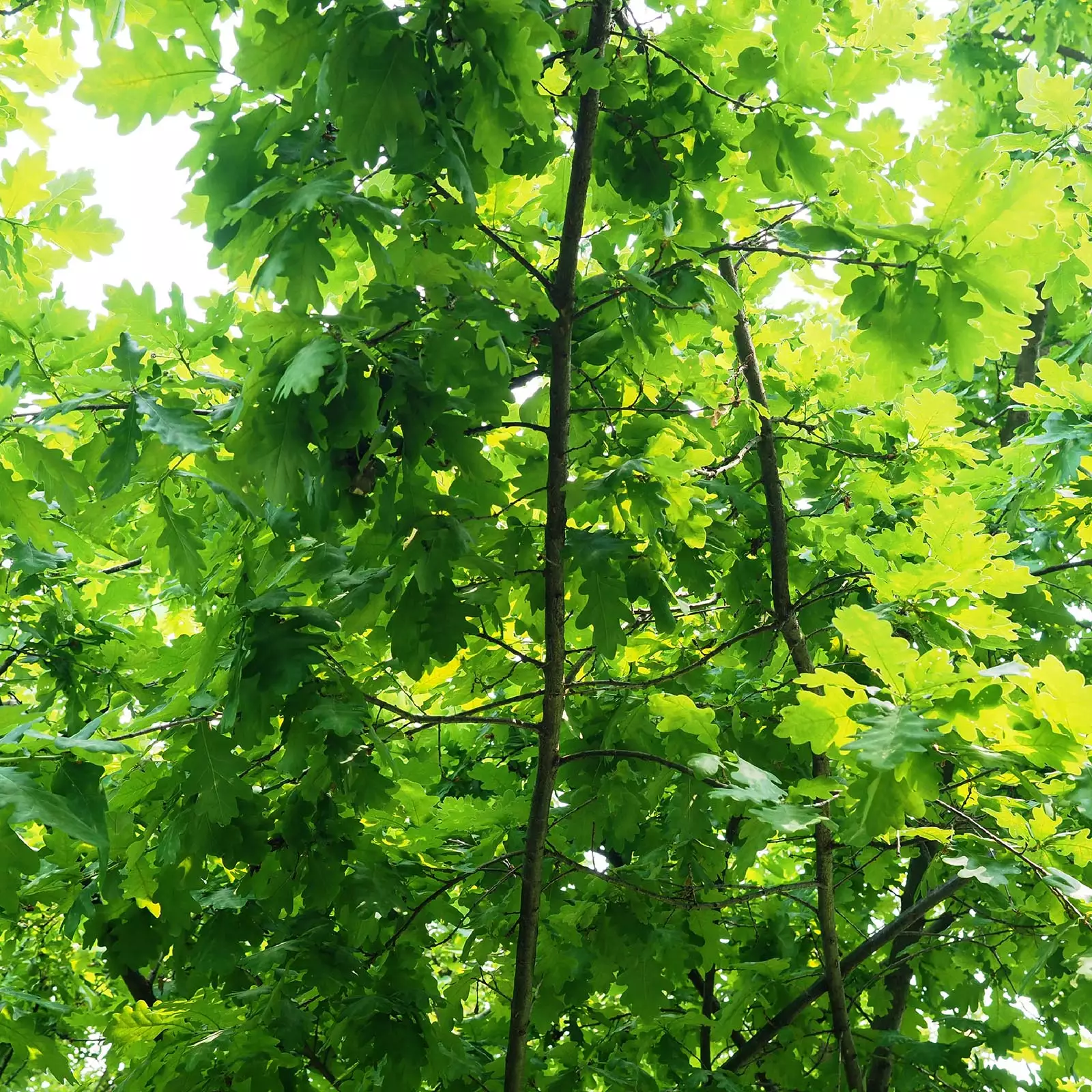
Oak (Quercus robur)
Oak is a majestic deciduous tree that has long been associated with strength, endurance and quiet power. It grows slowly but steadily, and its presence in the landscape often creates a sense of stability, depth and rootedness. In herbal tradition, the bark holds a special place, with its distinctly astringent taste immediately revealing something of its character.
Oak belongs to the beech family (Fagaceae).
In herbalism, we primarily use the younger bark (cortex), while other parts of the tree are used less frequently. The bark is traditionally the most valued part for preparing herbal extracts, including tinctures.
Oak is one of the most symbolic trees in European tradition. It has often been regarded as a tree of strength, protection and steadfastness. People gathered beneath ancient oaks, made important decisions there and sought shelter from the sun. In folk tradition, oak was associated with physical and inner resilience, while its strong, steady growth became a symbol of everything that requires time, patience and deep roots.
Traditionally, oak bark has been used during periods when a sense of firmness, protection and balance is desired. It is particularly valued in preparations for the care of the skin and mucous membranes, as well as for supporting a feeling of comfort in the mouth, throat and other sensitive areas of the body. Because of its strongly astringent character, oak bark is generally used thoughtfully, for shorter periods and in moderate amounts.
Oak bark is traditionally associated with comfort in the throat and with the care and protection of the mucous membranes of the mouth and throat. It is also valued in traditional skin care for helping maintain the skin’s overall appearance and condition. Above all, however, oak is a plant recognised by its distinctly astringent, tightening and deeply earthy character.
Oak Tincture + Calendula Balm
- both products for external use
- traditionally, oak and marigold complement each other in skin care; oak tincture brings its characteristic astringent and protective qualities, while Marigold Balm provides gentle, nourishing care and helps leave the skin feeling soft and comfortable
Oak Tincture + Dermafit Balm
- both products for external use
- a combination that brings together the astringent character of oak with rich herbal skin care; Oak Tincture is traditionally used to support a feeling of firmness and protection, while Dermafit Balm provides soothing, nourishing care for selected areas of the skin
Oak Tincture + Walnut Tincture
- Oak Tincture for external use and Walnut Tincture for internal use
- traditionally, walnut and oak complement each other as part of a combined internal and external herbal routine; Walnut Tincture is taken internally, while Oak Tincture can be applied externally to selected areas for its characteristic astringent and protective skin-care qualities
Can oak bark (Quercus robur) be used for psoriasis?
Oak bark has a long tradition of use in skin care, particularly because of its astringent character, which can leave the skin feeling firmer and protected.
Psoriasis is a complex skin condition, and individual responses to topical preparations can vary considerably. Diluted oak bark preparations, such as a diluted tincture or compress, may be used as part of a traditional external skin-care routine. However, because oak bark is naturally rich in tannins, it should be used with care, preferably for shorter periods and, when appropriate, alongside more nourishing preparations that help protect and moisturise the skin.
If the skin is very dry or sensitive, it is best to start with a well-diluted preparation and observe how the skin responds. Discontinue use if irritation occurs. For severe, persistent or worsening skin problems, consult a doctor or dermatologist.
How can Oak Tincture be used for gum care?
Oak bark has traditionally been valued for oral care, particularly because of its astringent character, which can create a feeling of firmness and protection on the oral mucosa. For sensitive gums, it is most commonly used locally as a mouth rinse or applied gently to the gums.
A simple way to use it:
- add 10–20 drops of tincture to a glass of lukewarm water
- gently rinse the mouth with the mixture 1–2 times daily
- alternatively, apply a small amount of diluted tincture directly to the gums using a cotton bud
Do not swallow the preparation; spit it out after use. Due to its tannin content, the tincture has a distinctly astringent taste and prolonged use may dry the oral mucosa slightly, so it is best used for shorter periods.
For particularly sensitive gums, dilute the tincture further and observe how the tissues respond. If gum problems persist, worsen or are accompanied by bleeding, swelling or pain, consult a dentist.